

Understanding the Difference Between Bookkeeping and Accounting reveals a crucial distinction often overlooked in the world of finance. While both are essential for managing a business’s finances, they represent distinct processes and skill sets. Bookkeeping, the meticulous recording of financial transactions, forms the bedrock upon which accounting builds. Accounting, in contrast, leverages this recorded data to analyze, interpret, and strategize for the future financial health of an organization. This exploration will illuminate the specific roles of each, clarifying their interconnectedness and individual importance.
We will delve into the daily tasks, required skills, and the overall impact of both bookkeeping and accounting on a business’s success. From the detailed recording of invoices and expenses in bookkeeping to the high-level financial analysis and strategic planning in accounting, we’ll unpack the intricacies of each function. Understanding this difference is crucial for entrepreneurs, small business owners, and anyone involved in managing finances, regardless of the size or type of organization.
Defining Bookkeeping
Bookkeeping forms the bedrock of any successful business, providing the essential financial data needed for informed decision-making. It’s the systematic recording of financial transactions, a crucial first step in understanding a company’s financial health. While often conflated with accounting, bookkeeping focuses on the detailed, day-to-day record-keeping, while accounting analyzes and interprets that data for broader financial insights.
Bookkeeping involves the methodical recording of all financial transactions, including sales, purchases, expenses, and payments. This process ensures that a complete and accurate record of all financial activity is maintained. It’s a critical function for maintaining financial order, facilitating tax preparation, and providing essential information for business management. Accurate bookkeeping also streamlines the accounting process, ensuring the financial statements are reliable and trustworthy.
Core Functions of Bookkeeping
The core functions of bookkeeping revolve around the meticulous recording and organization of financial data. This involves classifying transactions according to established accounting principles, ensuring accuracy and consistency in recording financial events. This data is then used to generate reports that provide a snapshot of the financial status of the business. These reports are essential for internal management and external stakeholders such as banks and investors.
A Step-by-Step Guide to the Bookkeeping Process for a Small Business
A typical bookkeeping process for a small business involves several key steps. First, all financial transactions must be documented using source documents such as invoices, receipts, and bank statements. Next, these documents are categorized according to their type (e.g., income, expenses, payments). Then, the information is entered into a bookkeeping system, which can be manual or software-based. This process often involves using a chart of accounts to categorize transactions. Finally, regular reports are generated, summarizing financial activity over specific periods (daily, weekly, monthly).
Examples of Common Bookkeeping Software and Their Features
Several software options cater to different business needs and sizes. Xero, for example, offers cloud-based accounting and bookkeeping features, including invoice generation, expense tracking, and bank reconciliation. QuickBooks offers similar functionalities, with various plans catering to different business scales. FreshBooks focuses on invoicing and expense tracking, ideal for freelancers and small businesses. Wave Accounting provides a free version with basic features, suitable for smaller businesses with simpler needs. Each software offers features tailored to streamline the bookkeeping process, automating tasks and providing real-time financial insights.
A Simple Bookkeeping System for a Freelance Writer
For a freelance writer, a simple system can be highly effective. Daily tasks could include recording invoices issued and expenses incurred, along with noting the payment method (e.g., online payment, check). Weekly tasks could involve reviewing all recorded transactions for accuracy and reconciling bank statements. Monthly tasks should include generating income statements and expense reports, categorizing all transactions for tax purposes, and preparing for tax payments. A spreadsheet or simple accounting software like Wave Accounting would suffice for such a system. This consistent approach ensures that the writer maintains accurate financial records, simplifying tax preparation and providing valuable insights into their business performance.
Defining Accounting

Accounting is a significantly broader field than bookkeeping. While bookkeeping focuses on the recording of financial transactions, accounting encompasses the entire process of identifying, measuring, recording, interpreting, and communicating financial information to various stakeholders. This includes not only recording transactions but also analyzing them to make informed business decisions and ensure compliance with regulations.
The Scope of Accounting Compared to Bookkeeping
Bookkeeping is a fundamental component of accounting, providing the raw data—the financial transactions—that accountants then analyze and interpret. Think of bookkeeping as data entry and accounting as the analysis and interpretation of that data. Bookkeepers meticulously record daily transactions, while accountants use this data to create financial statements, assess financial health, and offer strategic financial advice. The accountant’s role is significantly more analytical and strategic than the bookkeeper’s.
Types of Accounting
Accounting is categorized into several key areas, each serving a distinct purpose. Financial accounting, for instance, focuses on preparing financial statements for external stakeholders like investors and creditors. Managerial accounting, conversely, provides internal financial information to help management make operational decisions. Cost accounting, a specialized branch, focuses on tracking and analyzing the costs associated with producing goods or services.
Comparison of Bookkeeper and Accountant Roles
A bookkeeper’s primary responsibility is the accurate and timely recording of financial transactions. This includes tasks such as data entry, generating invoices, reconciling bank statements, and managing accounts payable and receivable. Accountants, on the other hand, build upon the bookkeeper’s work. They analyze financial data, prepare financial statements, interpret financial trends, offer tax advice, and provide strategic financial planning guidance. The bookkeeper provides the data; the accountant interprets it and uses it to inform business strategy.
Key Financial Statements
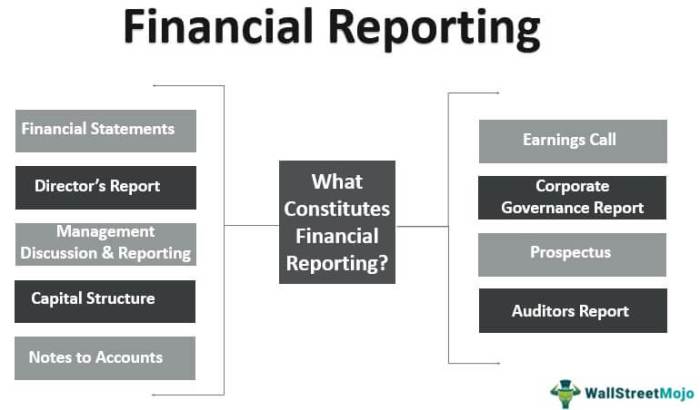
Three primary financial statements are central to accounting: the balance sheet, the income statement, and the cash flow statement. These statements provide a comprehensive overview of a company’s financial position and performance.
| Financial Statement | Key Components | Purpose |
|---|---|---|
| Balance Sheet | Assets, Liabilities, Equity | Shows a company’s financial position at a specific point in time. |
| Income Statement | Revenue, Expenses, Net Income/Loss | Shows a company’s financial performance over a period of time. |
| Cash Flow Statement | Cash from Operating Activities, Cash from Investing Activities, Cash from Financing Activities | Shows the movement of cash into and out of a company over a period of time. |
Key Differences
While bookkeeping and accounting are closely related and often work in tandem, they are distinct disciplines with different focuses and responsibilities. Bookkeeping forms the foundational data for accounting, but accounting goes significantly further in analyzing that data to provide strategic insights for business decision-making.
The core difference lies in the scope of work and the level of analysis involved. Bookkeepers meticulously record financial transactions, while accountants interpret those records to understand the financial health and performance of a business. This difference manifests in their daily tasks, required skills, and overall contributions to an organization.
Daily Tasks Comparison
Bookkeepers and accountants have very different day-to-day responsibilities. Bookkeeping involves routine, repetitive tasks focused on accuracy and timeliness, whereas accounting involves more strategic and analytical work.
- Bookkeeper: A bookkeeper’s day might consist of recording invoices, entering bank transactions, reconciling accounts, generating financial reports like balance sheets and income statements (though typically less detailed than those produced by an accountant), and managing accounts payable and receivable.
- Accountant: An accountant’s day might involve analyzing financial statements, preparing tax returns, auditing financial records, developing financial strategies, creating budgets and forecasts, and advising management on financial matters.
Financial Analysis Levels
The level of financial analysis is significantly different between the two roles. Bookkeeping primarily involves data entry and basic calculations to ensure accuracy, while accounting involves complex analysis to interpret the financial data.
- Bookkeeping: Bookkeeping focuses on the accuracy of the data itself. Analysis is limited to identifying discrepancies or errors in the recorded transactions. For example, a bookkeeper might notice an unusual debit or credit entry, flagging it for further review.
- Accounting: Accounting utilizes the data recorded by bookkeepers to perform in-depth analysis. This includes ratio analysis (like profitability ratios or liquidity ratios), trend analysis to identify growth or decline, and variance analysis to compare actual results against budgets or forecasts. For example, an accountant might analyze the profitability ratios over several years to identify trends and recommend strategic adjustments.
Skills and Qualifications
The required skills and qualifications for bookkeepers and accountants differ considerably, reflecting the differing levels of complexity and responsibility.
- Bookkeeping: Bookkeepers typically require a high school diploma or equivalent and on-the-job training or a short certificate program. Key skills include meticulous attention to detail, proficiency in accounting software, strong organizational skills, and an understanding of basic accounting principles.
- Accounting: Accountants usually require a bachelor’s degree in accounting or a related field. Many pursue professional certifications like a Certified Public Accountant (CPA) license, which requires passing a rigorous exam and meeting experience requirements. Key skills include advanced accounting knowledge, financial analysis skills, strong problem-solving abilities, communication skills (to explain complex financial information to non-financial stakeholders), and often, knowledge of tax law.
Typical Responsibilities
The following lists summarize the typical responsibilities for each role.
- Bookkeeping Responsibilities:
- Recording daily financial transactions
- Maintaining general ledger accounts
- Reconciling bank statements
- Managing accounts payable and receivable
- Generating basic financial reports (e.g., balance sheet, income statement)
- Data entry and verification
- Accounting Responsibilities:
- Financial statement preparation and analysis
- Tax preparation and compliance
- Auditing financial records
- Budgeting and forecasting
- Developing financial strategies
- Providing financial advice to management
- Cost accounting and management accounting
The Relationship Between Bookkeeping and Accounting

Bookkeeping and accounting, while distinct disciplines, are inextricably linked. Bookkeeping provides the foundational data that fuels the accounting process, allowing for the creation of financial statements and the analysis of a business’s financial health. Without accurate and timely bookkeeping, the accounting function would be severely hampered.
Bookkeeping data supports accounting functions by providing the raw material for financial reporting. The detailed records of transactions—receipts, payments, invoices, etc.—are the building blocks upon which financial statements are constructed. These statements, such as the income statement, balance sheet, and cash flow statement, offer a comprehensive overview of a company’s financial performance and position.
Transferring Bookkeeping Information to Accounting Reports
The process of transferring bookkeeping information to accounting reports involves several steps. First, bookkeeping data, typically maintained in a general ledger, is reviewed for accuracy and completeness. This often includes reconciliation of bank statements and other external records. Then, this verified data is categorized and summarized according to the chart of accounts. Finally, this summarized data is used to generate the financial statements. Specialized accounting software often automates much of this process, significantly reducing the time and effort required.
Impact of Bookkeeping Errors on Accounting Accuracy
Errors in bookkeeping directly compromise the accuracy of accounting reports. A simple mistake, such as an incorrectly recorded transaction or a missed entry, can lead to inaccuracies in the balance sheet, income statement, and other financial reports. These inaccuracies can misrepresent the financial health of the business, potentially leading to flawed decision-making by management and investors. For example, a consistently understated expense could artificially inflate profits, leading to an overestimation of the company’s performance. Similarly, an inaccurate recording of inventory could lead to miscalculations of cost of goods sold and ultimately impact profitability.
Effective Bookkeeping and Accounting Process Efficiency, Understanding the Difference Between Bookkeeping and Accounting
Effective bookkeeping significantly improves the efficiency of the accounting process. Well-maintained records facilitate the timely and accurate preparation of financial statements. This allows for quicker identification of trends, potential problems, and opportunities for improvement. For instance, a business with a robust bookkeeping system can easily generate reports to track sales, expenses, and profitability on a monthly or even weekly basis, allowing for proactive adjustments to business strategies. This timely data empowers informed decision-making, leading to enhanced operational efficiency and improved financial performance. Conversely, inefficient bookkeeping often results in delays in generating reports, hindering effective financial management and increasing the risk of errors.
Illustrative Examples
Let’s examine practical scenarios to solidify our understanding of the differences between bookkeeping and accounting. These examples will illustrate how both functions work together to provide a complete financial picture for a business.
A Small Business Owner’s Financial Records
Imagine Sarah, the owner of a small bakery. Her bookkeeping involves the daily recording of transactions: sales receipts, ingredient purchases, utility bills, and employee wages. She meticulously records each transaction in a ledger, noting the date, description, and monetary value. This detailed record-keeping is the core of her bookkeeping. However, Sarah also needs to understand the overall financial health of her bakery. This is where accounting comes in. Her accountant uses the bookkeeping data to create financial statements—income statements, balance sheets, and cash flow statements—which provide a summarized view of her bakery’s profitability, financial position, and cash flow over specific periods. These statements are vital for making informed business decisions, such as pricing strategies, expansion plans, and securing loans. The bookkeeping provides the raw data; accounting transforms that data into meaningful insights.
Bookkeeping Error and its Impact on Financial Statements
Suppose Sarah mistakenly records a $500 ingredient purchase as $50. This is a simple bookkeeping error. In the short term, this might not seem significant, but it will directly affect her financial statements. Her cost of goods sold will be understated by $450 on her income statement, leading to an overstated gross profit and net income. Her balance sheet will also be affected; her inventory will be understated, and her retained earnings will be overstated. This error, if left uncorrected, could lead to inaccurate tax filings, misinformed business decisions based on flawed financial data, and potentially even legal issues. Correcting the error involves locating the incorrect entry in the ledger, making the necessary adjustments, and then recalculating the financial statements to reflect the accurate figures. This highlights the importance of accurate bookkeeping for reliable accounting and sound financial management.
Visual Representation of Bookkeeping and Accounting Roles
Imagine a river flowing through a landscape. The river represents the flow of financial transactions within a business. Bookkeeping is like a series of strategically placed dams and weirs along the river. These structures meticulously collect and channel the water (transactions) into organized streams (ledgers). Each dam represents a different aspect of bookkeeping, like recording sales, expenses, or payments. Accounting, on the other hand, is the hydroelectric power plant situated further downstream. It takes the carefully channeled water (organized financial data from bookkeeping) and transforms it into usable energy (meaningful financial statements and insights). The plant processes the water, generating power that drives the business forward (informed decision-making). The plant’s output (financial statements) shows the overall power generated (business performance), and the dams (bookkeeping) ensure a steady and controlled flow of water to the plant. Without the dams, the plant wouldn’t have enough water, and without the plant, the water’s potential would remain untapped.
Epilogue
In conclusion, while bookkeeping and accounting are closely intertwined, they represent distinct yet equally crucial functions within any organization’s financial management system. Bookkeeping provides the raw data, the meticulous record of financial transactions; accounting interprets that data, transforming it into actionable insights for informed decision-making. Mastering both aspects ensures a clear understanding of financial performance, facilitating growth and long-term sustainability. The effective collaboration between bookkeepers and accountants is paramount for a healthy financial future.
FAQ Compilation: Understanding The Difference Between Bookkeeping And Accounting
What is the difference in salary between a bookkeeper and an accountant?
Accountants generally earn more than bookkeepers due to their higher level of education, expertise, and responsibilities.
Can I do both bookkeeping and accounting for my small business myself?
For very small businesses, this is possible, but as the business grows, outsourcing either or both functions becomes increasingly beneficial to focus on core business activities.
What software is best for bookkeeping?
The best software depends on your business needs and budget. Popular options include Xero, QuickBooks, and FreshBooks, each offering various features and pricing tiers.
What are some common bookkeeping errors to avoid?
Common errors include inaccurate data entry, neglecting to reconcile bank statements, and inconsistent record-keeping practices. Regular reviews and using accounting software can help mitigate these risks.
Find out about how Understanding the Role of Forensic Accounting in Fraud Detection can deliver the best answers for your issues.