

The Role of Accounting in Business Valuation is paramount in determining a company’s true worth. Accurate financial reporting, encompassing balance sheets, income statements, and cash flow statements, forms the bedrock of any credible valuation. Different approaches, such as asset-based, income-based, and market-based valuations, rely heavily on this accounting data, highlighting the critical interplay between accounting practices and the ultimate financial assessment of a business. Misinterpretations or inconsistencies in this data can significantly skew the valuation, underscoring the need for rigorous accounting procedures and potentially independent audits.
This exploration delves into the specifics of how accounting information is utilized across various valuation methodologies. We will examine the importance of financial ratio analysis, the treatment of intangible assets, and the impact of accounting standards (GAAP or IFRS) on valuation outcomes. Furthermore, we’ll consider the crucial role of auditing in ensuring the reliability of the accounting data used in the valuation process, ultimately influencing investor confidence and the final valuation itself.
Introduction to Business Valuation and Accounting’s Role
Business valuation is the process of determining the economic worth of a company or business unit. Accurate valuation is crucial for a variety of purposes, including mergers and acquisitions, initial public offerings (IPOs), divorce settlements, estate planning, and financial reporting. Accounting information plays a fundamental role in this process, providing the raw data necessary for reliable and credible valuations. Without accurate and complete accounting records, any valuation is inherently suspect.
Fundamental Principles of Business Valuation
The core principle underlying all business valuation approaches is the concept of fair market value. This represents the price at which a willing buyer would purchase a business from a willing seller, both acting in their own best interests and having reasonable knowledge of the relevant facts. Other important principles include the consideration of future cash flows, the risk associated with those cash flows, and the appropriate discount rate to reflect that risk. The valuation process must also account for the specific characteristics of the business being valued, such as its industry, competitive landscape, and management team.
Valuation Approaches
There are three primary approaches to business valuation: asset-based, income-based, and market-based. Each approach utilizes different data and methodologies, and the most appropriate approach will depend on the specific circumstances of the valuation.
Accounting’s Role in Valuation Approaches
Accounting information forms the bedrock of all three valuation approaches. For asset-based valuations, the balance sheet provides the primary data source, detailing the assets and liabilities of the business. Income-based approaches rely heavily on the income statement and cash flow statement to project future earnings and cash flows. Market-based approaches utilize comparable company data, often requiring financial statements from similar publicly traded companies to establish appropriate valuation multiples.
Impact of Inaccurate Accounting Data
Inaccurate or incomplete accounting data can significantly skew valuation results. For example, understated revenues or overstated expenses can lead to an undervaluation of the business, potentially costing the owners in a sale or merger. Conversely, overstated assets or understated liabilities can lead to an overvaluation, potentially harming investors or lenders. A classic example would be a company that improperly capitalizes expenses, inflating its reported assets and net income, resulting in a higher valuation than is warranted. The consequences of such inaccuracies can be substantial, leading to financial losses and legal disputes.
Comparison of Valuation Approaches, The Role of Accounting in Business Valuation
| Approach | Strengths | Weaknesses | Accounting Data Reliance |
|---|---|---|---|
| Asset-Based | Relatively simple to understand and apply; useful for companies with primarily tangible assets. | May not reflect the true market value, especially for companies with significant intangible assets; susceptible to manipulation of asset values. | Balance sheet (assets and liabilities) |
| Income-Based | Reflects the earning power of the business; considers future profitability. | Relies on projections, which can be uncertain; sensitive to the discount rate used. | Income statement (revenues and expenses), cash flow statement |
| Market-Based | Uses real-world market data; provides a benchmark for comparison. | Finding truly comparable companies can be difficult; relies on the accuracy of market data. | Financial statements of comparable public companies |
Accounting Data Used in Valuation
Accurate and comprehensive accounting data forms the bedrock of any reliable business valuation. The financial health and future prospects of a company are largely reflected in its financial statements, making their analysis crucial for determining fair market value. Different valuation methods rely on various aspects of this data, making a thorough understanding of its nuances essential.
Key Financial Statements and Their Relevance
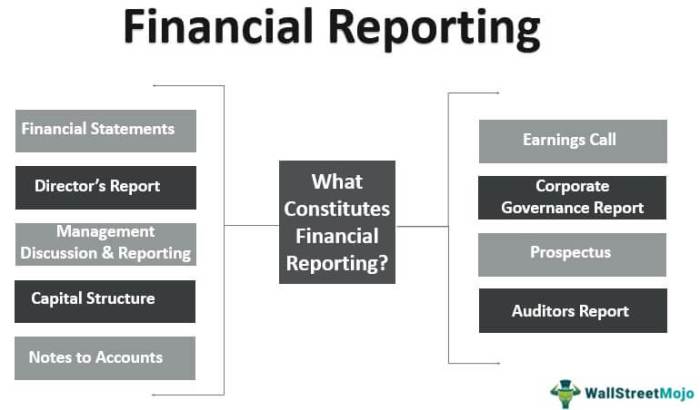
The three primary financial statements—the balance sheet, the income statement, and the cash flow statement—provide a holistic view of a company’s financial position. The balance sheet presents a snapshot of a company’s assets, liabilities, and equity at a specific point in time. This is vital for determining net asset value, a common valuation approach. The income statement details a company’s revenues, expenses, and profits over a specific period. This information is critical for assessing profitability, growth potential, and ultimately, the company’s earning power. The statement of cash flows tracks the movement of cash both into and out of the business, providing insights into liquidity and solvency, crucial factors influencing valuation. The interaction and consistency between these statements are paramount for a comprehensive valuation.
Financial Ratio Analysis in Business Valuation
Analyzing financial ratios enhances the interpretation of raw accounting data, providing valuable insights into a company’s performance and financial health. Ratios normalize financial statement data, allowing for comparisons across different companies, industries, and time periods. For instance, profitability ratios like gross profit margin and net profit margin indicate a company’s ability to generate profit from sales and overall operations respectively. Liquidity ratios, such as the current ratio and quick ratio, assess a company’s ability to meet its short-term obligations. Solvency ratios, such as the debt-to-equity ratio and times interest earned ratio, evaluate a company’s long-term financial stability and its capacity to service its debt. A comprehensive ratio analysis provides a more nuanced understanding of the business than examining individual line items in isolation. For example, a high debt-to-equity ratio might suggest a higher risk profile, potentially impacting the valuation.
Working Capital and Its Impact on Valuation
Working capital, the difference between a company’s current assets and current liabilities, represents the capital available to fund day-to-day operations. Sufficient working capital is crucial for a company’s smooth functioning. A significant shortage can indicate operational difficulties and negatively affect valuation, while excessive working capital might signal inefficient asset management. In valuation, working capital is often adjusted to reflect its optimal level, ensuring that the valuation isn’t skewed by either a surplus or deficit. For example, a company with excessive inventory might have a higher working capital than justified, leading to an overvaluation if this excess is not considered.
Adjusting Accounting Data for Non-Recurring Items
Accounting data often includes non-recurring items or unusual transactions that can distort the true picture of a company’s performance. These items, such as extraordinary gains or losses, restructuring charges, or write-downs, should be identified and adjusted to provide a more accurate reflection of the company’s normalized earnings and cash flows. This normalization process ensures that the valuation is based on sustainable performance indicators, rather than one-off events. For instance, a significant gain from the sale of an asset should be excluded when calculating normalized earnings for valuation purposes. Adjustments are crucial for providing a more realistic and sustainable valuation.
Application of Financial Statement Data in Valuation Methods
The following table illustrates how specific line items from financial statements are utilized in different valuation methods:
| Line Item | Discounted Cash Flow (DCF) | Asset-Based Valuation | Market-Based Valuation |
|---|---|---|---|
| Revenue (Income Statement) | Used to project future cash flows | Not directly used | Used in comparable company analysis |
| Net Income (Income Statement) | Used in calculating free cash flow | Not directly used | Used in comparable company analysis (P/E ratio) |
| Cash Flow from Operations (Cash Flow Statement) | Primary input for valuation | Not directly used | Can be used in comparable company analysis |
| Total Assets (Balance Sheet) | Used in calculating working capital needs | Primary input for valuation | Used in comparable company analysis (Asset-to-Market ratio) |
| Total Liabilities (Balance Sheet) | Used in calculating working capital needs and net debt | Primary input for valuation | Used in comparable company analysis (Debt-to-Equity ratio) |
| Shareholder Equity (Balance Sheet) | Used in calculating net asset value | Primary input for valuation | Used in comparable company analysis |
Specific Accounting Issues in Valuation
:max_bytes(150000):strip_icc()/accounting-valuation.asp_Final-f441df548f6444ca9db23e01b7ea9efe.png?w=700)
Accurately valuing a business requires a deep understanding of accounting principles and their potential impact on the final valuation. Several accounting issues can significantly influence the results, necessitating careful consideration and, often, adjustments. These issues stem from the inherent complexities in accounting for certain assets and the potential for inconsistencies in accounting methods across different companies or periods.
Valuing Intangible Assets
Intangible assets, such as goodwill, patents, and brand recognition, present unique challenges for valuation. Unlike tangible assets, they lack physical form and their value is derived from future expected benefits. Accounting standards, such as IFRS and US GAAP, provide guidance on the recognition and measurement of intangible assets, but their valuation remains subjective and relies heavily on estimations and projections. Goodwill, for instance, is often valued based on the excess of the purchase price over the fair value of identifiable net assets acquired in a business combination. This valuation is inherently uncertain and can fluctuate significantly depending on future performance. Intellectual property, such as patents and copyrights, can be valued using various methods, including income approaches (discounted cash flow analysis), market approaches (comparable sales), and cost approaches (replacement cost). The choice of method depends on the specific asset and the availability of reliable data. These methods often require substantial assumptions and estimations, which directly affect the final valuation.
Inventory Valuation Methods
Different methods for valuing inventory – FIFO (First-In, First-Out), LIFO (Last-In, First-Out), and weighted-average cost – can significantly impact a company’s reported net income and, consequently, its valuation. FIFO assumes that the oldest inventory is sold first, while LIFO assumes the newest inventory is sold first. The weighted-average cost method calculates the average cost of all inventory items. During periods of inflation, LIFO generally results in a lower net income and a lower valuation than FIFO because the cost of goods sold is higher, reflecting the more recent, higher costs. Conversely, in periods of deflation, LIFO would result in a higher net income and valuation. The choice of inventory valuation method, therefore, needs careful consideration in the context of the business’s specific circumstances and the overall economic environment. A consistent method should be used over time for comparability.
Impact of Depreciation Methods
The choice of depreciation method (straight-line, declining balance, units of production) directly affects the reported value of fixed assets and, consequently, the overall valuation of the business. The straight-line method allocates the cost of an asset evenly over its useful life, while the declining balance method accelerates depreciation in the early years. The units of production method bases depreciation on the actual use of the asset. The choice of method can significantly impact the reported net income and the book value of assets, thus influencing the valuation. For example, a company using the declining balance method will report lower net income and asset values in the early years compared to a company using the straight-line method, potentially leading to differences in valuation. Understanding the implications of each method is crucial for accurate valuation.
Potential Accounting Inconsistencies
Several accounting inconsistencies can distort valuation results. These include changes in accounting policies, inconsistent application of accounting standards, and the use of different accounting periods. For example, a change from LIFO to FIFO inventory valuation can significantly impact reported income and assets. Similarly, inconsistent application of revenue recognition principles can lead to inaccurate revenue figures, which directly influence valuation. Different accounting periods can also affect comparisons and lead to misinterpretations. Identifying and addressing such inconsistencies are essential for reliable valuation.
Common Accounting Adjustments Before Valuation
Before conducting a business valuation, several accounting adjustments are often necessary to ensure the financial statements accurately reflect the economic reality of the business. These adjustments aim to normalize the financial data and remove any distortions caused by accounting practices or unusual events.
- Normalization of income and expenses: Removing non-recurring items, such as extraordinary gains or losses, and adjusting for unusual fluctuations in expenses.
- Adjustments for fair value: Recasting assets and liabilities to their fair market values, particularly for assets like inventory, property, plant, and equipment.
- Adjustments for deferred taxes: Recognizing the impact of deferred tax liabilities and assets on the overall valuation.
- Capitalization of expenses: Reclassifying certain expenses as capital expenditures if they enhance the value of assets beyond their current reporting period.
- Working capital adjustments: Adjusting working capital levels to reflect the business’s optimal operating requirements.
Accounting Standards and Valuation: The Role Of Accounting In Business Valuation
Accounting standards, such as Generally Accepted Accounting Principles (GAAP) in the US and International Financial Reporting Standards (IFRS) globally, play a crucial role in business valuation. These frameworks dictate how financial information is recorded and presented, directly influencing the data used in valuation models. Consistency and transparency in financial reporting, enforced by these standards, are essential for reliable valuation.
The Role of GAAP and IFRS in Business Valuation
GAAP and IFRS provide a standardized framework for financial reporting, ensuring comparability across different companies and industries. This standardization is vital for valuation because it allows analysts to apply consistent methodologies and interpret financial statements with greater confidence. Differences in accounting practices can lead to significantly different valuation results, highlighting the importance of understanding the specific accounting standards employed by a company. For example, the choice between different depreciation methods can significantly impact a company’s reported net income and consequently its valuation. Adherence to these standards increases the reliability and credibility of the financial information used in the valuation process, thus reducing uncertainty and improving the accuracy of the valuation outcome.
Impact of Changes in Accounting Standards on Valuation Outcomes
Changes in accounting standards can have a significant impact on a company’s reported financial performance and, consequently, its valuation. The adoption of a new standard may require companies to re-evaluate their assets and liabilities, leading to adjustments in their balance sheets and income statements. These adjustments can directly affect key valuation metrics such as earnings, book value, and cash flow, potentially altering the valuation significantly. For instance, the adoption of IFRS 9 on financial instruments led to significant changes in how companies recognized and measured financial assets, impacting their reported earnings and ultimately their market valuations. Understanding the implications of such changes is critical for accurate valuation.
Specific Accounting Standards and Their Effects on Asset Valuation
Different accounting standards affect the valuation of various asset classes differently. For example, the accounting treatment of intangible assets, such as patents and trademarks, varies across standards and can significantly impact valuation. Under GAAP, the amortization of intangible assets is often required, whereas IFRS allows for impairment testing, leading to potentially different valuations. Similarly, the accounting for inventory (FIFO vs. LIFO) directly influences the cost of goods sold and, consequently, the reported profit. Different standards and methods for property, plant, and equipment (PP&E) depreciation also lead to variations in reported net income and book value, influencing valuation. The impact of these accounting treatments needs careful consideration when valuing a business.
Valuation Implications of Different Accounting Methods: FIFO vs. LIFO
The choice between First-In, First-Out (FIFO) and Last-In, First-Out (LIFO) inventory accounting methods significantly affects a company’s reported cost of goods sold (COGS) and net income, especially during periods of inflation. FIFO assumes that the oldest inventory is sold first, resulting in a lower COGS and higher net income during inflationary periods. LIFO, conversely, assumes the newest inventory is sold first, leading to a higher COGS and lower net income. This difference in reported earnings directly impacts valuation multiples based on earnings, potentially leading to different valuation conclusions. The tax implications of each method should also be considered, as LIFO often results in lower taxable income.
Influence of Key Accounting Standards on Valuation Techniques
| Accounting Standard | Valuation Technique Affected | Impact on Valuation | Example |
|---|---|---|---|
| IFRS 9 (Financial Instruments) | Discounted Cash Flow (DCF) | Changes in expected future cash flows due to revised impairment rules | Increased volatility in valuation due to changes in credit risk assessment. |
| ASC 350 (Intangible Assets) | Asset-Based Valuation | Different amortization and impairment rules impacting intangible asset value | Lower valuation of companies with significant intangible assets under stricter amortization rules. |
| ASC 105 (Revenue Recognition) | Market-Based Valuation | Changes in reported revenue affecting market multiples | Higher valuation if revenue recognition leads to higher reported revenue. |
| IAS 16 (Property, Plant, and Equipment) | Asset-Based Valuation | Different depreciation methods affecting net book value | Higher valuation if straight-line depreciation is used compared to accelerated depreciation. |
The Role of Auditing in Valuation
An independent audit plays a crucial role in bolstering the reliability of financial information used in business valuation. The auditor’s examination provides assurance to stakeholders that the financial statements fairly present the company’s financial position, results of operations, and cash flows. This assurance is paramount in valuation, as it significantly impacts the credibility and trustworthiness of the data used to determine a company’s worth.
The presence of an independent audit lends significant weight to the valuation process. Without a credible audit, the valuation relies heavily on the company’s self-reported data, which may be subject to bias or inaccuracies. An independent assessment provides a crucial layer of verification, reducing uncertainty and enhancing the confidence of investors and other stakeholders in the valuation outcome.
Audit Reports and Their Influence on Valuation Decisions
The auditor’s report, a formal statement expressing an opinion on the fairness of the financial statements, directly influences valuation decisions. An unqualified opinion (a “clean” audit report) indicates that the financial statements are free from material misstatements and are fairly presented in accordance with generally accepted accounting principles (GAAP). This lends significant credibility to the valuation process. Conversely, a qualified opinion, an adverse opinion, or a disclaimer of opinion raises concerns about the reliability of the financial statements and may necessitate adjustments or further investigation before a valuation can be finalized. These different audit opinions directly impact the valuation multiple applied and the final valuation itself. For example, a company with a qualified opinion might receive a lower valuation than a comparable company with a clean audit report.
Limitations of Audited Financial Statements in Business Valuation
Despite the value of audited financial statements, it is crucial to acknowledge their inherent limitations within the context of business valuation. Audited financial statements primarily focus on historical data, offering limited insight into future performance, which is a critical component of many valuation methods. Furthermore, the valuation process often incorporates intangible assets (like brand reputation or intellectual property) which are not always fully reflected in the audited financial statements. Finally, even audited statements can contain errors or omissions, though material misstatements are less likely due to the audit process. Therefore, the valuator needs to be aware of these limitations and consider supplementary information and valuation methodologies to account for them.
Examples of Audit-Uncovered Issues Affecting Valuation
Audits frequently uncover issues that can significantly affect valuation. For instance, an audit might reveal unrecorded liabilities, leading to a reduction in the company’s net asset value. Similarly, an audit could uncover instances of revenue recognition manipulation, inflating reported earnings and consequently, the valuation. Another common example is the discovery of fraudulent activities, which would severely impact investor confidence and significantly reduce the valuation. The detection of inconsistencies in inventory valuation methods or discrepancies in fixed asset depreciation could also affect the reported financial results and consequently, the valuation.
Auditor’s Opinion and Investor Confidence
The auditor’s opinion significantly impacts investor confidence and, consequently, the valuation. A clean audit report reassures investors that the financial information used in the valuation is reliable and credible. This confidence can translate into a higher valuation, as investors are more willing to pay a premium for a company with transparent and verifiable financial data. Conversely, a qualified or adverse opinion can significantly reduce investor confidence, leading to a lower valuation or even deterring potential investors. This effect is particularly pronounced in situations involving initial public offerings (IPOs) or mergers and acquisitions, where investor confidence plays a vital role in determining the transaction price.
Conclusive Thoughts
In conclusion, understanding the intricate relationship between accounting and business valuation is crucial for both financial professionals and business owners. The accuracy and reliability of accounting data directly impact the validity and reliability of any valuation. By meticulously analyzing financial statements, understanding the implications of different accounting methods and standards, and utilizing the insights provided by independent audits, stakeholders can arrive at a more informed and accurate assessment of a business’s true worth. This process, while complex, is fundamental to sound financial decision-making, from investment strategies to mergers and acquisitions.
Popular Questions
What are some common errors in accounting that affect business valuation?
Common errors include inconsistent application of accounting principles, misclassification of assets and liabilities, and inaccurate recording of revenue and expenses. These errors can lead to an overstatement or understatement of a company’s value.
How does inflation affect business valuation?
Inflation can significantly impact business valuation, particularly in asset-based approaches. Adjustments for inflation are often necessary to accurately reflect the current value of assets and liabilities.
What is the role of a valuation specialist?
Valuation specialists provide independent assessments of a business’s worth, considering various factors, including financial statements, market conditions, and industry benchmarks. They ensure objectivity and expertise in the valuation process.
Browse the implementation of How AI-Powered Audits Are Changing the Accounting Industry in real-world situations to understand its applications.