


The Importance of Transparency in Financial Reporting underpins the health of any financial system. This exploration delves into the core principles of transparent financial reporting, examining its benefits for stakeholders and the challenges in achieving it. We’ll investigate how technology enhances transparency and explore real-world examples of both successful and failed transparency initiatives, illustrating the critical role it plays in building trust and fostering economic stability.
From the perspective of investors seeking secure returns to the needs of creditors ensuring repayment, the demand for clear and honest financial reporting is undeniable. Understanding the nuances of transparency versus mere disclosure is crucial, as is appreciating the diverse approaches different nations adopt. This analysis will illuminate the path toward a more transparent and accountable financial landscape.
Defining Transparency in Financial Reporting
Transparency in financial reporting is paramount for fostering trust and confidence in the market. It ensures that stakeholders – investors, creditors, regulators, and the public – have access to accurate, reliable, and readily understandable information about an organization’s financial performance and position. This allows them to make informed decisions and hold the organization accountable.
Core Principles of Transparent Financial Reporting encompass readily available information, consistent application of accounting standards, and clear presentation of data without ambiguity. Accurate and complete financial statements, prepared in accordance with generally accepted accounting principles (GAAP) or International Financial Reporting Standards (IFRS), form the bedrock of transparency. This includes detailed notes and disclosures that explain the underlying assumptions, judgments, and estimations used in preparing the statements. Furthermore, timely reporting of financial results, both positive and negative, is crucial to maintaining transparency. A commitment to open communication and proactive engagement with stakeholders further strengthens transparency efforts.
Transparency versus Disclosure
While often used interchangeably, transparency and disclosure are distinct concepts. Disclosure refers to the act of revealing specific information, while transparency implies a broader commitment to open communication and accessibility of information. Disclosure focuses on the “what” – the specific data provided – whereas transparency encompasses the “how” and “why” – the methods used to gather and present the information, and the context surrounding it. For example, a company might disclose its revenue figures (disclosure), but a truly transparent company would also explain the methodology used to calculate revenue, potential risks affecting future revenue, and any significant changes in revenue recognition policies (transparency).
Examples of Practices Demonstrating a Lack of Transparency
Several practices highlight a lack of transparency. One common example is the deliberate omission of critical information, such as significant contingent liabilities or related-party transactions. Another is the use of complex and obscure accounting treatments that make it difficult for stakeholders to understand the true financial position. The practice of burying unfavorable information within lengthy and convoluted financial reports is also indicative of a lack of transparency. Finally, delaying the release of financial information or failing to respond to inquiries from stakeholders can erode trust and indicate a lack of transparency.
Levels of Transparency Across Industries
Transparency levels vary considerably across industries. Publicly traded companies, subject to stringent regulatory requirements, generally exhibit higher levels of transparency compared to privately held businesses. Industries with high regulatory scrutiny, such as finance and pharmaceuticals, tend to have more transparent reporting practices than industries with less regulation. Furthermore, the size of an organization often influences its level of transparency; larger organizations typically have more resources dedicated to compliance and disclosure. However, even within the same industry and size category, the level of transparency can differ significantly depending on a company’s commitment to ethical business practices.
Hypothetical Scenario Illustrating the Consequences of Opaque Reporting
Imagine a publicly traded technology company, “InnovateTech,” that consistently underreports its research and development (R&D) expenses to boost short-term profits. This opaque reporting initially deceives investors, leading to an artificially inflated stock price. However, when the truth eventually comes to light – perhaps through an internal whistleblower or regulatory investigation – investor confidence plummets. InnovateTech’s stock price crashes, causing significant financial losses for shareholders. The company faces substantial legal penalties, reputational damage, and difficulty attracting future investment. This scenario highlights the severe consequences of opaque reporting, demonstrating that short-term gains achieved through a lack of transparency ultimately lead to long-term losses.
Benefits of Transparent Financial Reporting for Stakeholders: The Importance Of Transparency In Financial Reporting
Transparent financial reporting offers significant advantages to a wide range of stakeholders. Open and honest communication regarding a company’s financial health fosters trust, reduces uncertainty, and ultimately contributes to the overall stability and success of the business and the wider economy. This section will explore the specific benefits for key stakeholder groups.
Impact on Investors
Investors, whether individual shareholders or large institutional funds, rely heavily on accurate and transparent financial reporting to make informed investment decisions. Transparency reduces information asymmetry, the imbalance where company insiders have more knowledge than outsiders. This improved information flow allows investors to better assess risk and potential returns, leading to more efficient capital allocation. For example, a company that consistently and clearly reports its earnings, assets, and liabilities allows investors to confidently assess its financial health and make sound investment choices, contributing to a more stable and efficient market. Reduced uncertainty, in turn, decreases volatility in the stock price, benefiting both the company and its investors.
Impact on Creditors
Creditors, including banks and bondholders, use financial statements to evaluate a company’s creditworthiness before extending loans or purchasing debt. Transparent reporting allows creditors to accurately assess the risk of default. For instance, a company with a history of transparently reporting its debt levels and cash flow will find it easier to secure loans at favorable interest rates, compared to a company with opaque financial practices. Open communication also fosters stronger relationships between the company and its creditors, facilitating smoother negotiations and reducing potential conflicts.
Impact on Employees
Employees are stakeholders who benefit from transparency in financial reporting. Open communication about the company’s financial performance builds trust and improves morale. When employees understand the company’s financial situation, they are more likely to feel secure in their jobs and more engaged in their work. For example, a company that openly shares its financial goals and progress with its employees may experience increased productivity and reduced employee turnover. Transparency can also contribute to a more collaborative and informed work environment, as employees can better understand the impact of their work on the company’s overall success.
Impact on Government and Regulatory Bodies
Governments and regulatory bodies rely on transparent financial reporting to ensure compliance with tax laws and other regulations. Accurate and complete financial information helps them monitor the financial health of businesses and the economy as a whole. Transparency facilitates effective oversight, reducing the likelihood of fraudulent activities and promoting fair competition. This, in turn, contributes to a more stable and equitable economic environment.
Benefits of Transparency for Stakeholders
| Stakeholder Group | Improved Confidence | Reduced Risk | Enhanced Relationships |
|---|---|---|---|
| Investors | Increased confidence in investment decisions | Reduced investment risk due to better information | Improved communication and trust with management |
| Creditors | Greater confidence in lending | Lower default risk assessment | Stronger and more collaborative relationships |
| Employees | Increased job security and morale | Reduced uncertainty about the company’s future | Improved communication and trust with management |
| Government | Improved regulatory oversight | Reduced risk of financial fraud and market manipulation | Facilitates effective economic policy |
Challenges and Barriers to Achieving Transparency
Implementing fully transparent financial reporting practices faces numerous obstacles, stemming from both internal company factors and external regulatory environments. These challenges often intertwine, creating a complex landscape that necessitates a multifaceted approach to overcome them. The pursuit of complete transparency is a continuous process, not a single destination.
Regulatory and Accounting Standard Limitations, The Importance of Transparency in Financial Reporting
While regulations and accounting standards aim to promote transparency, their effectiveness is often hampered by loopholes, ambiguities, and the inherent difficulty of anticipating all potential forms of financial manipulation. For example, the complexity of International Financial Reporting Standards (IFRS) can lead to varying interpretations and applications across different companies and jurisdictions, reducing comparability and potentially obscuring crucial information. Furthermore, the constant evolution of financial instruments and business models can outpace the development of relevant regulations, creating gaps that can be exploited. The enforcement of existing regulations also varies significantly across countries, further hindering the global standardization of transparency.
Costs Associated with Increased Transparency
Enhanced transparency comes at a cost. Implementing robust internal controls, investing in sophisticated accounting systems, and conducting thorough audits all require significant financial resources. Smaller companies, in particular, may struggle to bear these costs, potentially hindering their ability to compete with larger, better-resourced organizations. The cost also extends beyond direct financial expenditure; it includes the time and effort required by management and staff to comply with reporting requirements, potentially diverting resources from core business activities. This cost-benefit analysis is crucial for companies to consider when implementing new transparency initiatives.
Varied Approaches to Financial Reporting Transparency Across Countries
Different countries adopt varying approaches to financial reporting transparency, reflecting differences in legal systems, cultural norms, and levels of economic development. Countries with strong investor protection laws and robust regulatory frameworks tend to have higher levels of transparency, while others may prioritize other policy objectives, such as maintaining national competitiveness or attracting foreign investment. For instance, the US generally mandates a more detailed and comprehensive level of disclosure compared to some emerging economies where regulations may be less stringent or enforcement weaker. This inconsistency creates challenges for multinational corporations operating in multiple jurisdictions, as they must navigate a patchwork of different reporting requirements.
Potential Solutions to Overcome Barriers to Transparency
Addressing the challenges to transparency requires a multi-pronged approach involving improvements in regulations, enhanced corporate governance, and increased stakeholder engagement. A crucial step is strengthening the enforcement of existing regulations and reducing ambiguity in accounting standards to ensure consistent application. Furthermore, promoting greater corporate governance, including independent audits and strong internal controls, can significantly enhance the reliability and credibility of financial reports. Finally, fostering greater stakeholder engagement through increased dialogue and improved access to information can empower stakeholders to hold companies accountable for their reporting practices. Ultimately, a collaborative effort between regulators, companies, and stakeholders is essential to foster a culture of transparency in financial reporting.
Best Practices for Transparent Financial Reporting
Achieving truly transparent financial reporting requires a multifaceted approach that goes beyond simply complying with regulations. It involves a commitment to clear communication, readily accessible information, and a proactive approach to stakeholder engagement. By adopting best practices, companies can build trust, attract investment, and foster long-term sustainable growth.
Exemplary Companies and Their Transparent Reporting Practices
Several companies consistently demonstrate exemplary transparency in their financial reporting. For instance, Microsoft provides detailed breakdowns of its revenue streams, highlighting geographic segmentation and product categories. This allows investors to understand the drivers of its performance and assess its exposure to various market risks. Similarly, Unilever’s sustainability reports, integrated with its financial reports, offer comprehensive information on its environmental and social impact, demonstrating a holistic approach to transparency that goes beyond just financial metrics. These companies showcase the benefits of a proactive approach to transparency, showcasing a commitment to providing comprehensive and accessible information to all stakeholders.
Designing Clear and Concise Financial Statements
Effective financial statement design is crucial for transparency. Statements should be structured logically, using clear and consistent terminology. The use of visual aids, such as charts and graphs, can significantly enhance understanding, particularly for complex data. For example, instead of simply presenting a long list of numbers representing revenue growth over time, a line graph visually demonstrates the trend, making it easier to grasp at a glance. Furthermore, providing clear explanations of accounting policies and methodologies used, alongside the statements themselves, helps to avoid ambiguity and enhance understanding.
The Importance of Plain Language in Financial Communications
Using plain language in financial communications is paramount. Avoiding jargon and technical terms, or providing clear definitions when necessary, ensures that the information is accessible to a wider audience, including those without specialized financial knowledge. For instance, instead of using the term “depreciation,” a company might use “reduction in the value of assets over time,” which is easier to understand for a non-financial professional. This approach fosters greater trust and engagement from all stakeholders, enabling informed decision-making.
Communicating Complex Financial Information to Diverse Audiences
Effectively communicating complex financial information requires tailoring the message to the specific audience. A detailed technical report may be appropriate for financial analysts, but a simpler summary with key highlights would be more effective for the general public. Using various communication channels, such as annual reports, investor presentations, and social media, can help reach a wider audience. Furthermore, interactive tools, such as online dashboards, can provide users with a more engaging and personalized experience, allowing them to explore the information at their own pace and focus on areas of specific interest.
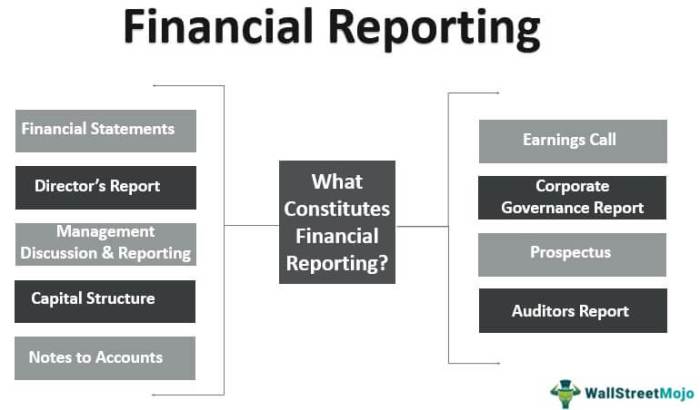
Essential Elements of a Transparent Financial Report
A transparent financial report should include several key elements. These are vital to ensuring that the report is comprehensive, reliable, and readily understood by all stakeholders.
- A clear and concise overview of the company’s financial performance.
- Detailed explanations of accounting policies and methodologies used.
- A comprehensive breakdown of revenue streams and expenses.
- Information on significant risks and uncertainties facing the company.
- Key performance indicators (KPIs) that are relevant to the company’s business model.
- Data presented in a clear and easy-to-understand format, including visual aids where appropriate.
- Contact information for inquiries and clarification.
- Assurance from an independent auditor, providing verification and validation of the information presented.
The Role of Technology in Enhancing Transparency

Technology plays a crucial role in bolstering transparency within financial reporting. Its impact spans from enhancing the accessibility and accuracy of data to facilitating the detection of irregularities and improving the security of transactions. This ultimately leads to greater trust and confidence in the financial system.
The application of technology significantly improves the speed and ease with which financial data can be accessed and analyzed. Automated data entry and processing reduce the likelihood of human error, while readily available online portals allow stakeholders to access information quickly and efficiently. This increased accessibility empowers stakeholders to make informed decisions, fostering greater accountability and responsibility within organizations.
Find out further about the benefits of The Influence of Cultural Differences on International Accounting Ethics that can provide significant benefits.
Data Analytics for Enhanced Transparency and Irregularity Detection
Data analytics offers powerful tools for enhancing transparency and detecting potential irregularities within financial reporting. Advanced algorithms can identify anomalies and patterns that might otherwise go unnoticed, flagging potentially fraudulent activities or inconsistencies. For instance, machine learning models can be trained to recognize unusual spending patterns or discrepancies between reported revenue and actual cash flow, alerting auditors and management to potential red flags. This proactive approach to risk management contributes to more accurate and reliable financial statements.
Blockchain Technology for Secure and Traceable Financial Transactions
Blockchain technology, with its decentralized and immutable ledger system, offers a significant advancement in enhancing the security and traceability of financial transactions. Each transaction is recorded on multiple nodes, making it extremely difficult to alter or delete data. This inherent security feature significantly reduces the risk of fraud and manipulation, while the transparent nature of the blockchain allows for easy tracking of funds and assets throughout the entire transaction lifecycle. Imagine a supply chain where each step, from raw materials to final product, is recorded on a blockchain, offering complete transparency into the origin and handling of goods, directly impacting financial reporting related to inventory and cost of goods sold. This improved traceability can also assist in compliance efforts.
Data Visualization for Improved Understanding of Financial Information
Effective communication of financial information is crucial for transparency. Data visualization techniques, such as interactive dashboards, charts, and graphs, transform complex financial data into easily understandable formats. Instead of relying solely on dense numerical reports, stakeholders can quickly grasp key performance indicators, trends, and financial health through visually appealing representations. For example, a simple bar chart illustrating revenue growth over several quarters is far more readily understood than a lengthy table of figures. This improved comprehension fosters greater engagement and empowers stakeholders to participate more effectively in decision-making processes.
A Hypothetical System for Enhanced Transparency in the Healthcare Industry
Consider a hypothetical system for enhancing transparency in the healthcare industry, a sector often characterized by complex billing and reimbursement processes. This system would leverage blockchain technology to securely record all patient medical records, billing information, and insurance claims. Data analytics would be employed to identify potential overbilling, fraud, and discrepancies in coding practices. A user-friendly dashboard, incorporating data visualization techniques, would then provide patients and insurers with readily accessible information regarding their medical expenses and claims processing. This system would not only enhance transparency but also contribute to improved efficiency and cost reduction within the healthcare system. Furthermore, real-time data updates would facilitate quicker dispute resolutions and improved regulatory compliance.
Case Studies
This section examines two contrasting case studies: one demonstrating exemplary transparency in financial reporting and another highlighting the detrimental effects of opacity. Analyzing these examples will underscore the crucial link between transparency and financial success, or conversely, failure.
Costco Wholesale Corporation: A Model of Transparency
Costco, a multinational corporation specializing in bulk sales, consistently ranks highly for its transparent financial reporting practices. Their annual reports are comprehensive, providing detailed breakdowns of revenue streams, operating expenses, and profit margins. They proactively disclose information regarding their supply chain, ethical sourcing practices, and employee compensation, fostering trust among investors and consumers. This commitment to openness is reflected in their strong investor relations, stable stock performance, and positive brand reputation. Their transparency extends beyond mandatory disclosures, actively engaging with stakeholders through detailed online resources and clear communication. This proactive approach not only mitigates risk but also cultivates a strong sense of accountability and reinforces their commitment to long-term sustainability. The consistent and comprehensive nature of their disclosures allows investors to accurately assess the company’s financial health and make informed decisions.
Enron Corporation: A Case Study in Opacity and Collapse
In stark contrast, Enron’s history serves as a cautionary tale of the devastating consequences of financial opacity. Enron, once a prominent energy company, employed sophisticated accounting techniques, including the use of special purpose entities (SPEs), to mask substantial debt and inflate profits. These actions deliberately obscured the company’s true financial position from investors and regulators. The lack of transparency fostered an environment of distrust, ultimately leading to the company’s bankruptcy and significant losses for investors and employees. Specific examples include the misrepresentation of revenue and the concealment of billions of dollars in debt through off-balance-sheet accounting. The consequences included massive job losses, eroded investor confidence, and a significant blow to the reputation of the accounting profession. The Enron scandal triggered major regulatory reforms, including the Sarbanes-Oxley Act, aimed at enhancing corporate governance and transparency.
Comparative Analysis of Costco and Enron
Costco’s proactive and comprehensive approach to financial reporting stands in sharp contrast to Enron’s deliberate obfuscation. Costco’s transparency fostered investor confidence, resulting in stable stock performance and a strong brand reputation. Conversely, Enron’s opacity cultivated an environment of distrust, culminating in bankruptcy and significant financial losses. This comparison highlights the direct correlation between transparency in financial reporting and long-term financial health and stability.
Visual Representation of Financial Performance
A line graph comparing Costco and Enron’s stock prices over a ten-year period (e.g., 1990-2000 for Enron and a comparable period for Costco) would visually illustrate the contrasting trajectories. Costco’s line would likely show a steady, upward trend reflecting consistent growth and stability, while Enron’s line would demonstrate a period of rapid growth followed by a dramatic and precipitous decline culminating in zero value at bankruptcy. This visual representation would powerfully underscore the long-term benefits of transparency versus the catastrophic consequences of opacity.
End of Discussion
Ultimately, the Importance of Transparency in Financial Reporting cannot be overstated. While challenges exist in implementing and maintaining complete transparency, the benefits—increased investor confidence, stronger creditor relationships, improved employee morale, and a more stable economic environment—far outweigh the costs. By embracing best practices, leveraging technology, and fostering a culture of accountability, organizations can cultivate a transparent financial reporting system that benefits all stakeholders and contributes to a healthier global economy.
Common Queries
What are some common red flags indicating a lack of transparency in financial reporting?
Inconsistent reporting, vague language, lack of detailed explanations, missing information, and unexplained discrepancies in financial data are all red flags.
How can small businesses improve transparency in their financial reporting?
Small businesses can utilize simple accounting software, maintain meticulous records, and engage a qualified accountant to ensure clear and accurate financial statements.
What is the role of whistleblowers in promoting financial transparency?
Whistleblowers play a vital role by bringing instances of financial misconduct or opacity to light, triggering investigations and potentially preventing further harm.
How does transparency affect a company’s reputation?
Transparent financial reporting enhances a company’s reputation, building trust with investors, creditors, and the public, leading to greater stability and opportunities.