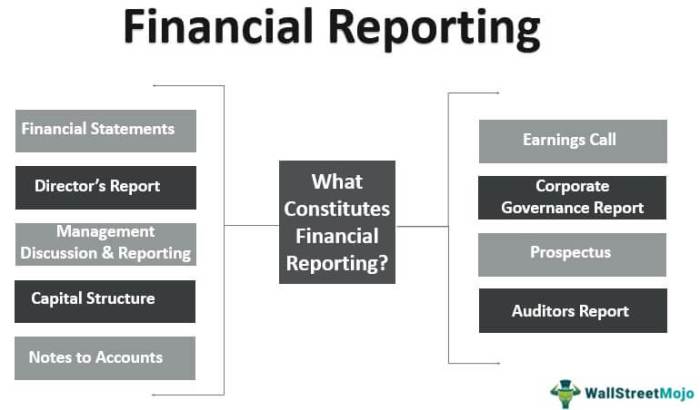


The Importance of Compliance in Financial Reporting is paramount for maintaining the integrity of financial markets and fostering trust among stakeholders. Accurate and reliable financial reporting is not merely a legal requirement; it’s the cornerstone of sound financial management and sustainable economic growth. This exploration delves into the core principles, regulatory frameworks, and practical implications of compliance, examining its impact on various stakeholders and outlining strategies for ensuring adherence to established standards.
From understanding the intricacies of Generally Accepted Accounting Principles (GAAP) and International Financial Reporting Standards (IFRS) to implementing robust internal controls and navigating the complexities of audits, this discussion provides a comprehensive overview of the multifaceted nature of financial reporting compliance. We will also address the emerging challenges posed by technological advancements and the crucial role of ethical conduct in maintaining financial integrity.
Defining Financial Reporting Compliance

Financial reporting compliance refers to the adherence to established accounting standards and legal regulations when preparing and presenting a company’s financial statements. Accurate and reliable financial reporting is crucial for maintaining investor confidence, attracting capital, and ensuring the overall health and stability of the financial system. Non-compliance, on the other hand, can lead to significant legal and financial repercussions.
Financial reporting must be accurate and reliable to provide a true and fair view of a company’s financial position, performance, and cash flows. This requires the application of consistent accounting principles, proper documentation of transactions, and the absence of intentional misrepresentation or omission of material information. Key principles include completeness, accuracy, timeliness, and understandability. Information must be comprehensive, free from error, presented in a timely manner, and easily interpreted by users.
Legal and Regulatory Frameworks
Several legal and regulatory frameworks govern financial reporting, ensuring consistency and comparability across different companies and jurisdictions. Generally Accepted Accounting Principles (GAAP) are the established accounting standards in the United States, while International Financial Reporting Standards (IFRS) are used internationally by many countries. These frameworks provide detailed guidance on accounting treatments for various transactions and events, promoting transparency and accountability. Securities laws and regulations, such as the Sarbanes-Oxley Act (SOX) in the U.S., further enhance the regulatory environment, imposing stricter requirements on corporate governance and internal controls. Failure to comply with these frameworks can result in severe penalties.
Examples of Non-Compliance and Consequences
Non-compliance with financial reporting regulations can manifest in various ways, ranging from unintentional errors to deliberate fraud. Examples include: the improper recognition of revenue, the misclassification of assets or liabilities, the failure to disclose material information, and the manipulation of financial statements to inflate earnings or hide losses. Consequences can range from financial penalties and reputational damage to criminal prosecution and imprisonment. For instance, Enron’s accounting scandal, involving the use of special purpose entities to hide debt, resulted in the company’s bankruptcy and criminal convictions for several executives. Similarly, WorldCom’s fraudulent accounting practices, which involved improperly capitalizing expenses, led to massive losses for investors and the company’s collapse.
Penalties for Financial Reporting Violations
| Violation Type | Penalty Type | Example Penalty Amount (USD) | Other Consequences |
|---|---|---|---|
| Financial Statement Fraud | Fines, Imprisonment | Millions to billions (depending on severity and impact) | Reputational damage, delisting from stock exchanges, civil lawsuits |
| Insider Trading | Fines, Imprisonment | Hundreds of thousands to millions | Loss of job, ban from securities markets |
| Non-compliance with GAAP/IFRS | Fines, Restatement of financial statements | Thousands to millions (depending on the materiality of the misstatement) | Reputational damage, investor distrust |
| Failure to disclose material information | Fines, Civil lawsuits | Varies widely depending on the nature and impact of the undisclosed information | Reputational damage, loss of investor confidence |
The Role of Internal Controls in Compliance
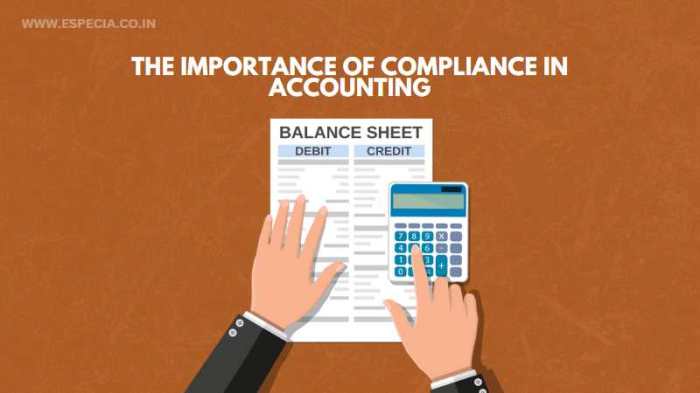
Robust internal controls are the bedrock of reliable financial reporting and compliance. They act as a safeguard against errors, fraud, and ultimately, non-compliance with accounting standards and regulations. A well-designed and effectively implemented system ensures accuracy, reliability, and timeliness in financial reporting, fostering trust among stakeholders.
Effective internal controls minimize the risk of material misstatements in financial statements. They provide a framework for managing risks associated with financial reporting, ranging from human error to intentional fraud. This, in turn, strengthens the credibility and integrity of the organization’s financial information, benefiting investors, creditors, and regulatory bodies alike.
Design and Implementation of Effective Internal Control Systems
The design and implementation of an effective internal control system requires a comprehensive approach. It should align with the organization’s overall strategic objectives and risk profile. Key elements include establishing clear lines of authority and responsibility, implementing segregation of duties, and designing robust authorization procedures. Regular monitoring and evaluation are critical to ensure the system remains effective and adapts to changing circumstances. For example, a company might implement a system of checks and balances where different individuals are responsible for authorizing transactions, recording them, and reconciling bank statements. This prevents any single individual from having complete control over a process, reducing the risk of fraud or error.
Common Weaknesses in Internal Control Systems
Several common weaknesses can undermine the effectiveness of internal control systems. A lack of segregation of duties, inadequate authorization procedures, and insufficient oversight are frequent culprits. Furthermore, ineffective monitoring and a lack of timely updates to the system in response to changes in the business environment can also create vulnerabilities. For instance, a small business might lack the resources to implement sophisticated internal controls, leading to a higher risk of errors or fraud. Similarly, a company that experiences rapid growth might fail to adapt its internal control system to the changing demands of its larger scale operations, creating new vulnerabilities.
Best Practices for Maintaining and Regularly Testing Internal Controls
Maintaining and regularly testing internal controls is crucial for ensuring their ongoing effectiveness. Regular reviews, including both management and independent audits, help identify weaknesses and areas for improvement. These reviews should assess the design and operating effectiveness of controls. For example, a company might conduct regular reconciliations of bank statements to identify any discrepancies. They might also perform surprise audits of specific departments or processes to ensure controls are being followed consistently. Implementing a strong system of documentation, including policies and procedures, facilitates understanding and consistent application of controls. This documentation serves as a guide for employees and provides a record for auditors. Finally, incorporating technology can enhance efficiency and effectiveness in monitoring and testing internal controls. For instance, the use of data analytics can help identify anomalies or unusual patterns in financial data that might indicate a control weakness.
Ensuring Compliance Through Audits and Reviews
Maintaining accurate and reliable financial reporting requires a robust system of checks and balances. Independent audits and internal reviews play a crucial role in ensuring compliance with relevant regulations and standards, fostering trust among stakeholders, and mitigating financial risks. These processes provide an objective assessment of the financial health and reporting practices of an organization.
The Role of Independent Audits in Verifying Financial Statement Accuracy
Independent audits provide an objective examination of a company’s financial statements. Performed by external auditors, these audits aim to offer reasonable assurance to stakeholders that the financial statements are free from material misstatement, whether due to error or fraud. This assurance is critical for investors, creditors, and other stakeholders who rely on the accuracy of the financial information for decision-making. The auditors follow established auditing standards and guidelines, employing various techniques, including testing internal controls and examining supporting documentation, to form their opinion. A clean audit opinion indicates that the financial statements fairly present the financial position and performance of the company in accordance with the applicable accounting framework.
Types of Audits and Their Respective Scopes
Several types of audits exist, each with a specific scope and objective. Financial statement audits are the most common, focusing on the overall accuracy and fairness of the financial statements. Compliance audits examine adherence to specific laws, regulations, and internal policies. Operational audits assess the effectiveness and efficiency of an organization’s operations, while internal control audits evaluate the design and effectiveness of internal controls in preventing and detecting fraud and errors. The scope of each audit is determined by its objectives and the specific risks involved. For example, a company facing increased regulatory scrutiny might undergo a more extensive compliance audit than a company with a strong compliance history.
Internal Review and Self-Assessment Processes
Internal review and self-assessment processes are crucial components of a strong compliance framework. Internal review involves a systematic examination of an organization’s financial reporting processes and internal controls by its own employees. This process allows for early identification of potential weaknesses and allows for corrective action before they escalate into material misstatements. Self-assessment, often involving questionnaires and checklists, allows employees to evaluate their own compliance with relevant policies and procedures. These self-assessments help to promote awareness of compliance requirements and encourage a culture of accountability. Regular internal reviews and self-assessments, coupled with appropriate remediation efforts, are vital for strengthening the overall effectiveness of internal controls.
Comparison of External and Internal Auditor Responsibilities
External and internal auditors both play vital roles in ensuring financial reporting compliance, but their responsibilities differ significantly. External auditors are independent of the organization they audit and provide an objective opinion on the fairness of the financial statements. Their primary responsibility is to stakeholders outside the organization. Internal auditors, on the other hand, are employees of the organization and report to management. They focus on evaluating the effectiveness of internal controls and identifying areas for improvement. While both conduct audits, external auditors provide an independent assurance to external users, while internal auditors provide assurance to management and the board. Their findings and recommendations serve different purposes, with external auditors focusing on public reporting and internal auditors focusing on internal improvement and risk management.
Emerging Trends and Challenges in Compliance
The landscape of financial reporting compliance is constantly evolving, driven by factors such as globalization, technological advancements, and increased regulatory scrutiny. Understanding these emerging trends and the challenges they present is crucial for organizations aiming to maintain robust and compliant financial reporting practices. Failure to adapt can lead to significant financial penalties, reputational damage, and erosion of investor trust.
The increasing complexity of financial regulations presents a significant hurdle for businesses of all sizes. New regulations are frequently introduced, often with overlapping or conflicting requirements across jurisdictions. This complexity necessitates a sophisticated understanding of applicable rules and a robust compliance framework capable of adapting to these changes. Furthermore, the sheer volume of regulatory documentation can be overwhelming, making it difficult for organizations to stay abreast of all relevant updates. This complexity extends beyond simply understanding the rules; it also impacts the resources required for compliance, including personnel, technology, and time.
Increasing Complexity of Financial Regulations
Navigating the intricate web of international financial reporting standards (IFRS), generally accepted accounting principles (GAAP), and other regionally specific regulations requires specialized expertise and robust internal processes. For example, the implementation of IFRS 17 (Insurance Contracts) significantly altered the accounting treatment of insurance contracts, demanding substantial adjustments to systems and processes for insurance companies worldwide. The ongoing evolution of regulations related to environmental, social, and governance (ESG) factors also adds another layer of complexity, requiring companies to report on their sustainability performance, often using non-financial metrics that are not yet standardized across industries. This necessitates the development of new internal reporting mechanisms and the adoption of sophisticated data collection and analysis techniques.
Challenges Posed by New Technologies and Data Analytics
The rapid adoption of new technologies, particularly in areas like artificial intelligence (AI), machine learning (ML), and big data analytics, presents both opportunities and challenges for financial reporting compliance. While these technologies can automate compliance processes and enhance data analysis, they also introduce new risks. For example, the use of AI in automated trading systems necessitates robust controls to prevent algorithmic errors or manipulation. The increasing reliance on cloud-based systems also raises concerns about data security and access control, which are vital components of maintaining compliance. Furthermore, the sheer volume of data generated by these technologies can overwhelm traditional compliance systems, demanding new approaches to data governance and management.
Strategies for Adapting to Evolving Compliance Requirements
Proactive adaptation is key to navigating the ever-changing compliance landscape. This involves investing in robust compliance technology, including specialized software for regulatory updates and automated reporting. Building a strong culture of compliance within the organization is also paramount. This involves providing regular training to employees on relevant regulations and best practices, and establishing clear lines of accountability. Engaging with external experts, such as legal and accounting professionals, can provide valuable insights and support in interpreting and implementing complex regulations. Furthermore, organizations should develop a flexible and agile compliance framework that allows for quick adjustments to changes in regulations and technology. This framework should incorporate regular risk assessments and ongoing monitoring to identify potential compliance gaps.
Technology and Compliance Interplay, The Importance of Compliance in Financial Reporting
Imagine a visual representation: a central hub labeled “Financial Reporting” with interconnected spokes radiating outward. One spoke represents “Regulatory Frameworks” (IFRS, GAAP, etc.), another “Internal Controls” (segregation of duties, authorization processes), another “Data Management” (data storage, access controls, data analytics), and finally, a prominent spoke labelled “Technology.” This “Technology” spoke is further divided into sub-sections: “Automation” (robotic process automation for reporting), “AI/ML” (for fraud detection and risk assessment), and “Cloud Computing” (secure data storage and access). Arrows connect each spoke to the central hub, illustrating the dependence of financial reporting on each element. The arrows also connect the “Technology” spoke to the other spokes, showing how technology facilitates compliance across all areas: automation streamlines internal controls, AI/ML enhances risk assessment within regulatory frameworks, and cloud computing ensures secure data management. The thickness of the arrows could visually represent the level of integration and importance of each technological component in achieving compliance. This visualization clearly shows the synergistic relationship between technology and effective financial reporting compliance.
The Importance of Ethical Conduct in Financial Reporting: The Importance Of Compliance In Financial Reporting
Ethical conduct forms the bedrock of trustworthy financial reporting. Without a strong ethical foundation, the accuracy and reliability of financial statements are compromised, potentially leading to significant consequences for businesses, investors, and the broader economy. This section explores the crucial role of ethics in financial reporting, examining the responsibilities of professionals, common ethical dilemmas, the importance of organizational culture, and the development of a robust code of conduct.
Ethical Responsibilities of Financial Professionals
Financial professionals bear a significant responsibility to uphold the highest ethical standards in their work. This includes acting with integrity, objectivity, and independence, ensuring the fair presentation of financial information, and adhering to relevant professional codes of conduct. They must prioritize the interests of stakeholders, including investors, creditors, and the public, over personal gain or the interests of their employers when these conflict. This requires a commitment to transparency, accuracy, and due diligence in all financial reporting activities. Failure to meet these responsibilities can lead to severe penalties, including fines, legal action, and reputational damage.
Examples of Ethical Dilemmas in Financial Reporting
Ethical dilemmas in financial reporting are common and often complex. One example is the pressure to meet unrealistic financial targets, which can tempt professionals to manipulate financial data or engage in aggressive accounting practices. Another common dilemma involves conflicts of interest, such as when a financial professional has a personal stake in the outcome of a financial reporting decision. For example, a financial analyst might be pressured to provide a positive outlook on a company’s performance despite having evidence to the contrary if they have a personal investment in that company. The decision to disclose or withhold potentially damaging information, such as material weaknesses in internal controls, also presents a significant ethical challenge. Navigating these dilemmas requires careful consideration, adherence to professional guidelines, and, if necessary, seeking advice from ethical committees or legal counsel.
The Importance of a Strong Ethical Culture Within Organizations
A strong ethical culture is paramount to ensuring compliance with financial reporting standards and preventing ethical misconduct. This culture should be fostered from the top down, with leadership setting a clear example of ethical behavior and promoting a culture of transparency, accountability, and integrity. Organizations should implement robust ethics training programs for all employees, particularly those involved in financial reporting, and establish clear mechanisms for reporting ethical violations. An effective whistleblower protection program is essential to encourage employees to report misconduct without fear of retaliation. Regular assessments of ethical risk and compliance should also be conducted to identify and address potential vulnerabilities.
A Code of Conduct for Financial Reporting Professionals
A comprehensive code of conduct for financial reporting professionals should encompass the following key principles:
- Integrity: Acting honestly and ethically in all financial reporting activities.
- Objectivity: Maintaining impartiality and avoiding conflicts of interest.
- Due Diligence: Performing thorough research and analysis before making financial reporting decisions.
- Confidentiality: Protecting sensitive financial information.
- Professional Competence: Maintaining the necessary skills and knowledge to perform financial reporting duties effectively.
- Compliance: Adhering to all relevant laws, regulations, and professional standards.
- Transparency: Disclosing all relevant information clearly and accurately.
This code should be widely disseminated, regularly reviewed, and enforced consistently to ensure its effectiveness in promoting ethical conduct within the financial reporting profession. Regular training and updates are crucial to keep professionals abreast of changes in regulations and best practices.
Final Review
Ultimately, compliance in financial reporting is not just about avoiding penalties; it’s about building a foundation of trust and transparency. By adhering to established standards, implementing robust internal controls, and fostering a strong ethical culture, organizations can safeguard their financial health, protect stakeholder interests, and contribute to a more stable and reliable financial ecosystem. The ongoing evolution of regulations and technologies necessitates continuous adaptation and a commitment to best practices, ensuring that financial reporting remains a credible reflection of an organization’s true financial position.
Questions Often Asked
What happens if a company intentionally misrepresents its financial information?
Intentional misrepresentation can lead to severe penalties, including hefty fines, legal action, reputational damage, and even criminal charges against responsible individuals.
How often should internal controls be reviewed and updated?
Internal controls should be reviewed and updated regularly, ideally at least annually, or more frequently if significant changes occur within the organization or its operating environment.
What is the role of a whistleblower in ensuring compliance?
Whistleblowers play a crucial role by reporting suspected violations. Many jurisdictions offer legal protections to whistleblowers to encourage reporting without fear of retaliation.
Are there any specific resources available for small businesses to help them understand and comply with financial reporting regulations?
Yes, many regulatory bodies and professional organizations offer resources, guides, and training specifically tailored to the needs of small and medium-sized enterprises (SMEs).
Find out about how The Importance of Budgeting in Business Accounting can deliver the best answers for your issues.