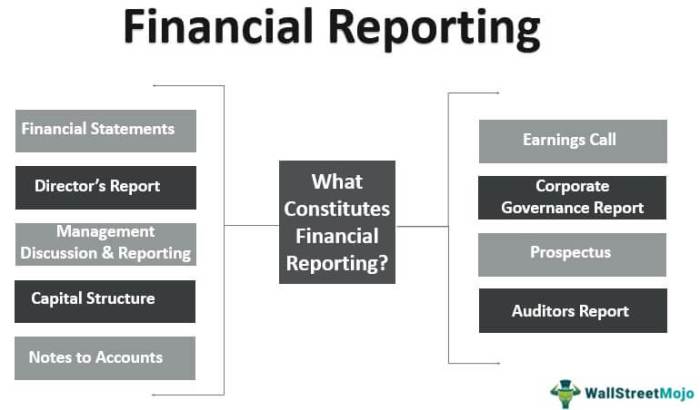



The Impact of Global Economic Recessions on Corporate Financial Statements is a critical area of study for investors, analysts, and business leaders alike. Economic downturns significantly reshape the financial landscape, forcing companies to adapt and strategize for survival. This exploration delves into the multifaceted effects of recessions, examining their influence on revenue streams, cost structures, profitability, liquidity, asset valuations, and financing options. Understanding these impacts is crucial for navigating economic uncertainty and making informed decisions.
From analyzing shifts in revenue recognition and cost of goods sold to evaluating the performance of key profitability and liquidity ratios, we will examine how companies across various sectors respond to the challenges presented by global recessions. The analysis will include case studies illustrating successful and unsuccessful strategies, highlighting the importance of proactive financial management and robust internal controls during periods of economic stress.
Impact on Revenue Recognition
Global economic recessions significantly impact corporate revenue recognition, leading to observable shifts in financial statements. Understanding these trends is crucial for investors, analysts, and businesses themselves to navigate periods of economic downturn. The effects are multifaceted, stemming from decreased consumer spending and reduced business investment, ultimately impacting a company’s bottom line.
Decreased consumer spending and reduced business investment directly affect a company’s revenue streams. During recessions, consumers tend to reduce discretionary spending, focusing on essential goods and services. This directly impacts businesses reliant on consumer demand, such as retail, hospitality, and entertainment. Simultaneously, businesses postpone or cancel capital expenditures and expansion plans, reducing demand for goods and services from other businesses, affecting companies in sectors like manufacturing and construction. This ripple effect can cascade through the economy, impacting even seemingly recession-resistant sectors.
Industries Vulnerable to Revenue Decline During Recessions
The following table illustrates industries particularly vulnerable to revenue decline during economic downturns, along with examples and potential mitigation strategies. The severity of the impact varies depending on factors such as the industry’s specific market segment, the company’s financial health, and the overall duration and depth of the recession.
| Industry | Revenue Impact | Specific Example | Mitigation Strategies |
|---|---|---|---|
| Automotive | Significant decline in vehicle sales due to reduced consumer spending and business investment. | General Motors experienced substantial revenue drops during the 2008-2009 recession, necessitating government bailouts. | Focus on cost reduction, diversification into other market segments (e.g., electric vehicles), and strategic partnerships. |
| Tourism and Hospitality | Sharp decrease in travel and leisure spending due to reduced consumer confidence and travel restrictions. | Many hotels and airlines faced severe revenue losses during the COVID-19 pandemic, which triggered a global recession. | Implement cost-cutting measures, develop flexible pricing strategies, and invest in digital marketing to reach potential customers. |
| Retail (Discretionary Goods) | Substantial drop in sales of non-essential goods due to decreased consumer spending. | Department stores like Macy’s have historically seen significant revenue declines during recessions. | Shift towards e-commerce, focus on private-label brands, and implement loyalty programs to retain customers. |
| Construction | Reduced demand for new construction projects due to decreased business investment and consumer confidence. | Construction companies experienced significant project cancellations and delays during the 2008-2009 recession. | Diversify project portfolio, focus on public sector projects, and explore alternative financing options. |
Changes in Cost of Goods Sold (COGS) and Operating Expenses
Economic downturns significantly impact corporate profitability, forcing companies to re-evaluate their cost structures. This section examines how changes in cost of goods sold (COGS) and operating expenses manifest during recessions and the strategies employed to mitigate their effects. The strategies used vary significantly depending on the size and sector of the company.
During economic contractions, businesses experience a decline in demand, leading to lower sales volumes. This directly impacts COGS, as companies may be left with excess inventory or face pressure to reduce production. Simultaneously, revenue reduction necessitates careful management of operating expenses to maintain profitability or at least minimize losses. The responses to these pressures vary considerably between large corporations and SMEs.
Explore the different advantages of How Standardizing ESG Reporting Improves Global Investor Confidence that can change the way you view this issue.
Strategies for Managing COGS During Economic Downturns
Corporations implement various strategies to control COGS during economic downturns. These often involve optimizing supply chains, renegotiating contracts with suppliers, and streamlining production processes. For example, a manufacturing company might negotiate lower prices for raw materials by leveraging its buying power or explore alternative, less expensive suppliers. They might also invest in technology to improve efficiency and reduce waste in the production process. Another common approach is to reduce inventory levels by offering discounts or promotions to clear out excess stock. This minimizes storage costs and reduces the risk of obsolescence. Furthermore, some companies might temporarily halt production of less profitable products to focus resources on more successful lines.
Adjustments to Operating Expenses During Economic Downturns
Companies often undertake significant adjustments to their operating expenses in response to reduced revenue. Marketing budgets are frequently cut back, as companies prioritize cost-efficiency over expansive marketing campaigns. Research and development (R&D) spending might also be reduced, although this can be a risky strategy in the long term, potentially hindering future innovation and competitiveness. Administrative expenses are also targeted for reduction, often through measures like hiring freezes, voluntary severance packages, and streamlining administrative processes. Companies might also renegotiate lease agreements for office space or consolidate facilities to lower overhead costs. Travel and entertainment budgets are often significantly curtailed.
Cost-Cutting Measures: Large Corporations vs. SMEs
Large corporations typically have more resources and options available for cost-cutting than SMEs. They might be able to negotiate better terms with suppliers due to their greater purchasing power. They also possess more financial flexibility, allowing them to weather economic downturns more effectively through access to credit and larger financial reserves. Layoffs, while a painful measure, are a more common occurrence in large corporations due to their larger workforce.
In contrast, SMEs often face greater challenges during economic downturns. Their smaller size and limited resources restrict their options for cost-cutting. They may lack the negotiating power to secure better terms with suppliers and may find it harder to access credit. Layoffs can be particularly devastating to SMEs, potentially threatening the viability of the entire business. SMEs might rely more heavily on strategies like reducing owner compensation or seeking government support programs. They may also be more vulnerable to cash flow issues and might need to implement more drastic measures to survive, such as selling assets or seeking merger or acquisition opportunities.
Analysis of Profitability Ratios
Recessions significantly impact a company’s profitability, making the analysis of key profitability ratios crucial for understanding a firm’s financial health and resilience during economic downturns. These ratios provide insights into a company’s ability to generate profits relative to its revenue, costs, and assets. Analyzing these changes helps investors and stakeholders assess the effectiveness of a company’s cost management strategies and its overall performance under pressure.
Profitability ratios offer a vital perspective on how effectively a company translates its sales into profits and manages its resources to achieve sustainable growth. A decline in these ratios during a recession doesn’t automatically signal impending failure; rather, it provides a benchmark against which to measure a company’s response to the economic climate. A thorough analysis allows for a more nuanced understanding of a company’s operational efficiency and its ability to navigate challenging economic periods.
Key Profitability Ratios and Their Recessionary Behavior
The following profitability ratios are particularly insightful during economic downturns: gross profit margin, net profit margin, and return on assets (ROA). These ratios offer a comprehensive view of a company’s profit generation and resource utilization efficiency. Changes in these ratios directly reflect a company’s capacity to manage costs and preserve profitability even amidst economic adversity.
| Ratio Name | Typical Change During Recession | Reasons for Change | Example Company Illustration |
|---|---|---|---|
| Gross Profit Margin (Gross Profit / Revenue) | Decrease | Reduced sales volume, increased input costs (raw materials, labor), pressure to maintain pricing competitiveness. | During the 2008 recession, many automobile manufacturers experienced a decline in gross profit margin due to falling sales and rising steel prices. For example, General Motors saw a significant drop as consumer demand plummeted and inventory costs increased. |
| Net Profit Margin (Net Profit / Revenue) | Decrease | Lower gross profit margins, increased operating expenses (e.g., marketing, administrative costs), potential write-downs of assets, and higher interest expenses due to increased borrowing. | The airline industry during the COVID-19 pandemic saw a drastic decrease in net profit margins due to severely reduced passenger numbers, increased operating costs, and government aid often coming with strings attached, reducing the bottom line. Companies like Delta Air Lines faced substantial losses. |
| Return on Assets (Net Profit / Total Assets) | Decrease | Lower net profit coupled with potentially increased asset base (e.g., inventory buildup due to decreased sales). This indicates less efficient utilization of assets in generating profits. | Retail companies during the 2008 recession often saw a decrease in ROA as they struggled to sell excess inventory and faced declining profits, despite possibly holding onto more assets than before. Macy’s, for instance, experienced such a decrease due to lower sales and higher inventory levels. |
Impact on Liquidity and Solvency
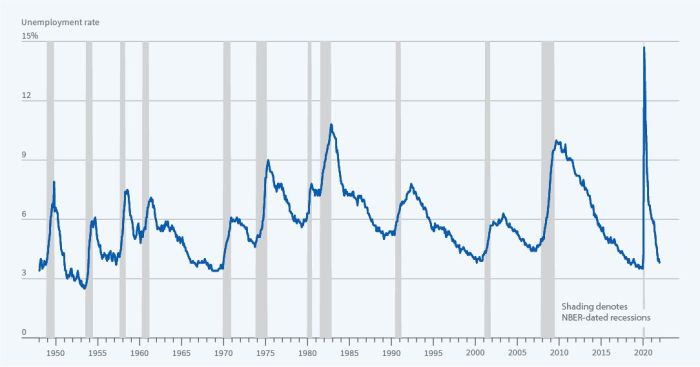
Global economic recessions significantly impact a company’s ability to manage its short-term and long-term financial obligations, affecting both its liquidity and solvency. During a recession, reduced consumer spending and investment lead to decreased sales and revenue, impacting a firm’s cash flow and ability to meet its financial commitments. Simultaneously, increased credit risk and tighter lending conditions can exacerbate financial difficulties.
Recessions exert pressure on key financial ratios that measure a company’s liquidity and solvency. Liquidity ratios, such as the current ratio (current assets/current liabilities) and the quick ratio ((current assets – inventory)/current liabilities), indicate a company’s ability to meet its short-term obligations. Solvency ratios, such as the debt-to-equity ratio (total debt/total equity), reflect a company’s long-term financial stability and its ability to meet its long-term debt obligations. A decline in these ratios during a recession signals increasing financial vulnerability.
Changes in Liquidity Ratios During Recessions
A decrease in sales during a recession directly impacts a company’s cash inflows. Simultaneously, businesses may find it more challenging to collect receivables from customers facing their own financial strains. This reduction in cash flow can lead to a lower current ratio and quick ratio, indicating a diminished ability to meet immediate obligations. For example, a company with a healthy current ratio of 2.0 before a recession might see this drop to 1.5 or even below 1.0, highlighting a heightened risk of short-term insolvency. This situation forces companies to prioritize short-term survival over long-term growth strategies.
Changes in Solvency Ratios During Recessions
Recessions often force companies to take on additional debt to finance operations, maintain liquidity, and meet ongoing expenses. This increased debt burden, coupled with potentially lower profitability, leads to a higher debt-to-equity ratio, indicating increased financial risk. A company might resort to borrowing to cover operational shortfalls, resulting in a significantly higher debt-to-equity ratio compared to pre-recession levels. For instance, a company with a debt-to-equity ratio of 0.5 might see this rise to 1.0 or even higher during a prolonged recession, increasing its vulnerability to financial distress.
Examples of Companies Facing Liquidity and Solvency Challenges
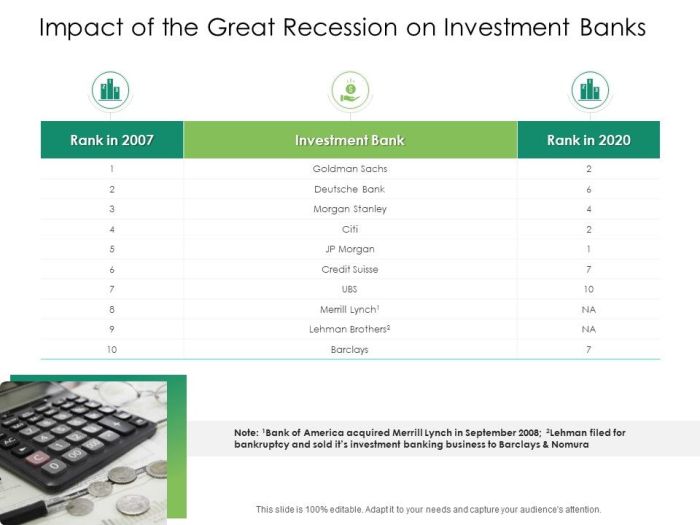
During the 2008-2009 financial crisis, many companies in the automotive and financial sectors experienced significant liquidity and solvency problems. General Motors and Chrysler, for example, required government bailouts to avoid bankruptcy due to plummeting sales and liquidity issues. They had to restructure their operations, reduce their debt, and renegotiate contracts to regain financial stability. Similarly, several large financial institutions faced insolvency due to the collapse of the housing market and the subsequent credit crunch. These institutions implemented measures such as asset sales, cost-cutting, and capital injections to improve their solvency. These examples underscore the severe impact of recessions on even large, established companies.
Effects on Asset Values and Depreciation: The Impact Of Global Economic Recessions On Corporate Financial Statements
Global economic recessions significantly impact the valuation of a company’s assets and, consequently, its depreciation expense. The downturn typically leads to decreased demand, lower prices, and increased uncertainty, all of which affect the carrying amounts of assets on a company’s balance sheet and the related depreciation charges on the income statement. Understanding these effects is crucial for accurately interpreting a company’s financial performance during and after a recession.
During a recession, the market value of assets like property, plant, and equipment (PP&E) often declines. This is because reduced economic activity leads to lower demand for the goods and services produced using these assets, resulting in diminished potential for future cash flows. This decrease in market value can necessitate impairment testing, requiring companies to write down the carrying amount of their assets to their fair value, reflecting the reduced economic utility. This write-down directly impacts the income statement, resulting in a non-cash impairment charge that reduces net income. Simultaneously, the lower carrying amount also affects the calculation of depreciation expense in subsequent periods.
Depreciation Expense Adjustments Following Asset Impairment
A decrease in the carrying amount of an asset due to impairment directly impacts subsequent depreciation calculations. The depreciation expense is calculated based on the asset’s revised carrying amount (original cost less accumulated depreciation and any impairment losses). For example, if a company previously depreciated a machine using the straight-line method over ten years, and an impairment loss reduces the carrying amount in year five, the remaining depreciation expense will be recalculated based on the new carrying amount and the remaining useful life (five years in this case). This leads to a lower depreciation expense in subsequent years compared to what it would have been without the impairment.
Depreciation Method Variations During Recessions, The Impact of Global Economic Recessions on Corporate Financial Statements
The choice of depreciation method can influence the reported financial results during an economic downturn. While the straight-line method evenly distributes depreciation expense over an asset’s useful life, accelerated methods, such as double-declining balance, allocate higher depreciation expense in the early years of an asset’s life. During a recession, companies might consider switching to a more accelerated method to reflect the faster obsolescence of assets in a changing market. However, this decision should be based on a careful assessment of the asset’s actual useful life and not solely as a means to artificially reduce reported profits in the short term. Using an accelerated method will lead to higher depreciation expenses early in the asset’s life, potentially reducing reported net income during the recession. Conversely, in later years, depreciation expenses will be lower. Conversely, companies might retain the straight-line method to present a more stable picture of earnings during a period of economic uncertainty.
Examples of Depreciation Method Application During Economic Downturn
Consider a manufacturing company with a production facility valued at $10 million. During a severe recession, the market value of the facility drops to $7 million, necessitating an impairment charge of $3 million. If the company uses the straight-line method with a 20-year useful life, the annual depreciation before impairment was $500,000 ($10 million / 20 years). After the impairment, the annual depreciation will be $350,000 ($7 million / 20 years). The impact on the income statement would be a $3 million impairment charge in the year of the impairment and a reduction in annual depreciation expense of $150,000 in subsequent years. If a double-declining balance method were used, the impact would be more pronounced in the early years after the impairment, with higher depreciation charges initially and lower charges later in the asset’s life. This illustrates how the choice of depreciation method and the occurrence of asset impairments can significantly alter a company’s reported financial performance during an economic downturn.
Impact on Financing Activities
Economic recessions significantly impact a company’s ability to secure financing, influencing investment decisions and overall financial health. The reduced economic activity and increased uncertainty during these periods create a ripple effect across the financial landscape, affecting both the availability and cost of capital.
Access to financing contracts during economic downturns. Companies face heightened scrutiny from lenders and investors, leading to stricter lending criteria and reduced appetite for risk. This translates to a decreased availability of credit, higher borrowing costs, and difficulty in securing equity financing. The implications for corporate investment are substantial, as companies may postpone or cancel expansion plans, research and development initiatives, and acquisitions due to limited access to funds. This can lead to reduced innovation and stifled long-term growth.
Changes in Access to Financing and Corporate Investment
During economic expansions, companies generally enjoy easier access to various financing options, including bank loans, bonds, and equity investments. Investor confidence is high, leading to competitive lending rates and a willingness to invest in new ventures. This abundant capital allows businesses to pursue growth strategies, invest in new technologies, and expand their operations. Conversely, during recessions, the picture changes dramatically. Lenders become more cautious, increasing interest rates to compensate for the higher perceived risk. Investors become more risk-averse, reducing their willingness to provide equity financing. This scarcity of capital forces companies to prioritize existing operations, often delaying or forgoing expansion projects. For example, during the 2008 financial crisis, many companies experienced significant difficulties securing loans, leading to a sharp decline in capital expenditures and hiring freezes.
Impact of Higher Interest Rates and Reduced Investor Confidence
Higher interest rates directly increase the cost of borrowing for companies. This makes debt financing more expensive, reducing the attractiveness of projects with long payback periods. Simultaneously, reduced investor confidence leads to a lower demand for equity offerings, making it harder for companies to raise capital through stock issuances. This combination of higher borrowing costs and reduced equity financing options can severely restrict a company’s ability to fund its operations and invest in future growth. For instance, a company planning a large-scale factory expansion might abandon the project if interest rates rise significantly, making the debt financing prohibitively expensive.
Financing Strategies During Economic Growth vs. Recession
During periods of economic growth, companies often employ aggressive financing strategies, leveraging debt to fund expansion and acquisitions. They may also issue equity to capitalize on high investor demand. However, during recessions, companies tend to adopt more conservative approaches. They may focus on reducing debt levels, prioritizing cash flow, and delaying non-essential investments. They might explore alternative financing options such as government-backed loans or asset sales to maintain liquidity. The shift from aggressive expansion to a focus on survival and debt reduction reflects the changed economic environment and the need to navigate the increased financial uncertainty. A company that relied heavily on debt financing during an economic boom might find itself struggling to service its debt during a recession, potentially leading to financial distress.
The Role of Accounting Standards and Reporting Practices
Accounting standards play a crucial role in shaping how companies report their financial performance, particularly during economic recessions. Consistency in reporting, facilitated by these standards, allows for meaningful comparisons between companies and across different periods, providing a clearer picture of the overall economic impact. The application of these standards, however, is not without its challenges during times of economic hardship.
The primary accounting frameworks, International Financial Reporting Standards (IFRS) and Generally Accepted Accounting Principles (GAAP), provide a structured approach to financial reporting. These standards dictate how assets are valued, liabilities are recognized, and revenues and expenses are measured. During a recession, the application of these principles can significantly impact a company’s reported financial health. For example, the impairment of assets, a key consideration under both IFRS and GAAP, becomes more prevalent during economic downturns, leading to increased write-downs and potentially impacting profitability. Similarly, the principles governing revenue recognition, particularly in industries with long-term contracts or significant revenue deferrals, are tested under recessionary pressures.
Impact of Accounting Standards on Recession Reporting
IFRS and GAAP provide a framework for consistent reporting, enabling comparisons across companies and time periods. However, the application of these standards during recessions can lead to variations in reported financial performance depending on the specific circumstances and management’s judgment. For example, the estimation of allowance for doubtful accounts, a crucial element in evaluating the collectability of receivables, necessitates careful consideration of economic conditions and industry-specific factors. Conservatism in accounting practices, often emphasized during recessions, might lead to earlier recognition of potential losses, potentially resulting in lower reported profits but a more accurate reflection of the financial reality. Conversely, overly optimistic estimations can lead to misleading financial statements.
Increased Accounting Irregularities and Internal Controls
Economic downturns often create an environment conducive to increased accounting irregularities. The pressure to meet financial targets, maintain investor confidence, and secure financing can lead to companies engaging in aggressive accounting practices or even outright fraud. This emphasizes the critical role of robust internal controls. Effective internal controls, including segregation of duties, regular audits, and a strong ethical culture, act as a deterrent against fraudulent activities and promote accurate financial reporting. A lack of strong internal controls, coupled with economic pressure, can lead to significant financial reporting issues, potentially resulting in regulatory penalties, investor lawsuits, and reputational damage.
Hypothetical Scenario: Impact of Different Accounting Treatments
Consider two companies, Alpha and Beta, both operating in the manufacturing sector, facing a severe recession. Both experience a decline in sales. Alpha, using a more conservative approach, immediately writes down the value of its inventory based on the reduced market demand, recognizing a significant loss in the current period. Beta, aiming to maintain its reported profitability, delays the inventory write-down, hoping for a market recovery. Under GAAP or IFRS, Alpha’s approach is likely to be considered more appropriate, providing a more realistic picture of its financial position. Beta’s approach, while potentially boosting short-term reported profits, could lead to a larger loss in subsequent periods when the write-down is eventually necessary. This scenario illustrates how different accounting treatments, even within the bounds of accepted standards, can significantly impact a company’s reported financial performance during a recession. The choice of accounting method reflects management’s judgment and can have significant consequences.
Ending Remarks
In conclusion, global economic recessions exert a profound and multifaceted impact on corporate financial statements. While the specific effects vary across industries and individual companies, understanding the typical trends in revenue, costs, profitability, liquidity, and asset values is crucial for effective financial planning and risk management. By adapting their strategies and strengthening their internal controls, businesses can improve their chances of navigating economic downturns and emerging stronger on the other side. Proactive financial management, coupled with a thorough understanding of accounting standards and reporting practices, is paramount in mitigating the negative consequences of recessionary pressures.
FAQs
What are some early warning signs of financial distress during a recession?
Early warning signs include declining sales, increasing debt levels, shrinking profit margins, deteriorating cash flow, and difficulty securing financing.
How do accounting standards affect the reporting of losses during a recession?
Accounting standards (like IFRS and GAAP) dictate how losses are recognized and reported, influencing the overall picture presented in financial statements. Consistency in application is key to accurate comparisons across companies and time periods.
What role does government intervention play in mitigating the impact of recessions on corporations?
Government interventions, such as stimulus packages, tax breaks, and loan guarantees, can provide crucial support to businesses during recessions, helping them maintain operations and avoid widespread bankruptcies.