


How to Navigate International Accounting Standards: Understanding the intricacies of global financial reporting is crucial for businesses operating across borders. This guide delves into the fundamental principles of International Financial Reporting Standards (IFRS), highlighting key differences from other accounting frameworks like US GAAP. We’ll explore the application of specific IAS standards, navigate the complexities of international accounting differences, and provide practical guidance for preparing and analyzing consolidated financial statements. Prepare to gain a comprehensive understanding of navigating the global landscape of accounting.
From the historical context of IFRS to the practical application of key standards like IAS 16 (Property, Plant, and Equipment) and IAS 38 (Intangible Assets), this guide offers a clear and concise path through the often-complex world of international accounting. We will examine the challenges posed by currency exchange rates, diverse tax jurisdictions, and the consolidation of financial statements from subsidiaries operating under different standards. Real-world case studies and best practices will further solidify your understanding, empowering you to confidently handle international accounting scenarios.
Understanding the Fundamentals of International Accounting Standards (IAS)
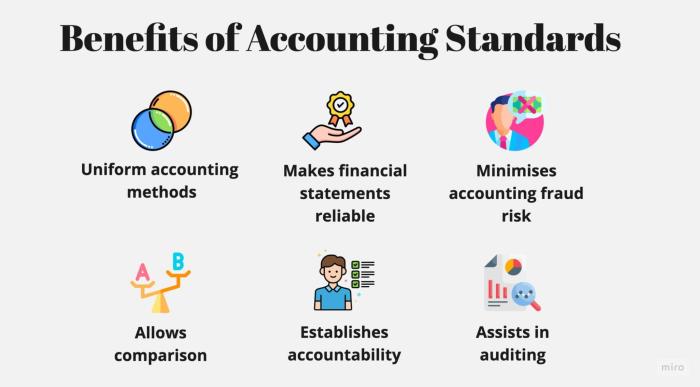
International Accounting Standards (IAS) aim to create a globally consistent framework for financial reporting, fostering transparency and comparability across borders. This consistency facilitates better investment decisions and efficient allocation of capital in the global market. Understanding the underlying principles and key differences between various standards is crucial for anyone involved in international finance.
History and Purpose of International Financial Reporting Standards (IFRS)
The International Financial Reporting Standards (IFRS) are issued by the International Accounting Standards Board (IASB), an independent, privately funded organization. The IASB’s origins trace back to the creation of the International Accounting Standards Committee (IASC) in 1973. The IASC aimed to harmonize accounting practices worldwide, leading to the development of several International Accounting Standards (IAS). In 2001, the IASC transitioned into the IASB, strengthening its mandate and improving its governance structure. The ultimate purpose of IFRS is to provide a high-quality, globally accepted set of accounting standards that enhance the comparability and reliability of financial statements, ultimately contributing to a more efficient and transparent global capital market. The adoption of IFRS has been steadily increasing globally, although not universally.
Key Differences Between IFRS and US GAAP
IFRS and US Generally Accepted Accounting Principles (GAAP) are the two dominant sets of accounting standards globally. While both aim for fair presentation of financial information, significant differences exist. For example, IFRS tends to be principles-based, offering broader guidance and allowing for more professional judgment, while US GAAP is often described as rules-based, providing more specific and detailed rules. This difference can lead to variations in how similar transactions are accounted for. Another key difference lies in the treatment of certain assets and liabilities, such as intangible assets and the recognition of revenue. IFRS generally allows for more flexibility in the valuation and recognition of these items compared to US GAAP. Further differences exist in the treatment of leases, research and development costs, and inventory valuation. These variations necessitate careful consideration and conversion when comparing financial statements prepared under different accounting standards.
Comparison of Conceptual Frameworks
Both IFRS and US GAAP are underpinned by conceptual frameworks that Artikel the fundamental principles and objectives of financial reporting. These frameworks guide the development and interpretation of specific accounting standards. The IFRS conceptual framework emphasizes the importance of fair presentation, going concern, accrual accounting, and materiality. It also Artikels the qualitative characteristics of useful financial information, such as relevance, reliability, understandability, and comparability. The US GAAP conceptual framework shares many similarities but may differ in its emphasis and specific definitions. For instance, the US GAAP framework provides more detailed guidance on specific aspects, such as the definition of assets and liabilities. Understanding these conceptual frameworks is crucial for interpreting and applying the specific accounting standards.
Comparison of IFRS and US GAAP Principles
| Principle | IFRS | US GAAP | Notes |
|---|---|---|---|
| Revenue Recognition | Based on transfer of control | More rules-based, with specific industry guidance | IFRS uses a more holistic approach; US GAAP has industry-specific revenue recognition rules. |
| Inventory Valuation | Lower of cost and net realizable value | Lower of cost or market | Minor differences in the definition of “market” value. |
| Impairment of Assets | Impairment loss recognized when carrying amount exceeds recoverable amount | Similar but with more specific rules for certain assets | Both address asset impairment but differ in the specifics of calculation and application. |
| Leases | Right-of-use model for all leases | Operating and finance lease classifications | IFRS simplifies lease accounting compared to US GAAP’s more complex classification system. |
Key IAS Standards and Their Application
Navigating the complexities of international accounting requires a thorough understanding of key International Accounting Standards (IAS). This section delves into the application of several crucial IAS standards within a multinational context, highlighting their practical implications and potential challenges. We will examine specific standards and illustrate their application with relevant examples.
IAS 16: Property, Plant, and Equipment in a Multinational Context
IAS 16 governs the accounting treatment of property, plant, and equipment (PPE). In a multinational context, applying IAS 16 presents several challenges. Different countries have varying tax laws, depreciation methods, and valuation practices, leading to inconsistencies in how PPE is recognized and measured across subsidiaries. For example, a company with factories in both the US and Germany might use different depreciation methods for similar assets due to local regulations. Further complexity arises from fluctuations in exchange rates affecting the translation of PPE values from foreign currencies into the reporting currency. Consistent application of the standard requires careful consideration of these factors and the implementation of robust internal controls to ensure accurate reporting.
IAS 38: Complexities of Intangible Assets
IAS 38 deals with the recognition and measurement of intangible assets. This standard is particularly complex due to the inherent difficulties in defining, identifying, and valuing intangible assets. Many intangible assets lack a readily determinable fair value, leading to subjective estimations. Consider the challenges in valuing brand recognition, customer relationships, or intellectual property rights. Furthermore, determining whether an intangible asset meets the criteria for recognition under IAS 38 can be challenging. For example, internally generated goodwill is generally not recognized, whereas purchased goodwill is recognized at cost. The distinction between research and development costs, with only development costs potentially meeting the criteria for recognition, further complicates the application of this standard. The valuation and amortization of intangible assets also present difficulties, requiring careful judgment and adherence to the principles Artikeld in the standard.
IAS 2: Challenges in Applying Inventories Across Diverse Settings
IAS 2 addresses the accounting for inventories. Applying this standard across different countries presents unique challenges due to variations in inventory types, management practices, and economic conditions. For instance, a multinational retailer might stock perishable goods in one country and durable goods in another. The cost formula used to value inventories (FIFO, weighted-average cost, etc.) can significantly impact reported profits and inventory levels, and the choice of method might vary depending on local practices and tax regulations. Furthermore, managing inventory in countries with fluctuating exchange rates adds complexity to the valuation process. Accurate inventory tracking and consistent application of the chosen cost formula are critical for reliable financial reporting.
IAS 19: Employee Benefits in Different Global Settings
IAS 19 covers employee benefits, a broad category encompassing various compensation and benefits schemes. The application of this standard varies significantly across different global settings due to diverse national regulations and cultural practices.
- Defined Contribution Plans: In countries with predominantly defined contribution pension plans (e.g., the US 401(k) plans), the accounting is relatively straightforward, involving the recognition of contributions as an expense.
- Defined Benefit Plans: Countries with widespread defined benefit pension plans (e.g., many European countries) face more complex accounting. Actuarial valuations are required to estimate the present value of future pension obligations, leading to potential volatility in reported pension liabilities and expenses.
- Share-Based Payment Schemes: The accounting for employee stock options or other share-based payment schemes can be intricate, particularly when considering the impact of vesting periods, performance conditions, and market price fluctuations. The fair value of these benefits needs to be estimated and expensed over the vesting period.
- Sick Leave and Vacation Pay: The accounting treatment of accrued sick leave and vacation pay differs based on national labor laws and company policies. Some jurisdictions require accrual accounting, while others allow for recognition only when employees take leave.
Navigating International Accounting Differences and Challenges
International accounting presents unique complexities stemming from variations in standards, legal frameworks, and economic environments across jurisdictions. Understanding these differences is crucial for accurate financial reporting and effective global business operations. This section explores key challenges arising from diverse accounting treatments and their implications for multinational corporations.
Revenue Recognition Under IFRS 15
IFRS 15, Revenue from Contracts with Customers, provides a comprehensive framework for revenue recognition, aiming for consistency globally. However, practical application and interpretation can differ across jurisdictions due to variations in legal and regulatory contexts. For example, the determination of “control” over goods or services, a crucial element in IFRS 15, might be subject to differing legal interpretations in civil law versus common law systems. Furthermore, the application of specific guidance within IFRS 15, such as the treatment of variable consideration or significant financing components, can lead to diverse accounting outcomes even within the same standard. Consider a software company selling subscriptions: the timing of revenue recognition might vary depending on local interpretations of when the customer gains control of the software’s functionality. Similarly, the accounting treatment of performance obligations and their related revenue streams can differ based on the specific characteristics of the contract and local legal interpretations.
Impact of Currency Exchange Rates, How to Navigate International Accounting Standards
Fluctuations in currency exchange rates significantly impact financial reporting for multinational companies. Transactions denominated in foreign currencies must be translated into the reporting currency, leading to translation gains or losses. These gains or losses can affect the reported net income, assets, and liabilities. The choice of translation method (e.g., current rate method or temporal method) also impacts the financial statements. For instance, a company with significant assets in a foreign currency that depreciates against the reporting currency will see a decrease in the reported value of those assets, potentially affecting key financial ratios and impacting creditworthiness assessments. Furthermore, the timing of transactions and the volatility of exchange rates can lead to unpredictable fluctuations in reported financial performance. Hedging strategies, while mitigating some risks, introduce additional accounting complexities.
Accounting Implications of Multiple Tax Jurisdictions
Operating in multiple tax jurisdictions introduces significant accounting challenges, primarily related to the determination and allocation of income taxes. Different tax rates, tax bases, and tax laws in each jurisdiction necessitate careful planning and compliance. The determination of the tax expense requires consideration of various factors, including temporary and permanent differences between accounting and taxable income. Deferred tax assets and liabilities arise from these differences, potentially impacting the balance sheet and income statement. Furthermore, transfer pricing, the pricing of goods and services exchanged between related entities in different jurisdictions, requires careful consideration to ensure compliance with tax regulations and avoid disputes with tax authorities. The complexity is heightened when considering the varying tax treaties and conventions between countries.
Consolidation of Financial Statements from Subsidiaries
Consolidating financial statements from subsidiaries operating under different accounting standards presents significant challenges. Reconciling different accounting policies and practices is a time-consuming and complex process, requiring significant expertise and judgment. For example, a parent company using IFRS might have subsidiaries using US GAAP or local GAAP. Differences in revenue recognition, inventory valuation, depreciation methods, and impairment testing will require adjustments to ensure consistency and comparability in the consolidated financial statements. Consider a hypothetical scenario: a parent company based in the EU (using IFRS) owns subsidiaries in the US (using US GAAP) and Japan (using Japanese GAAP). Reconciling differences in the treatment of intangible assets, especially goodwill, would be a complex task. The consolidation process will involve significant adjustments to ensure the financial statements accurately reflect the overall financial position and performance of the group. This process often requires significant professional judgment and expertise to ensure the accuracy and reliability of the consolidated figures.
Practical Application and Case Studies
This section delves into the practical application of International Financial Reporting Standards (IFRS) through step-by-step guides, illustrative analyses, and a real-world case study. Understanding these applications is crucial for navigating the complexities of international accounting.
Preparing Consolidated Financial Statements under IFRS
Consolidating financial statements under IFRS involves combining the financial information of a parent company and its subsidiaries into a single set of statements. This process requires careful consideration of several factors, including the acquisition method, non-controlling interests, and the elimination of intercompany transactions. A step-by-step guide is provided below.
- Identify Subsidiaries: Determine which entities are subsidiaries based on control (power over the investee’s relevant activities).
- Determine the Acquisition Date: Establish the date when control was obtained. This is crucial for determining the fair value of net assets acquired.
- Determine Fair Value of Net Assets Acquired: Identify the fair value of each identifiable asset and liability of the subsidiary at the acquisition date. This often requires professional valuations.
- Recognize Goodwill (or Gain): Goodwill is recognized as the excess of the consideration transferred, plus the fair value of any non-controlling interest, over the net identifiable assets acquired. A gain arises if the net identifiable assets exceed the consideration transferred and non-controlling interest.
- Prepare the Consolidated Balance Sheet: Combine the assets, liabilities, and equity of the parent and subsidiary, eliminating intercompany transactions and balances.
- Prepare the Consolidated Income Statement: Combine the revenues, expenses, and profits of the parent and subsidiary, eliminating intercompany transactions and balances.
- Prepare the Consolidated Statement of Cash Flows: Combine the cash flows of the parent and subsidiary, eliminating intercompany transactions and balances.
- Disclose Non-Controlling Interests: Clearly present the share of profit or loss and net assets attributable to non-controlling interests.
Analyzing a Company’s Financial Statements Prepared under IFRS
Analyzing financial statements prepared under IFRS involves a similar process to analyzing statements under other accounting standards, but with a focus on understanding the specific requirements and disclosures mandated by IFRS. Key aspects include ratio analysis, trend analysis, and comparative analysis.
Ratio analysis involves calculating key financial ratios such as profitability ratios (gross profit margin, net profit margin), liquidity ratios (current ratio, quick ratio), and solvency ratios (debt-to-equity ratio). Trend analysis involves examining the changes in key financial metrics over time. Comparative analysis involves comparing a company’s financial performance to its competitors or industry benchmarks. These analyses provide insights into the company’s financial health, performance, and prospects.
Application of IFRS in the Banking Industry: A Case Study
Consider a large multinational bank operating across several countries. The bank’s financial statements must comply with IFRS, which presents unique challenges due to the complexity of banking products and transactions. For example, IFRS 9 (Financial Instruments) requires banks to classify and measure financial assets based on their business model and contractual cash flow characteristics. This impacts how the bank recognizes impairment losses on loans and other financial assets. Furthermore, IFRS 7 (Financial Instruments: Disclosures) mandates extensive disclosures related to the bank’s risk exposures, including credit risk, market risk, and liquidity risk. Analyzing the bank’s financial statements requires a deep understanding of these standards and their implications for the bank’s financial position and performance. Failure to properly apply IFRS 9 and IFRS 7 can lead to misstatements in the financial statements and potentially impact the bank’s regulatory compliance and investor confidence.
Best Practices for Navigating International Accounting Standards
The following table Artikels best practices for effectively navigating international accounting standards.
| Planning & Preparation | Implementation & Compliance | Monitoring & Review | Training & Development |
|---|---|---|---|
| Thorough understanding of relevant IFRS standards | Consistent application of standards across all entities | Regular internal audits to ensure compliance | Ongoing training for accounting staff on IFRS updates |
| Detailed assessment of the company’s accounting processes | Documentation of all accounting policies and procedures | External audits to ensure compliance with IFRS | Development of internal expertise in IFRS |
| Development of a comprehensive accounting policy manual | Effective internal controls to prevent errors and fraud | Benchmarking against industry best practices | Access to external IFRS expertise when needed |
| Proactive engagement with relevant accounting professionals | Regular communication with auditors and regulators | Continuous improvement of accounting processes | Staying up-to-date on changes and interpretations of IFRS |
Resources and Further Learning: How To Navigate International Accounting Standards
Mastering international accounting standards requires ongoing commitment to learning and staying updated. This section Artikels valuable resources and emphasizes the importance of continuous professional development in this dynamic field. Access to reliable information and professional guidance is crucial for accurate application and interpretation of IFRS.
The effective application of IFRS relies heavily on access to high-quality resources and continuous professional development. Understanding the various avenues for learning and staying current is paramount for accountants working within a globalized business environment. This section will highlight key resources and the role of professional bodies in supporting IFRS adoption and interpretation.
Reputable Organizations and Publications Providing IFRS Guidance
Several organizations and publications offer comprehensive and reliable guidance on IFRS. These resources provide interpretations, updates, and practical examples to assist accountants in navigating the complexities of international accounting standards. Utilizing these resources ensures compliance and promotes consistent application across jurisdictions.
- International Accounting Standards Board (IASB): The IASB is the primary standard-setter for IFRS, and its website provides the definitive source of information on all issued standards, interpretations, and related documents. It offers access to the full text of IFRS standards, as well as updates and news.
- IFRS Foundation: The IFRS Foundation oversees the IASB and supports its activities. Its website offers information about the IASB’s work, governance, and strategy.
- National Standard-Setters: Many countries have their own accounting standard-setting bodies that provide guidance on the implementation of IFRS within their jurisdictions. These bodies often publish supplementary guidance and interpretations specific to their local context.
- Professional Accounting Journals and Publications: Numerous academic and professional journals publish articles and research on IFRS, offering in-depth analysis and practical insights. Examples include the *Accounting Horizons*, *The Accounting Review*, and other specialized accounting publications.
Role of Professional Accounting Bodies in Promoting and Interpreting IFRS
Professional accounting bodies play a vital role in promoting the adoption and consistent interpretation of IFRS. They offer training, guidance, and support to accountants, fostering a common understanding and facilitating the global application of these standards. Their involvement ensures high-quality accounting practices worldwide.
Professional accounting bodies, such as the American Institute of Certified Public Accountants (AICPA), the Institute of Chartered Accountants in England and Wales (ICAEW), and similar organizations globally, actively contribute to the understanding and implementation of IFRS. These bodies offer a range of services, including:
- Continuing Professional Development (CPD) Programs: These programs provide updates on changes to IFRS, offer training on specific standards, and help accountants stay current with best practices.
- Publications and Guidance: Many bodies publish their own interpretations and guidance on IFRS, providing practical examples and addressing common challenges.
- Networking and Collaboration: These bodies facilitate networking and collaboration among accountants, fostering knowledge sharing and promoting consistent application of IFRS.
- Advocacy and Influence: They actively advocate for the adoption and consistent application of IFRS globally, influencing policy and contributing to the ongoing development of the standards.
Importance of Ongoing Professional Development in International Accounting
The field of international accounting is constantly evolving, with regular updates and revisions to IFRS standards. Continuous professional development (CPD) is therefore essential for accountants to maintain their competence and ensure they apply the standards accurately and consistently. This ongoing learning ensures practitioners remain knowledgeable and compliant.
Ongoing professional development is not merely a suggestion; it is a necessity. The complexity and frequent updates to IFRS necessitate a commitment to continuous learning. Without regular updates, accountants risk misinterpreting standards, leading to inaccurate financial reporting and potential legal ramifications. Examples of relevant CPD activities include attending conferences, participating in webinars, pursuing advanced certifications, and engaging in self-directed learning through reputable resources. Failure to maintain professional competency could result in sanctions from professional bodies or legal repercussions.
Flowchart Illustrating IFRS Research and Application
The process of researching and applying a specific IFRS standard involves a systematic approach. This flowchart illustrates the key steps involved.
[A flowchart would be depicted here. It would visually represent the following steps:
1. Identify the relevant transaction or event: This involves determining the specific accounting issue requiring IFRS application.
2. Locate the applicable IFRS standard: This involves using the IASB website or other reputable resources to find the relevant standard.
3. Read and understand the standard: This includes carefully reviewing the requirements, definitions, and guidance provided in the standard.
4. Apply the standard to the specific facts: This involves analyzing the transaction or event in light of the standard’s requirements.
5. Document the application: This involves maintaining detailed records of the steps taken and the rationale for the accounting treatment applied.
6. Review and evaluate: This involves a final check of the application and the overall accuracy of the financial reporting. The flowchart would use boxes and arrows to visually link these steps.]
Closure
Mastering international accounting standards is no small feat, but with a structured approach and a thorough understanding of the key principles, it becomes a manageable and even rewarding process. This guide has equipped you with the foundational knowledge and practical tools necessary to confidently navigate the complexities of IFRS and related standards. By understanding the nuances of different accounting treatments, the impact of currency fluctuations, and the challenges of operating in multiple jurisdictions, you’re now better prepared to handle the financial reporting needs of any multinational enterprise. Continue your professional development to stay abreast of evolving standards and best practices in this dynamic field.
Frequently Asked Questions
What is the difference between IFRS and US GAAP?
IFRS and US GAAP are both accounting frameworks, but they differ in their principles-based vs. rules-based approaches, leading to variations in how certain transactions are recorded and reported.
How often are IFRS standards updated?
IFRS standards are regularly reviewed and updated by the IASB to reflect changes in business practices and global economic conditions. Check the IASB website for the latest updates.
What resources are available for learning more about IFRS?
Numerous resources exist, including the IASB website, professional accounting bodies (e.g., ACCA, AICPA), and specialized publications focusing on international accounting.
Discover more by delving into The Future of Accounting in a Borderless Digital Economy further.