



How to Manage Seasonal Fluctuations in Business Finances is a critical skill for any business owner, especially those in industries with inherently cyclical demand. Successfully navigating these peaks and valleys requires proactive planning, strategic resource allocation, and a keen understanding of market trends. This guide will equip you with the knowledge and tools to not only survive seasonal downturns but thrive throughout the year.
From forecasting techniques and inventory management strategies to adjusting pricing and marketing efforts, we’ll explore a comprehensive approach to mitigating the financial risks associated with seasonality. We’ll delve into effective cash flow management, explore various financing options, and discuss building a more resilient business model less susceptible to the whims of seasonal changes. By the end, you’ll possess a clear roadmap for financial stability, no matter the time of year.
Understanding Seasonal Fluctuations

Seasonal fluctuations represent predictable changes in business activity throughout the year. These variations impact revenue, expenses, and overall profitability, making it crucial for businesses to anticipate and manage them effectively. Ignoring these patterns can lead to cash flow problems, missed opportunities, and even business failure. Understanding the nature and extent of these fluctuations is the first step towards successful financial management.
Typical Seasonal Patterns in Various Business Types
Many businesses experience predictable peaks and valleys in their activity. Retailers often see increased sales during the holiday season, while tourism-related businesses thrive during summer months. Agricultural businesses are heavily influenced by planting and harvesting cycles. Conversely, some industries, such as healthcare, may experience relatively stable demand throughout the year. The specific patterns vary greatly depending on the industry, location, and even the specific product or service offered. For example, a ski resort will have high demand during winter, while a water park will see its peak season in summer.
Industries Significantly Impacted by Seasonal Changes
Three industries demonstrably affected by seasonal changes are tourism, retail, and agriculture. The tourism industry experiences significant fluctuations based on weather patterns and holiday schedules. For instance, beach resorts see a surge in visitors during summer, while ski resorts thrive in winter. Retail businesses are heavily influenced by major holidays like Christmas and Black Friday, leading to periods of intense sales activity followed by quieter periods. Agriculture is inherently seasonal, with planting, growing, and harvesting periods dictating income streams. Yields can also vary greatly based on weather conditions, leading to unpredictable income for farmers.
External Factors Influencing Seasonal Fluctuations
External factors like weather and holidays significantly influence seasonal fluctuations. Unusually harsh winters can negatively impact businesses reliant on outdoor activities, while unexpectedly warm weather might reduce demand for winter clothing. Major holidays, such as Christmas, Easter, and Thanksgiving, often drive significant spikes in consumer spending in retail, impacting both revenue and expenses. Government regulations, such as changes in tax policies or public health measures, can also unexpectedly influence seasonal patterns, adding further complexity to financial planning. For instance, a prolonged heatwave might lead to increased energy consumption, affecting utility companies’ revenues.
Impact of Seasonality on Cash Flow for a Small Retail Business
For a small retail business, seasonality directly impacts cash flow. During peak seasons, like the holiday shopping period, sales increase, leading to a surge in cash inflow. However, this increased revenue is often accompanied by higher expenses, such as increased staffing costs to meet higher demand, additional marketing and advertising spending, and increased inventory costs to stock popular items. Conversely, during off-seasons, sales decline, resulting in lower cash inflows. This can create a significant challenge for managing expenses and maintaining sufficient working capital. Without careful planning and management, a small retail business might find itself struggling to meet its financial obligations during slower periods, despite having healthy profits during peak seasons. Effective cash flow forecasting and management strategies are therefore critical for small retailers to navigate seasonal fluctuations successfully.
Forecasting Seasonal Demand
Accurately predicting seasonal demand is crucial for effective financial management. Understanding the patterns of your business’s sales throughout the year allows for proactive resource allocation, inventory control, and optimized staffing levels, ultimately leading to improved profitability. This section explores various forecasting methods and strategies for leveraging historical data and market research to create a robust seasonal demand forecast.
Forecasting Methods for Seasonal Demand
Several methods can be employed to predict seasonal demand, each with its own strengths and weaknesses. The choice of method depends on factors such as data availability, the complexity of the seasonal pattern, and the resources available. Below, we compare three common approaches.
| Method | Pros | Cons | Suitability |
|---|---|---|---|
| Simple Moving Average | Easy to calculate, requires minimal data | Ignores trends and seasonality, less accurate for businesses with significant fluctuations | Suitable for businesses with stable, relatively unchanging demand; useful as a baseline for more sophisticated methods. |
| Exponential Smoothing | Gives more weight to recent data, adapts to changing trends | Requires parameter tuning (smoothing factor), may not accurately capture strong seasonality | Suitable for businesses with some trend and seasonality, but not extreme fluctuations; a good compromise between simplicity and accuracy. |
| Seasonal Decomposition | Explicitly models seasonal patterns, allowing for accurate separation of trend, seasonality, and residual components | Requires sufficient historical data, more complex to implement | Suitable for businesses with clear seasonal patterns and sufficient historical data; provides the most accurate forecasts for seasonal businesses. |
Using Historical Sales Data for Forecasting
Analyzing past sales data is fundamental to forecasting seasonal peaks and troughs. By identifying recurring patterns in sales figures over several years, businesses can gain valuable insights into their seasonal demand cycles. For example, a swimwear retailer might observe significantly higher sales during the summer months, with a clear decline in the autumn and winter. This historical data can then be used as the basis for projecting future sales. Simple techniques like calculating average sales for each season or using more advanced statistical methods like regression analysis can be applied.
Hypothetical Sales Forecast
Let’s consider a hypothetical example of a Christmas tree farm. Based on historical data, we can create a projected revenue forecast for each quarter:
| Quarter | Projected Revenue |
|---|---|
| Q1 (Jan-Mar) | $10,000 |
| Q2 (Apr-Jun) | $15,000 |
| Q3 (Jul-Sep) | $20,000 |
| Q4 (Oct-Dec) | $100,000 |
This forecast clearly illustrates the significant seasonal peak during the fourth quarter, driven by the Christmas holiday season. The farm can use this information to plan staffing, inventory (trees!), and marketing efforts accordingly.
Incorporating Market Research into Forecasting
While historical data provides a valuable foundation, incorporating market research enhances the accuracy and robustness of seasonal demand forecasts. Market research can reveal emerging trends, changing consumer preferences, and potential external factors (like economic conditions) that may impact demand. For example, conducting customer surveys or analyzing competitor activities can provide insights into anticipated changes in consumer buying behavior. This information can then be integrated into the forecasting model to refine the predictions and improve decision-making.
Managing Inventory During Seasonal Peaks and Lulls
Effective inventory management is crucial for businesses experiencing significant seasonal fluctuations. Successfully navigating these peaks and lulls requires a proactive approach that balances the risks of overstocking and understocking, ensuring optimal product availability while minimizing storage costs and potential losses from obsolete inventory. This section explores strategies for achieving this balance.
Risks of Overstocking and Understocking
Overstocking during peak seasons ties up significant capital in inventory that may not sell, leading to storage costs, potential spoilage or obsolescence, and ultimately, reduced profitability. Conversely, understocking during peak demand results in lost sales opportunities, dissatisfied customers, and damage to brand reputation. The ideal inventory level is a delicate balance, dependent on accurate sales forecasting and efficient inventory management practices. For example, a Christmas tree farm that overestimates demand might end up with unsold trees requiring disposal, while underestimating demand could mean lost revenue from potential customers unable to purchase trees.
Benefits of Just-in-Time Inventory System
A just-in-time (JIT) inventory system, while challenging to implement perfectly with seasonal businesses, offers significant advantages. JIT aims to receive materials only as they are needed in the production process, minimizing storage space and reducing the risk of obsolete inventory. For seasonal businesses, this might involve carefully timed orders based on precise sales forecasts, ensuring sufficient stock to meet demand without excessive surplus. For a company selling winter coats, a JIT approach might mean ordering smaller batches throughout the fall, adjusting order sizes based on real-time sales data. This minimizes storage needs and reduces the risk of being stuck with unsold coats after winter ends.
Inventory Management Plan for High Seasonal Demand
An effective inventory management plan for a business with high seasonal demand should include detailed ordering procedures and robust storage solutions. Ordering procedures should be based on accurate sales forecasts, incorporating historical data, market trends, and economic indicators. The plan should also Artikel reorder points, safety stock levels, and lead times for each product. Storage solutions should be carefully chosen to accommodate seasonal fluctuations, perhaps including scalable warehouse space or utilizing third-party logistics providers during peak seasons. For example, a company selling summer swimwear could lease additional warehouse space in the spring, returning it after the summer season concludes. This approach ensures sufficient storage capacity without incurring unnecessary costs year-round.
Examples of Inventory Management Software
Several software solutions are available to assist seasonal businesses in managing their inventory effectively. These systems typically include features such as demand forecasting, automated ordering, inventory tracking, and reporting. Examples include Fishbowl Inventory, Zoho Inventory, and QuickBooks Online. These platforms offer various functionalities tailored to businesses of different sizes and complexities, allowing for customization to meet specific seasonal needs. Choosing the right software depends on factors such as business size, budget, and specific inventory management requirements.
Managing Expenses and Cash Flow
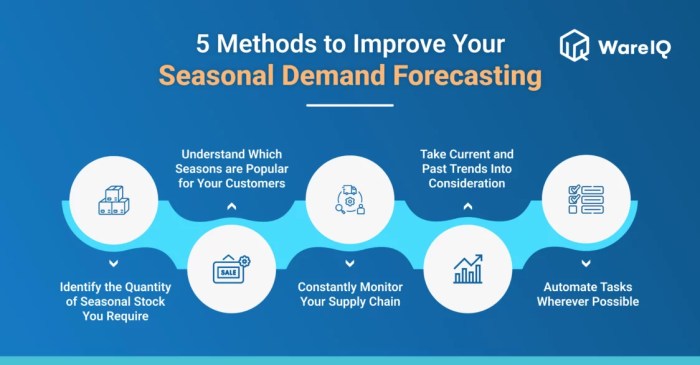
Successfully navigating seasonal fluctuations requires a keen understanding of how to manage expenses and cash flow effectively. Businesses often experience periods of high and low demand, directly impacting revenue and the need for resources. Careful planning and proactive strategies are crucial to maintain financial stability throughout the year.
Seasonally Fluctuating Expenses
Three common expenses that often exhibit seasonal variations are marketing and advertising costs, labor costs, and inventory holding costs. Marketing campaigns are frequently intensified during peak seasons to capitalize on increased demand, resulting in higher spending. Labor costs fluctuate due to the need for additional staff during busy periods and potential reductions during slower times. Finally, inventory holding costs, encompassing storage, insurance, and potential obsolescence, rise with increased inventory levels needed for peak seasons.
Controlling Expenses During Low-Demand Periods, How to Manage Seasonal Fluctuations in Business Finances
During periods of low demand, implementing cost-cutting measures becomes vital. This involves carefully reviewing all operational expenses to identify areas for potential reductions. Strategies include negotiating better rates with suppliers, temporarily reducing marketing and advertising spend, and optimizing staffing levels through cross-training employees or implementing temporary staff reductions (where legally permissible and ethically sound). Careful monitoring of utility costs and implementing energy-saving measures can also yield significant savings. For example, a retail store might reduce its air conditioning during off-peak months to lower energy bills. A restaurant could reduce its hours of operation during slower periods, reducing labor and ingredient costs.
Improving Cash Flow During Seasonal Lulls
Maintaining healthy cash flow is crucial during periods of low demand. Several strategies can be implemented to bolster cash reserves. These include optimizing accounts receivable by implementing stricter collection procedures and offering early payment discounts. Negotiating favorable payment terms with suppliers can extend payment deadlines, providing more time to generate revenue. Exploring lines of credit or short-term loans can provide a financial buffer during lean periods. Furthermore, proactively seeking out new revenue streams, such as offering seasonal promotions or discounts, or exploring related product offerings, can help generate additional income. For example, a swimwear company might offer discounts on last season’s swimwear during the off-season or introduce related products like beach towels or sunscreens.
Sample Seasonal Budget Allocation
The following table illustrates a simplified example of how a business might allocate funds across different seasons. This is a hypothetical example and should be adapted to fit the specific needs and circumstances of each individual business. Remember to always consult with a financial professional for personalized advice.
| Season | Revenue (Estimate) | Marketing & Advertising | Labor Costs | Inventory Holding | Other Expenses | Profit |
|---|---|---|---|---|---|---|
| Spring (Peak) | $100,000 | $20,000 | $30,000 | $15,000 | $10,000 | $25,000 |
| Summer (High) | $80,000 | $15,000 | $25,000 | $12,000 | $8,000 | $20,000 |
| Autumn (Low) | $40,000 | $5,000 | $15,000 | $5,000 | $5,000 | $10,000 |
| Winter (Low) | $30,000 | $3,000 | $10,000 | $3,000 | $4,000 | $10,000 |
Utilizing Financing Options: How To Manage Seasonal Fluctuations In Business Finances
Seasonal businesses often face unique financial challenges due to the fluctuating nature of their revenue streams. Effectively managing cash flow during periods of low sales is crucial for survival and growth. Understanding and leveraging various financing options can significantly mitigate these challenges and provide the necessary financial flexibility to navigate seasonal peaks and troughs.
Lines of credit offer a flexible way to manage seasonal cash flow fluctuations. They provide readily available funds that can be drawn upon as needed, offering a safety net during periods of low revenue. However, interest charges accrue on the outstanding balance, and maintaining a good credit score is essential for securing favorable terms.
Lines of Credit for Seasonal Cash Flow Management
Lines of credit are revolving credit facilities that allow businesses to borrow money up to a pre-approved limit. The advantage is the flexibility; businesses only pay interest on the amount borrowed, not the entire credit limit. This contrasts with term loans, which require repayment of the principal amount according to a fixed schedule. A disadvantage is that interest rates can be variable, potentially increasing borrowing costs if interest rates rise. Furthermore, if the business fails to repay the debt according to the agreed terms, it can negatively impact their credit rating. A seasonal business with a predictable revenue pattern, and a strong credit history, is a prime candidate for a line of credit. For example, a Christmas tree farm could utilize a line of credit to cover pre-season expenses like tree planting and harvesting, knowing they will have significant revenue during the holiday season to repay the loan.
Invoice Financing for Seasonal Businesses
Invoice financing, also known as accounts receivable financing, provides immediate cash flow by advancing a percentage of the value of outstanding invoices. This is particularly beneficial for seasonal businesses that experience delayed payments from customers. The advantage is that it converts unpaid invoices into immediate cash, helping to manage short-term cash flow needs. However, the disadvantage is that it typically involves fees and interest charges, and businesses relinquish some control over their accounts receivable. A seasonal retailer, for instance, could use invoice financing to cover operating expenses during the post-holiday lull, using the payments from holiday sales to quickly pay off the financing.
Alternative Financing Options for Seasonal Businesses
Several other financing options can be suitable for seasonal businesses, depending on their specific needs and risk profile. These include:
- Term Loans: These provide a fixed amount of money for a specific period, with a predetermined repayment schedule. They offer predictable payments but lack the flexibility of a line of credit.
- Small Business Administration (SBA) Loans: Government-backed loans offer favorable terms, including lower interest rates and longer repayment periods, but require a more rigorous application process.
- Merchant Cash Advances: These advance a lump sum based on future credit card sales, but often come with high fees and interest rates. They are best suited for businesses with consistent credit card sales.
Financing Suitability Based on Risk
The suitability of different financing options depends heavily on the business’s risk profile. Businesses with low risk and a strong credit history may qualify for favorable terms on term loans or lines of credit. However, higher-risk businesses may need to explore options like merchant cash advances, even though they come with higher costs. SBA loans can be a good middle ground, offering support for businesses that might not qualify for conventional financing on their own. A detailed financial analysis, considering revenue projections, expenses, and debt capacity, is crucial to determine the most appropriate financing option for a particular seasonal business.
Building a Resilient Business Model
Seasonal businesses, by their very nature, face periods of feast and famine. To thrive, it’s crucial to move beyond simply managing these fluctuations and instead build a business model that actively mitigates their impact. This involves diversifying revenue streams, strengthening customer relationships, and strategically expanding into new markets.
Building a resilient business model requires proactive steps to reduce reliance on seasonal peaks and prepare for inevitable lulls. A multifaceted approach encompassing product diversification, alternative revenue generation, customer relationship management, and market expansion provides a strong foundation for sustained growth, regardless of seasonal trends.
Product or Service Diversification
Diversifying your offerings is a powerful strategy to smooth out seasonal peaks and troughs. Imagine a Christmas tree farm that only sells trees in December. By adding year-round services like landscaping, tree trimming, or selling smaller potted plants, the business generates income throughout the year, reducing its dependence on the holiday rush. This diversification reduces risk and creates a more stable income stream. Consider offering complementary products or services that appeal to your existing customer base but are not as heavily influenced by seasonality. For example, a swimwear company could offer year-round activewear or accessories.
Alternative Revenue Streams
Developing alternative revenue streams acts as a buffer against seasonal dips. A ski resort, for example, might offer summer activities like mountain biking or hiking tours. Similarly, a pumpkin patch could host other events like corn mazes or fall festivals during the off-season. These additional income streams provide a financial safety net during periods of lower seasonal demand, ensuring consistent cash flow. Exploring online sales, subscription services, or licensing agreements can also provide consistent income regardless of seasonal fluctuations.
Strong Customer Relationships
Cultivating strong customer relationships is vital for repeat business throughout the year. Loyalty programs, personalized communications, and exceptional customer service foster a sense of connection and encourage customers to return. This repeat business helps to even out sales throughout the year, reducing the impact of seasonal peaks and troughs. Building an email list and actively engaging with customers through social media can facilitate these ongoing relationships. Consider offering exclusive deals or early access to new products for loyal customers.
Market Expansion
Expanding into new markets can significantly reduce seasonal dependence. A business heavily reliant on summer tourism in one region might consider expanding to a location with a different peak season, or to a market with less pronounced seasonal variations. This geographical diversification spreads the risk and provides a more consistent flow of revenue. Thorough market research is crucial to identify suitable locations and understand the specific needs and preferences of the target market in each new region. For instance, a company selling winter coats could expand into a country with a longer winter season, thus extending their peak sales period.
Closing Notes
Mastering the art of managing seasonal fluctuations in business finances is not merely about surviving slow periods; it’s about strategically positioning your business for consistent growth and profitability. By implementing the forecasting, inventory management, pricing, and financial strategies Artikeld in this guide, you can transform seasonal challenges into opportunities for enhanced performance. Remember, proactive planning and a flexible approach are key to building a resilient and successful business that thrives year-round.
Query Resolution
What are some early warning signs of potential seasonal cash flow problems?
Decreasing sales trends months before the typical slow season, high inventory levels, increasing accounts receivable, and difficulty paying bills on time are all warning signs.
How can I improve customer retention during the off-season?
Implement loyalty programs, offer exclusive off-season deals, maintain consistent communication with customers, and gather feedback to improve services for the next peak season.
What are some alternative revenue streams for businesses with seasonal peaks?
Consider offering complementary products or services, expanding into new markets, or exploring online sales channels to generate income during slow periods.
What if my business experiences unexpected seasonal variations?
Regularly monitor key financial indicators, maintain a flexible budget, and have contingency plans in place to address unexpected changes in demand.
Get the entire information you require about Tax Planning Techniques to Maximize Business Savings on this page.