

How to Manage Financial Risks in Your Business is crucial for sustainable growth. Understanding and mitigating financial risks isn’t just about avoiding losses; it’s about proactively shaping a more resilient and profitable future. This guide explores key strategies, from identifying potential threats to implementing robust mitigation techniques and leveraging financial forecasting for informed decision-making.
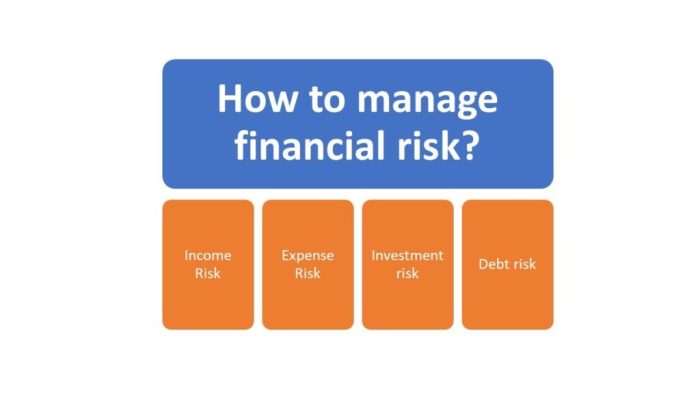
We’ll delve into various risk types, including credit, market, liquidity, and operational risks, providing a framework for assessment and prioritization. The importance of integrating risk management into your overall business strategy will be highlighted, along with the roles different departments play in this critical process. We will also explore practical tools and techniques, such as hedging, insurance, and diversification, to help you build a robust financial foundation for your business.
Identifying and Assessing Financial Risks
Understanding and managing financial risks is crucial for the long-term health and stability of any business. Failing to adequately assess and mitigate these risks can lead to significant financial losses, operational disruptions, and even business failure. This section Artikels a systematic approach to identifying, assessing, and prioritizing the financial risks your business faces.
Types of Financial Risks
Businesses face a multitude of financial risks, each with its own characteristics and potential impact. Understanding these different risk types is the first step towards effective risk management. Key categories include credit risk, market risk, liquidity risk, and operational risk. Credit risk refers to the potential loss arising from a borrower’s failure to repay a debt. Market risk encompasses the potential for losses due to fluctuations in market prices, such as interest rates, exchange rates, or commodity prices. Liquidity risk is the risk of not having enough readily available cash to meet short-term obligations. Finally, operational risk encompasses the potential for losses due to failures in internal processes, people, and systems.
Assessing Risk Likelihood and Impact
A robust risk assessment framework involves evaluating both the likelihood and the potential impact of each identified risk. Likelihood refers to the probability of the risk event occurring, often expressed as a percentage or qualitative descriptor (e.g., low, medium, high). Impact assesses the potential financial consequences if the risk event does materialize, which can be quantified in monetary terms (e.g., loss of revenue, increased expenses) or described qualitatively (e.g., minor, significant, catastrophic). A simple matrix can be used to visually represent this assessment.
Prioritizing Risks
Once the likelihood and impact of each risk have been assessed, they need to be prioritized to focus resources on the most critical threats. A common method is to multiply the likelihood score by the impact score to generate a risk priority score. Risks with higher scores represent a greater threat and should be addressed first. This prioritization helps to allocate resources effectively, focusing on mitigating the most significant risks.
Risk Assessment Table
| Risk Type | Likelihood | Impact | Priority Score (Likelihood x Impact) | Mitigation Strategies |
|---|---|---|---|---|
| Credit Risk (e.g., customer defaults) | Medium (50%) | Medium ($50,000 loss) | Medium (25,000) | Diversify customer base, implement robust credit checks, require collateral |
| Market Risk (e.g., interest rate fluctuations) | High (80%) | Low ($10,000 loss) | High (8,000) | Hedge using financial instruments, diversify investments |
| Liquidity Risk (e.g., cash flow shortages) | Low (20%) | High ($100,000 loss) | Medium (20,000) | Maintain sufficient cash reserves, improve forecasting accuracy, secure lines of credit |
| Operational Risk (e.g., system failure) | Medium (50%) | High ($150,000 loss) | High (75,000) | Invest in robust systems, implement disaster recovery plans, staff training |
Developing a Risk Management Strategy
A robust risk management strategy is crucial for business survival and growth. It’s not merely a reactive measure to address problems as they arise, but a proactive approach to identify, assess, and mitigate potential threats before they significantly impact the bottom line. A well-defined strategy ensures that resources are allocated efficiently, minimizing disruptions and maximizing opportunities.
A comprehensive risk management plan integrates risk assessment findings into a structured framework for managing uncertainties. This framework guides decision-making, resource allocation, and operational procedures, ultimately enhancing the resilience and profitability of the business. The plan should be dynamic, regularly reviewed and updated to reflect changing business conditions and emerging risks.
Best Practices for Developing a Risk Management Plan
Effective risk management planning involves several key steps. First, clearly define the scope of the plan, identifying the specific areas of the business that will be covered. Next, establish a clear methodology for identifying and prioritizing risks. This often involves brainstorming sessions, surveys, and analysis of historical data. The plan should then Artikel specific strategies for mitigating identified risks, including preventative measures and contingency plans. Finally, the plan needs to incorporate a robust monitoring and reporting system to track the effectiveness of implemented strategies and make necessary adjustments. Regular reviews, at least annually, are vital to ensure the plan remains relevant and effective.
Integrating Risk Management into Overall Business Strategy
Risk management shouldn’t be treated as a separate function but should be intrinsically linked to the overall business strategy. It’s a critical component of strategic planning, informing decisions about market entry, product development, investment, and resource allocation. By integrating risk management into the strategic planning process, businesses can proactively identify and address potential threats that could derail their objectives. For example, a company launching a new product might incorporate market research and competitor analysis into its risk assessment to anticipate potential challenges and develop mitigation strategies, such as flexible pricing or alternative marketing approaches. This integrated approach fosters a culture of proactive risk awareness throughout the organization.
Departmental Roles in Risk Management
Different departments play distinct roles in effective risk management. The finance department is responsible for assessing financial risks, such as credit risk, market risk, and liquidity risk. They also play a crucial role in developing financial controls and reporting on the financial health of the organization. The operations department focuses on operational risks, including supply chain disruptions, production inefficiencies, and technological failures. They develop and implement procedures to minimize these risks and ensure business continuity. The sales and marketing department focuses on market risks, such as changes in customer demand, competitive pressures, and regulatory changes. They contribute to the risk assessment process by providing market intelligence and identifying potential vulnerabilities. Effective risk management requires strong cross-departmental collaboration and communication to ensure a holistic view of potential threats and opportunities.
Sample Risk Management Policy Document
A comprehensive risk management policy document should clearly define roles, responsibilities, and reporting procedures. It should Artikel the process for identifying, assessing, and mitigating risks, including specific examples of different risk types and appropriate responses. The document should also specify who is responsible for implementing and monitoring the risk management plan, and establish clear reporting lines for communicating risk-related issues. Finally, it should include a schedule for regular reviews and updates of the plan to ensure it remains relevant and effective. A sample structure might include:
| Section | Content |
|---|---|
| Purpose | Statement of the policy’s aim to minimize organizational risks. |
| Scope | Specifies the areas of the business covered by the policy. |
| Roles and Responsibilities | Defines the roles of different departments and individuals in risk management. |
| Risk Identification and Assessment | Artikels the methodology for identifying and assessing risks. |
| Risk Mitigation Strategies | Details the strategies for mitigating identified risks. |
| Monitoring and Reporting | Specifies the process for monitoring and reporting on risk management activities. |
| Review and Updates | Sets out the schedule for reviewing and updating the policy. |
Implementing Risk Mitigation Techniques
Putting your risk assessment into action is crucial. This section details practical techniques to lessen the impact of identified financial risks on your business. Effective mitigation requires a strategic approach, considering both the likelihood and potential severity of each risk. The goal isn’t to eliminate all risk—that’s often impossible—but to reduce it to acceptable levels.
Implementing effective risk mitigation involves choosing the right techniques, monitoring their effectiveness, and adapting your strategy as needed. This requires a proactive and ongoing commitment.
Risk Mitigation Techniques and Their Application
Several techniques can be employed to mitigate financial risks. The optimal approach depends on the specific risk, your risk tolerance, and available resources. Common strategies include hedging, insurance, and diversification.
- Hedging: This involves using financial instruments to offset potential losses from adverse price movements. For example, a coffee roaster anticipating price increases in coffee beans could purchase futures contracts to lock in a price, protecting against rising input costs. The cost of hedging is the premium paid for the financial instrument, and its effectiveness depends on the accuracy of price predictions.
- Insurance: Transferring risk to an insurance company is a common approach. Business interruption insurance, for example, protects against revenue loss due to unforeseen events like natural disasters. The cost is the insurance premium, and the effectiveness depends on the policy’s coverage and the insurer’s financial stability.
- Diversification: Spreading risk across multiple products, markets, or customer segments reduces the impact of a single event. A company relying heavily on one product might diversify by developing other offerings. The cost is the investment in new products or markets, and the effectiveness depends on the correlation between the diversified elements. If the diversified areas are all susceptible to the same market downturn, the diversification will not be effective.
Comparing Risk Mitigation Strategies
The choice between hedging, insurance, and diversification often comes down to cost and effectiveness. Hedging can be expensive but highly effective when accurately predicting market movements. Insurance provides a safety net but can be costly, particularly for high-risk businesses. Diversification is often a lower-cost option but may not fully protect against systemic risks affecting all segments. A balanced approach, combining multiple techniques, is often the most effective. For instance, a small business might use insurance to cover property damage, diversification to spread customer base, and potentially hedging to protect against fluctuations in key commodity prices.
Key Performance Indicators (KPIs) for Monitoring Risk Mitigation
Regular monitoring is crucial to ensure risk mitigation strategies are working effectively. Relevant KPIs will vary depending on the specific risks and mitigation strategies implemented, but some examples include:
- Frequency and severity of financial losses: Tracking the number and size of financial setbacks provides insights into the effectiveness of your mitigation efforts. A decrease in both frequency and severity indicates success.
- Cost of risk mitigation: Monitoring the expenses associated with hedging, insurance premiums, and diversification investments helps assess the cost-effectiveness of your strategies.
- Insurance claims processed: Tracking the number and value of insurance claims helps evaluate the adequacy of your insurance coverage.
- Market share stability: For diversification strategies, tracking market share can demonstrate resilience against market changes.
Mitigation Strategies for Identified Financial Risks
Below is a list of potential mitigation strategies categorized by risk type (assuming Section 1 identified these risks; replace these examples with your actual identified risks):
- Risk: Credit Risk (Customers failing to pay)
- Implement robust credit checks before extending credit.
- Offer various payment options (e.g., installments).
- Consider credit insurance.
- Risk: Market Risk (Changes in demand or pricing)
- Diversify product offerings.
- Develop a flexible pricing strategy.
- Explore hedging strategies (e.g., futures contracts).
- Risk: Operational Risk (Disruptions to business operations)
- Invest in robust technology infrastructure.
- Develop contingency plans for disruptions.
- Purchase business interruption insurance.
Financial Forecasting and Budgeting
Accurate financial forecasting and budgeting are cornerstones of effective risk management. They provide a roadmap for your business, allowing you to anticipate potential financial challenges and proactively implement strategies to mitigate them. By understanding your future financial position, you can make informed decisions and avoid potentially disastrous outcomes.
Financial forecasting and budgeting are inextricably linked. Forecasting provides the forward-looking estimates that inform the creation of a realistic budget. The budget, in turn, serves as a benchmark against which actual performance can be measured, allowing for timely identification of deviations and potential risks.
Developing Realistic Budgets and Financial Projections
Creating a realistic budget involves a multi-step process. First, gather historical financial data, including income statements, balance sheets, and cash flow statements. This data provides a foundation for your projections. Next, conduct market research to understand industry trends and anticipate changes in demand for your products or services. Consider external factors such as economic conditions, interest rates, and potential regulatory changes. Then, based on this information, develop sales forecasts, projecting revenue for a specific period (e.g., the next year or quarter). These sales forecasts will then inform your projections for expenses, such as cost of goods sold, operating expenses, and capital expenditures. Finally, consolidate these projections to create a comprehensive budget that Artikels expected revenues, expenses, and profitability. For example, a small bakery might forecast a 10% increase in sales based on local population growth and positive customer reviews. This would inform their budget for ingredient purchases, staffing, and marketing.
Scenario Planning for Unexpected Events
Scenario planning is a crucial risk management tool that complements financial forecasting and budgeting. It involves creating several hypothetical scenarios, each representing a different potential outcome, and analyzing their impact on your business’s financial health. For example, a scenario might explore the impact of a sudden increase in raw material costs or a decrease in consumer spending. By considering these “what-if” scenarios, businesses can identify potential vulnerabilities and develop contingency plans to mitigate the risks. This proactive approach allows for quicker adaptation and minimizes the impact of unexpected events. A tech startup might create a scenario where a competitor launches a similar product, causing a decrease in market share. They would then analyze the impact on revenue and develop a plan to maintain market share through improved marketing or product features.
Visual Representation of the Interplay
Imagine a Venn diagram. One circle represents “Financial Forecasting,” encompassing projections of future revenue and expenses. Another circle represents “Budgeting,” representing the planned allocation of resources based on those forecasts. The overlapping area of these two circles represents the “Risk Management” section. This overlapping area shows how accurate forecasting and a well-defined budget directly support effective risk management. Within the Risk Management section, smaller sections can be shown to illustrate different risk mitigation strategies (e.g., contingency planning, insurance). The size of each section in the diagram can be adjusted to reflect the relative importance of each component in a particular business. For example, a rapidly growing business might have a larger forecasting section, while a more established business might have a larger budgeting section. The overlap would always be significant, highlighting the critical interdependence of forecasting, budgeting, and risk management.
Monitoring and Reporting
Effective monitoring and reporting are crucial for maintaining control over financial risks. A robust system allows businesses to identify emerging threats early, track the effectiveness of mitigation strategies, and demonstrate accountability to stakeholders. This involves establishing clear metrics, implementing regular reporting cycles, and utilizing visual tools to effectively communicate risk profiles.
Regular monitoring of key financial metrics and indicators provides real-time insights into the financial health of the business and its exposure to various risks. This allows for proactive responses to potential problems, rather than reactive measures after significant damage has occurred. The frequency of monitoring will vary depending on the size and complexity of the business and the nature of the risks involved.
Key Financial Metric Monitoring
The selection of key financial metrics depends on the specific risks faced by the business. However, some common metrics include: cash flow, debt-to-equity ratio, working capital, profitability ratios (gross profit margin, net profit margin, return on assets), liquidity ratios (current ratio, quick ratio), and credit ratings. Regularly tracking these metrics helps identify trends and potential issues. For example, a declining cash flow might signal liquidity problems, while a rising debt-to-equity ratio could indicate excessive reliance on debt financing.
Reporting Financial Risk Exposures
Regular reporting on financial risk exposures is essential for informing management decisions and keeping stakeholders apprised of the company’s financial health. Reports should be tailored to the audience, with management reports offering more detailed information and stakeholder reports focusing on key highlights and overall risk profile. The frequency of reporting should be determined by the risk profile of the business, with high-risk businesses requiring more frequent reporting.
Utilizing Dashboards and Reports
Dashboards and reports are invaluable tools for visualizing risk profiles and performance. Dashboards provide a real-time overview of key metrics, allowing management to quickly identify areas of concern. Reports, on the other hand, offer more in-depth analysis of specific risks and the effectiveness of mitigation strategies. Visualizations such as charts and graphs can make complex financial data more accessible and understandable. For instance, a dashboard could display key ratios alongside their historical trends, while a report might delve into the reasons behind any significant deviations.
Sample Financial Risk Report
A sample financial risk report might include the following sections:
* Executive Summary: A brief overview of the key findings and recommendations.
* Risk Assessment: A summary of identified financial risks, including their likelihood and potential impact.
* Mitigation Strategies: A description of the strategies implemented to mitigate identified risks.
* Key Performance Indicators (KPIs): A review of key financial metrics and their performance against targets.
* Recommendations: Specific recommendations for improving financial risk management.
For example, a section on liquidity risk might include the following:
Current liquidity ratios are below industry averages, indicating a potential vulnerability to short-term cash flow disruptions. We recommend exploring options for improving cash flow, such as negotiating more favorable payment terms with suppliers or securing a line of credit.
Another section might focus on credit risk:
The company’s reliance on a small number of key customers poses a significant credit risk. We recommend diversifying the customer base and implementing stricter credit approval procedures.
Insurance and Risk Transfer
Insurance plays a crucial role in mitigating financial risks faced by businesses. By transferring the financial burden of potential losses to an insurance company, businesses can protect their assets and ensure continued operation even in the face of unforeseen events. This allows businesses to focus on their core operations rather than constantly worrying about the financial impact of potential risks.
Types of Business Insurance Policies
Several types of insurance policies are available to address various financial risks. Choosing the right combination depends on the specific nature of the business and its exposure to different hazards. A comprehensive approach is often the most effective, providing protection against a wide range of potential losses.
- Property Insurance: This covers physical damage or loss to business property, including buildings, equipment, and inventory, due to events like fire, theft, or natural disasters. For example, a bakery could insure its ovens, mixers, and the building itself against fire damage.
- Liability Insurance (General Liability): This protects the business from financial losses arising from claims of bodily injury or property damage caused by the business’s operations or employees. A coffee shop, for example, might need this coverage if a customer slips and falls on a wet floor.
- Business Interruption Insurance: This covers the loss of income a business experiences due to a covered event that forces it to temporarily shut down. For instance, if a flood damages a restaurant’s kitchen, this insurance would help cover lost revenue during repairs.
- Professional Liability Insurance (Errors and Omissions): This protects businesses that provide professional services from claims of negligence or mistakes in their work. An architectural firm, for example, would benefit from this to cover potential lawsuits if a design flaw causes damage.
- Workers’ Compensation Insurance: This covers medical expenses and lost wages for employees injured on the job. This is a legally mandated insurance in many jurisdictions.
Cost-Benefit Analysis of Insurance Options
The cost of insurance varies depending on factors such as the type of coverage, the amount of coverage, the business’s risk profile, and the insurer. Businesses need to weigh the cost of premiums against the potential financial losses they could face without insurance. A cost-benefit analysis should be performed to determine the optimal level of insurance coverage. For example, a small business with limited assets might find that a basic liability policy is sufficient, while a large corporation with significant assets might require more extensive coverage. The potential financial impact of a major loss (e.g., a lawsuit, a fire) should be compared to the cost of the insurance premium to make an informed decision.
Selecting Appropriate Insurance Coverage
Selecting the right insurance coverage involves a careful assessment of the business’s specific risks. This process often involves working with an insurance broker or agent who can help assess the business’s needs and recommend appropriate policies. Key steps include:
- Identify potential risks: Conduct a thorough risk assessment to identify all potential hazards that could impact the business.
- Determine the potential financial impact of each risk: Estimate the potential cost of each risk, including property damage, lost income, and legal liabilities.
- Compare insurance options: Obtain quotes from multiple insurers to compare premiums and coverage options.
- Review policy details carefully: Understand the terms and conditions of each policy before purchasing it.
- Regularly review coverage needs: As the business grows and changes, its insurance needs may also change. Regular review ensures adequate protection.
Debt Management and Capital Structure
Effective debt management and a well-defined capital structure are crucial for minimizing financial risk and ensuring the long-term health of any business. Understanding the interplay between debt levels, profitability, and overall financial stability is paramount for sustainable growth. Ignoring these aspects can lead to significant financial distress, hindering a company’s ability to achieve its objectives.
The level of debt a business carries significantly impacts its financial risk profile. High debt levels increase financial leverage, magnifying both profits and losses. While leverage can amplify returns during periods of growth, it also increases the vulnerability to economic downturns or unexpected events. Increased interest payments consume a larger portion of cash flow, potentially reducing the funds available for reinvestment, innovation, or weathering economic storms. Conversely, low debt levels offer greater financial flexibility and stability, although they may limit growth opportunities dependent on debt financing.
Debt Management Strategies
Effective debt management involves a proactive approach to borrowing, repayment, and overall financial planning. This includes carefully considering the terms of loans, maintaining a healthy debt-to-equity ratio, and proactively managing cash flow to ensure timely debt servicing. A well-structured debt management plan can mitigate financial risks associated with high leverage and improve a company’s creditworthiness.
- Strategic Borrowing: Businesses should only borrow when necessary and for projects with a clear return on investment. Careful evaluation of loan terms, including interest rates and repayment schedules, is essential.
- Debt Refinancing: When interest rates fall, refinancing existing debt at lower rates can significantly reduce interest expenses and improve cash flow. This requires proactive monitoring of market conditions.
- Debt Consolidation: Combining multiple loans into a single loan with more favorable terms can simplify debt management and potentially lower overall interest payments.
- Maintaining Adequate Cash Reserves: Building and maintaining sufficient cash reserves provides a buffer against unexpected events and ensures timely debt repayment, preventing defaults.
Optimal Capital Structure for Minimizing Financial Risk
The optimal capital structure is the mix of debt and equity financing that minimizes the cost of capital while maintaining an acceptable level of financial risk. This balance varies depending on factors such as industry, growth stage, and risk tolerance. A conservative approach often favors a lower debt-to-equity ratio, while a more aggressive strategy may involve higher leverage to fuel rapid growth. However, exceeding a comfortable debt threshold can dramatically increase financial risk, even in times of economic prosperity. For example, a technology startup might justify higher debt to fund rapid expansion, while a mature utility company might prioritize lower debt to ensure stable dividend payments.
Financial Ratio Analysis for Evaluating Business Health, How to Manage Financial Risks in Your Business
Several key financial ratios provide valuable insights into a business’s financial health and risk profile. Analyzing these ratios allows for a comprehensive assessment of liquidity, solvency, and profitability, helping to identify potential financial weaknesses and inform strategic decision-making. These ratios are not isolated metrics; rather, they should be analyzed in conjunction with each other and within the context of the industry and overall economic conditions.
| Ratio | Formula | Interpretation | Example |
|---|---|---|---|
| Debt-to-Equity Ratio | Total Debt / Total Equity | Measures the proportion of financing from debt relative to equity. A higher ratio indicates higher financial risk. | A ratio of 1.5 suggests that the company uses 1.5 times more debt financing than equity financing. |
| Times Interest Earned Ratio | EBIT / Interest Expense | Indicates a company’s ability to meet its interest obligations. A higher ratio signifies lower risk. | A ratio of 5 indicates that the company’s earnings before interest and taxes are five times greater than its interest expense. |
| Current Ratio | Current Assets / Current Liabilities | Measures a company’s ability to meet its short-term obligations. A higher ratio indicates greater liquidity. | A ratio of 2 indicates that the company has twice the amount of current assets as current liabilities. |
Ending Remarks: How To Manage Financial Risks In Your Business
Effectively managing financial risks isn’t a one-time event; it’s an ongoing process requiring vigilance and adaptation. By consistently monitoring key financial metrics, implementing proactive mitigation strategies, and leveraging accurate financial forecasting, businesses can significantly reduce their vulnerability to unexpected events. Remember, a proactive approach to risk management is not just about minimizing losses, but also about maximizing opportunities for growth and long-term success. This guide provides a foundational understanding, empowering you to build a more resilient and prosperous business.
Frequently Asked Questions
What is the most common financial risk for small businesses?
Cash flow problems are a prevalent risk for small businesses, often stemming from late payments or unpredictable income streams.
How often should I review my risk management plan?
Regular reviews, ideally annually or semi-annually, are essential to adapt to changing market conditions and business circumstances.
What if I can’t afford comprehensive insurance?
Prioritize essential coverages based on your business’s unique vulnerabilities and gradually expand coverage as resources allow. Consider exploring cost-effective options and negotiating with insurers.
How can I improve my financial forecasting accuracy?
Utilize historical data, industry benchmarks, and incorporate expert opinions to refine your projections. Regularly review and adjust forecasts based on actual performance.
Further details about How to Improve Cash Flow with Better Accounting Practices is accessible to provide you additional insights.