




How Cost-Benefit Analysis Influences International Business Decisions is a critical consideration for multinational corporations venturing into global markets. Successfully navigating the complexities of international expansion requires a meticulous evaluation of potential costs and benefits, encompassing tangible factors like investment and operational expenses, and intangible aspects such as brand reputation and market access. This analysis isn’t merely a financial exercise; it’s a strategic roadmap that guides decisions about market entry strategies, risk mitigation, and long-term sustainability.
A comprehensive cost-benefit analysis (CBA) framework allows businesses to weigh the potential rewards of increased market share and diversification against the inherent risks of political instability, currency fluctuations, and cultural differences. By systematically quantifying these factors, companies can make informed choices, optimize resource allocation, and ultimately enhance their chances of success in the global arena. The process involves a detailed examination of various market entry strategies, ranging from exporting to foreign direct investment, each carrying a unique cost-benefit profile.
Introduction
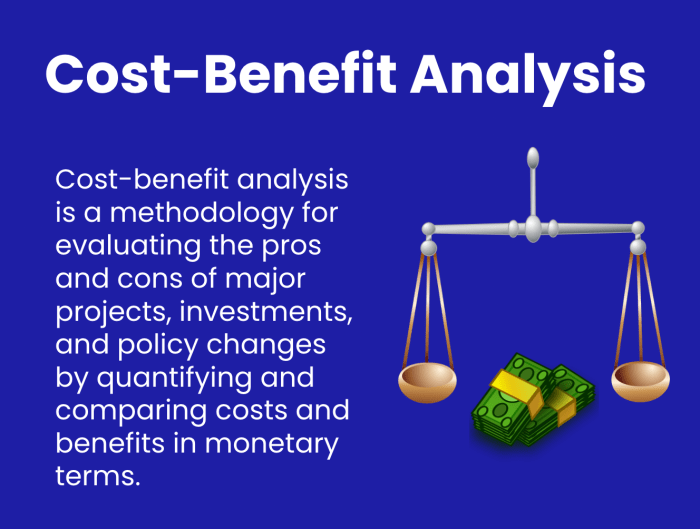
Cost-benefit analysis (CBA) is a crucial decision-making tool for multinational corporations (MNCs) navigating the complexities of international business. It provides a structured framework for evaluating the potential profitability and risks associated with various investment opportunities across borders, ensuring resources are allocated efficiently and strategically. Essentially, CBA involves systematically comparing the expected benefits of a project or venture against its anticipated costs, allowing for a rational assessment of its overall value.
The core principle of CBA lies in quantifying both tangible and intangible factors to arrive at a net present value (NPV). This NPV represents the overall financial gain or loss, considering the time value of money. A positive NPV suggests a worthwhile investment, while a negative NPV indicates otherwise. For MNCs, this rigorous approach is essential because international ventures involve significantly higher levels of uncertainty and risk compared to domestic operations, ranging from political instability and currency fluctuations to differing regulatory environments and cultural nuances.
Factors Considered in International CBA
A comprehensive CBA for international ventures considers a wide range of factors. These extend beyond simple financial calculations to encompass political, economic, social, and environmental aspects. Financial factors include initial investment costs, operating expenses, revenue projections, tax implications, and potential returns. Non-financial factors include market size and potential, regulatory hurdles, political risk, cultural compatibility, environmental regulations, and the availability of skilled labor. For instance, a manufacturing company considering setting up a plant in a developing country might weigh the lower labor costs against potential infrastructure challenges and political instability risks.
Industry-Specific Differences in CBA Frameworks
CBA frameworks are not uniform across all industries in international business. The relative importance of various factors varies significantly depending on the specific industry and project. For example, a technology company expanding into a new market might place greater emphasis on intellectual property protection and market penetration strategies in their CBA, while a resource extraction company would prioritize factors like resource availability, environmental regulations, and geopolitical risks. A pharmaceutical company, on the other hand, would need to account for stringent regulatory approvals and intellectual property rights, potentially incurring significantly higher upfront costs compared to a manufacturing firm. These industry-specific nuances highlight the need for tailored CBA approaches that accurately reflect the unique challenges and opportunities of each sector.
Identifying Costs and Benefits in International Expansion
International expansion presents a significant strategic decision for businesses, requiring a thorough evaluation of potential costs and benefits. A robust cost-benefit analysis (CBA) is crucial for informed decision-making, ensuring that the potential rewards outweigh the inherent risks and financial commitments. This section delves into the tangible and intangible aspects of both costs and benefits associated with venturing into new international markets.
Tangible and Intangible Costs of International Expansion
Entering a new international market involves substantial costs, which can be categorized as tangible and intangible. Tangible costs are readily quantifiable, representing direct financial outlays. Intangible costs, conversely, are less easily measured but equally significant in impacting the overall success of the venture.
Tangible costs include direct investments in infrastructure such as setting up offices, manufacturing facilities, or distribution networks. Operational expenses such as salaries for local staff, marketing and advertising campaigns tailored to the target market, and ongoing maintenance of operations contribute significantly. The risk of failure, though difficult to quantify precisely, translates into a tangible cost if the venture proves unsuccessful, leading to losses in investment and resources. For example, a company launching a new product line in a foreign market without adequate market research might incur significant losses due to poor sales.
Intangible costs encompass factors such as the time and effort dedicated to understanding the new market’s cultural nuances, legal framework, and business practices. Building relationships with local stakeholders, navigating bureaucratic processes, and managing potential cultural misunderstandings all consume valuable resources and can significantly impact the project’s timeline and budget. The risk of reputational damage due to operational issues or negative publicity is also a considerable intangible cost. For instance, a negative review in a foreign market can damage brand reputation and influence future sales.
Potential Benefits of International Expansion
The potential benefits of international expansion are numerous and can significantly impact a company’s long-term growth and profitability. Increased market share is a primary driver, as businesses gain access to a wider customer base beyond their domestic market. This expansion allows for economies of scale, reducing production costs and increasing profitability. Access to new resources, including raw materials, skilled labor, and technological advancements, can enhance competitiveness and innovation. Diversification of risk is a crucial benefit, as dependence on a single market is reduced, mitigating the impact of economic downturns or political instability in any one region. For example, a company with operations in multiple countries can offset losses in one market with gains in another.
Cost-Benefit Comparison Table
The following table provides a comparison of the costs and benefits associated with international expansion.
| Cost Type | Description | Benefit Type | Description |
|---|---|---|---|
| Initial Investment | Setting up offices, facilities, and infrastructure in the new market. | Increased Market Share | Access to a larger customer base, leading to higher sales and revenue. |
| Operational Expenses | Salaries, marketing, logistics, and other ongoing costs of operation. | Access to New Resources | Acquisition of raw materials, skilled labor, and technological advancements. |
| Risk of Failure | Potential loss of investment due to market misjudgment, operational challenges, or unforeseen circumstances. | Risk Diversification | Reduced dependence on a single market, mitigating the impact of economic or political instability. |
| Cultural Adaptation Costs | Expenses related to understanding and adapting to local cultural norms and business practices. | Enhanced Brand Reputation | Building a global brand presence, increasing customer trust and loyalty. |
Risk Assessment and Mitigation in International CBA
Conducting a comprehensive cost-benefit analysis (CBA) for international business ventures necessitates a thorough assessment and mitigation of inherent risks. Ignoring these risks can lead to inaccurate projections and ultimately, project failure. This section details various risk categories, quantification methods, and mitigation strategies.
International business ventures are inherently riskier than domestic ones due to the increased complexities involved. Factors such as political instability, currency fluctuations, and regulatory differences introduce significant uncertainties that must be carefully considered. Failing to account for these risks can lead to substantial financial losses and damage to a company’s reputation.
Types of Risks in International Business
A wide range of risks can significantly impact the success of international business ventures. Understanding these risks and their potential impact is crucial for developing effective mitigation strategies.
- Political Risk: This encompasses events such as political instability, regime change, civil unrest, nationalization, and expropriation. For example, a sudden change in government policy could lead to the imposition of new taxes or restrictions on foreign businesses, impacting profitability.
- Economic Risk: This includes macroeconomic factors like inflation, recession, currency devaluation, and changes in interest rates. For instance, unexpected inflation in a host country can erode the value of profits earned in the local currency when converted back to the home currency.
- Regulatory Risk: This involves changes in laws, regulations, and government policies that affect business operations. Examples include changes in environmental regulations, import/export restrictions, and labor laws. A sudden tightening of environmental regulations could necessitate costly upgrades to a manufacturing facility.
- Operational Risk: This category encompasses risks associated with day-to-day operations, such as supply chain disruptions, logistical challenges, and difficulties in managing a geographically dispersed workforce. A major port strike in a key trading partner could severely disrupt supply chains and production schedules.
- Financial Risk: This includes risks related to currency fluctuations, interest rate changes, and credit risk. Unforeseen currency fluctuations can significantly impact the profitability of a project, especially if there’s significant exposure to foreign exchange markets.
Quantifying and Incorporating Risks into CBA
Effectively integrating risk into a CBA requires quantifying the potential impact of each risk factor. This involves assigning probabilities and potential financial consequences to each risk.
Several methods can be employed:
- Sensitivity Analysis: This involves varying key input variables (e.g., exchange rates, sales volume) to assess their impact on the project’s net present value (NPV). This helps identify which variables are most sensitive to change and require closer monitoring.
- Scenario Planning: This involves developing multiple scenarios based on different assumptions about the future (e.g., optimistic, pessimistic, most likely). Each scenario is then evaluated separately, providing a range of potential outcomes.
- Monte Carlo Simulation: This is a sophisticated statistical technique that uses random sampling to model the probability distribution of project outcomes. It considers the uncertainty associated with various input variables and generates a distribution of potential NPVs.
The results of these analyses can be incorporated into the CBA by adjusting the projected cash flows to reflect the likelihood and potential impact of identified risks. For instance, a higher probability of political instability might lead to a reduction in projected cash flows for a particular year.
Obtain access to The Relationship Between Accounting and Corporate Governance to private resources that are additional.
Risk Mitigation Strategies
Once risks have been identified and quantified, strategies can be implemented to mitigate their impact. These strategies aim to reduce the probability or severity of negative outcomes.
- Insurance: Obtaining insurance coverage against specific risks, such as political risk insurance or property damage insurance, can transfer some of the financial burden of unexpected events.
- Hedging: Employing hedging strategies, such as currency hedging or interest rate swaps, can reduce exposure to financial risks associated with exchange rate fluctuations or interest rate changes. For example, a company could use forward contracts to lock in a favorable exchange rate for future transactions.
- Diversification: Diversifying operations across multiple countries or markets can reduce dependence on any single market and lessen the impact of localized risks. For example, if one market experiences political instability, operations in other markets can offset the losses.
- Local Partnerships: Collaborating with local partners can provide valuable insights into the local market, regulatory environment, and potential risks. Local partners can also help navigate complex bureaucratic processes and build stronger relationships with local stakeholders.
- Contingency Planning: Developing detailed contingency plans for various scenarios (e.g., natural disasters, political instability) can help ensure business continuity and minimize disruption in case of unforeseen events. This involves identifying potential disruptions and outlining specific actions to be taken to mitigate their impact.
Comparative Analysis of Different International Market Entry Strategies
Choosing the right international market entry strategy is crucial for success. A thorough cost-benefit analysis (CBA) allows businesses to weigh the potential gains against the associated risks and resource commitments of each option, ultimately leading to a more informed and strategic decision. This section compares and contrasts several common strategies, highlighting their respective cost-benefit profiles to illustrate how CBA can guide the selection process.
Several factors influence the choice of an international market entry strategy. These include the company’s resources and capabilities, the characteristics of the target market (e.g., market size, competitive landscape, regulatory environment), and the level of control desired over the foreign operations. A comprehensive CBA will consider all these factors to determine the optimal approach.
International Market Entry Strategy Comparison
The following table summarizes the cost-benefit profile of three common international market entry strategies: exporting, foreign direct investment (FDI), and joint ventures. It’s important to note that the specific costs and benefits will vary significantly depending on the industry, target market, and specific circumstances of the business.
| Strategy | Costs | Benefits | Risk Level |
|---|---|---|---|
| Exporting | Lower initial investment, transportation costs, tariffs, potential logistical challenges, marketing and distribution costs in the foreign market. | Lower risk, relatively quick entry, less capital commitment, potential for increased revenue and market share expansion. | Low to Moderate |
| Foreign Direct Investment (FDI) | High initial investment (e.g., setting up a subsidiary or acquiring a local company), operational costs, regulatory compliance costs, potential for cultural and management challenges. | High level of control, access to local resources and expertise, potential for significant profits, stronger brand presence. | Moderate to High |
| Joint Ventures | Negotiation and partnership costs, potential conflicts with partners, sharing of profits and control. | Shared risks and costs, access to local knowledge and networks, potentially faster market entry, compliance with local regulations facilitated by the partner. | Moderate |
How CBA Informs Strategy Choice: A CBA allows companies to quantify the costs and benefits of each strategy. For example, a company might calculate the net present value (NPV) of each option, considering factors such as initial investment, projected revenue streams, and the discount rate. The strategy with the highest NPV would generally be considered the most attractive. Additionally, the risk level associated with each strategy can be assessed through sensitivity analysis, identifying the potential impact of changes in key variables (e.g., exchange rates, sales volume) on the profitability of each option. This allows for a more robust and informed decision, mitigating potential negative outcomes.
For instance, a small company with limited resources might find exporting to be the most suitable entry strategy, due to its lower initial investment and risk. A larger company with more resources and a desire for greater control might opt for FDI. A company lacking specific local knowledge or expertise might prefer a joint venture, leveraging the partner’s local network and experience to overcome market entry barriers. The specific choice, however, depends heavily on the individual circumstances and the results of a comprehensive CBA.
The Role of Cultural and Political Factors in CBA
Cost-benefit analysis (CBA) in international business requires a nuanced understanding of the cultural and political landscape of the target market. Ignoring these factors can lead to inaccurate estimations and ultimately, flawed decision-making. Successful international expansion hinges on a comprehensive assessment of how cultural norms and political realities will influence both the costs and benefits associated with a particular venture.
Cultural differences significantly impact cost and benefit estimations. Variations in consumer preferences, communication styles, and business practices can affect market entry strategies, marketing campaigns, and operational efficiency. For instance, a marketing campaign successful in one culture might be completely ineffective, or even offensive, in another. Similarly, differences in labor laws and business etiquette can influence project timelines and associated labor costs.
Cultural Differences and Cost-Benefit Estimations
Understanding cultural nuances is crucial for accurate forecasting. For example, a company aiming to introduce a new product in a collectivist culture might need to adapt its marketing strategy to emphasize community benefits rather than individual gains. This could entail additional costs in market research and advertising, but it could also lead to greater market acceptance and higher returns. Conversely, a product designed for a highly individualistic culture might fail to resonate in a collectivist market, leading to significant losses. Failing to account for these cultural differences in the CBA could lead to a severely skewed assessment of profitability. Accurate cultural understanding, therefore, isn’t merely an add-on; it’s integral to a robust CBA.
Political and Regulatory Environments and International Business Decisions, How Cost-Benefit Analysis Influences International Business Decisions
The political and regulatory environment of a target market plays a crucial role in shaping international business decisions. Political stability, regulatory frameworks, and the presence of corruption all influence the risk profile of an investment. A stable political climate with clear and transparent regulations generally reduces risk and increases the likelihood of success. Conversely, political instability, arbitrary regulations, and corruption increase costs and uncertainty, potentially making a project unviable. These factors must be explicitly incorporated into the CBA.
Incorporating Political Risk into CBA
Political risk can be incorporated into a CBA through various methods, including scenario planning and sensitivity analysis. Scenario planning involves creating different scenarios based on varying levels of political risk, each with its associated costs and benefits. Sensitivity analysis helps determine the impact of changes in political variables on the overall project profitability. For example, a company considering an investment in a country with a history of political instability might develop three scenarios: a stable political environment, a moderate level of political instability, and a high level of political instability. Each scenario would have a different set of costs and benefits associated with it, allowing for a more realistic assessment of the project’s overall risk and return. This approach provides a more comprehensive and realistic assessment of the project’s viability compared to a CBA that ignores political risk entirely. Consider a hypothetical investment in a developing nation. A scenario analysis might project reduced returns or even losses in a scenario of political upheaval, whereas stable political conditions would show strong profitability. The CBA would then weigh these probabilities against each other, ultimately informing the decision.
Long-Term Sustainability and CBA in International Business
Incorporating long-term sustainability considerations into cost-benefit analyses (CBA) for international business ventures is no longer a niche practice; it’s a necessity. Ignoring the environmental and social impacts of a project can lead to reputational damage, regulatory hurdles, and ultimately, financial losses. A comprehensive CBA must account for the full lifecycle of a project, encompassing its environmental footprint and its effects on local communities. This ensures that decisions are not only financially sound but also ethically responsible and contribute to a more sustainable global economy.
The integration of environmental and social factors into a traditional financial CBA requires a nuanced approach. It necessitates moving beyond purely monetary valuations to encompass a broader range of impacts. This often involves assigning monetary values to intangible assets like biodiversity or community well-being, a process that can be challenging but increasingly crucial for responsible decision-making.
Methods for Incorporating Environmental and Social Costs and Benefits
Several methods exist for incorporating environmental and social costs and benefits into a CBA. These methods aim to quantify the often-intangible impacts of a project and express them in a common metric, usually monetary terms. This allows for a more holistic comparison of different investment options. For instance, the “shadow pricing” method assigns a monetary value to environmental goods and services, such as clean air or water, which are not typically traded in markets. Another approach involves conducting a life-cycle assessment (LCA) to evaluate the environmental impacts of a product or project from cradle to grave, including material extraction, manufacturing, transportation, use, and disposal. This LCA data can then be incorporated into the CBA. Furthermore, social impact assessments (SIAs) are used to quantify the social benefits and costs of a project, including its impact on employment, health, education, and community relations. These assessments might use qualitative data, which can then be translated into quantitative metrics for incorporation into the CBA using techniques like contingent valuation or stated preference methods. For example, a company investing in a new factory in a developing country might use an SIA to assess the impact on local employment and wages, factoring these impacts into its overall CBA.
Best Practices for Conducting a Sustainable CBA in International Business
Conducting a robust and reliable sustainable CBA requires careful planning and execution. Several best practices can enhance the accuracy and credibility of the analysis.
It is crucial to establish clear objectives and scope from the outset. Defining the geographic boundaries, timeframe, and key stakeholders is essential for a focused and relevant analysis. This includes identifying the relevant environmental and social issues that the project may impact. A thorough stakeholder consultation process ensures that the perspectives of all affected parties, including local communities, are considered.
Transparency and data quality are paramount. Using reliable data sources and employing rigorous methodologies builds trust and confidence in the results. Clearly documenting the assumptions and limitations of the analysis is essential for transparency and allows for scrutiny and critical evaluation by stakeholders. This includes clearly defining the metrics used, the data sources, and the methods employed to translate qualitative data into quantitative measures. Furthermore, independent verification of data and methodologies can strengthen the credibility of the analysis. A robust sensitivity analysis should be performed to assess the impact of uncertainties and assumptions on the final results. This allows for a more informed decision-making process by highlighting potential risks and opportunities.
Finally, integrating the findings of the sustainable CBA into the overall decision-making process is crucial. The results should be clearly communicated to all stakeholders, and the analysis should inform the design and implementation of mitigation strategies to address any identified negative impacts. Regular monitoring and evaluation of the project’s environmental and social performance are necessary to ensure that the commitments made in the CBA are met and to identify any unforeseen consequences. This iterative process ensures continuous improvement and contributes to a more responsible and sustainable approach to international business.
Case Studies
Case studies offer valuable insights into the practical application of cost-benefit analysis (CBA) in international business. Examining both successful and unsuccessful implementations reveals crucial lessons for strategic decision-making. By analyzing these examples, we can better understand the critical factors that contribute to the effectiveness of CBA in guiding international expansion strategies.
Successful CBA: Starbucks’ Expansion into China
Starbucks’ successful expansion into China serves as a compelling case study demonstrating the effectiveness of a well-executed CBA. Prior to entering the Chinese market, Starbucks conducted extensive research to identify potential costs and benefits. Costs included significant initial investment in store development, marketing campaigns targeting a new consumer base, and navigating complex regulatory environments. Benefits were projected based on the immense size of the Chinese consumer market, the growing middle class’s increasing disposable income, and the potential for high brand loyalty within a market with a burgeoning coffee culture. Their CBA incorporated detailed market research, projections of sales growth, and analysis of potential risks such as competition from local coffee chains and fluctuating currency exchange rates. The meticulous planning and careful consideration of both short-term and long-term implications resulted in a highly profitable expansion, solidifying Starbucks’ position as a leading global coffee brand. The outcome showcased the importance of a comprehensive CBA in mitigating risks and maximizing returns in a challenging international market.
Unsuccessful CBA: The Failure of Walmart in Germany
In contrast to Starbucks’ success, Walmart’s failure in Germany highlights the detrimental consequences of neglecting a thorough CBA. Walmart underestimated the significant cultural differences between the US and German markets. They failed to adequately account for the strong preference among German consumers for local grocery stores and established brands, leading to underestimation of marketing costs needed to overcome this preference. Furthermore, their CBA overlooked the higher labor costs in Germany and the complexities of complying with stringent German regulations concerning employee benefits and working conditions. They also underestimated the costs associated with adapting their business model to the unique needs and preferences of German consumers, particularly regarding product assortment and store layout. The result was significant financial losses and a hasty retreat from the German market, underscoring the critical need for a comprehensive CBA that fully accounts for cultural, regulatory, and economic factors.
Visual Representation of a Successful International CBA
Imagine a flowchart. At the top is a central box labeled “International Expansion Project: [Project Name]”. From this central box, two main branches extend downwards: “Costs” and “Benefits”. The “Costs” branch further subdivides into smaller boxes representing: initial investment (facilities, equipment), marketing and advertising, operational expenses (staffing, utilities), regulatory compliance costs, and potential risks (currency fluctuations, political instability). Each box contains a quantified estimate. The “Benefits” branch similarly branches into boxes for: projected revenue, market share gains, brand enhancement, access to new resources, and long-term growth potential. Each benefit box also includes quantified projections. Connecting the “Costs” and “Benefits” branches at the bottom is a final box labeled “Net Present Value (NPV)” which displays the calculated difference between total discounted benefits and total discounted costs, indicating the overall profitability of the project. Arrows connecting all boxes clearly show the flow of information and relationships between costs, benefits, and the final NPV. This visual clearly communicates the comprehensive nature of a successful CBA, highlighting the detailed analysis required for effective international expansion.
Last Point: How Cost-Benefit Analysis Influences International Business Decisions
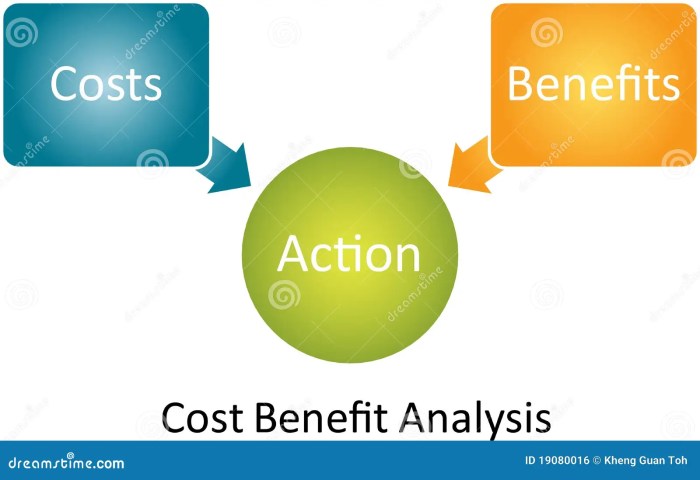
In conclusion, a robust cost-benefit analysis is indispensable for informed decision-making in international business. By meticulously assessing both tangible and intangible costs and benefits, while proactively addressing potential risks and incorporating long-term sustainability considerations, businesses can significantly improve their odds of successful international expansion. The process, while demanding, empowers companies to make strategic choices aligned with their overall goals and risk tolerance, ultimately driving sustainable growth and profitability in the global marketplace.
Quick FAQs
What are some common intangible costs overlooked in international CBA?
Intangible costs often overlooked include reputational damage from negative publicity, loss of intellectual property, and difficulties in managing cultural differences within teams.
How can political risk be effectively incorporated into a CBA?
Political risk can be incorporated using scenario planning, sensitivity analysis, and by consulting political risk assessment firms to assign probabilities to various political events and their potential financial impacts.
What are some examples of long-term sustainability factors in international CBA?
Examples include environmental impact assessments, adherence to ethical labor practices, and community engagement initiatives. These can be quantified through metrics like carbon footprint reduction or community development impact.
How does CBA differ for small and medium-sized enterprises (SMEs) compared to large multinational corporations (MNCs)?
SMEs often have fewer resources for extensive CBA, relying on simpler models and potentially focusing on fewer market entry options. MNCs can afford more sophisticated analyses and have greater capacity for risk absorption.