



Understanding Tax Credits and How They Benefit Your Business is crucial for any forward-thinking enterprise. This guide delves into the world of tax credits, explaining how these valuable incentives can significantly reduce your tax liability and fuel business growth. We’ll explore various types of business tax credits, eligibility criteria, calculation methods, and the application process, empowering you to make informed decisions and maximize your financial potential.
From researching available credits to understanding the documentation required for successful claims, we’ll equip you with the knowledge needed to navigate the complexities of tax credits. We’ll also analyze the long-term impact of utilizing tax credits, comparing their advantages to other funding options and providing real-world examples of how businesses have successfully leveraged them for expansion and increased profitability.
Introduction to Tax Credits
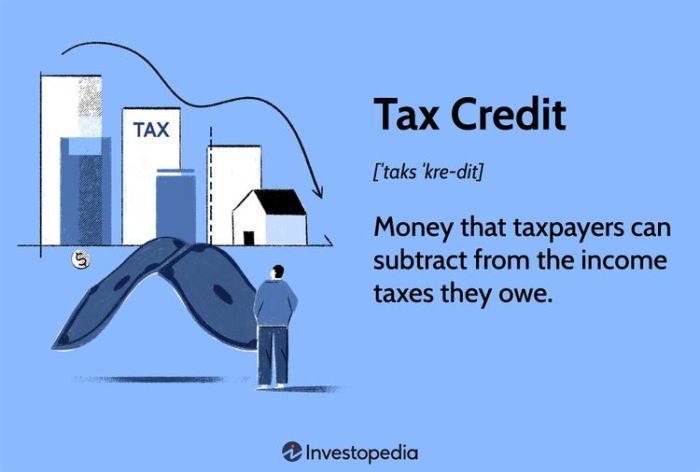
Tax credits offer businesses a powerful way to reduce their tax liability, providing significant financial relief. Unlike tax deductions, which reduce the amount of income subject to tax, tax credits directly reduce the amount of tax owed, dollar for dollar. This makes them a more impactful financial incentive than deductions. Understanding the various types of available credits is crucial for maximizing a business’s financial well-being.
Tax credits are offered by governments at various levels – federal, state, and even local – to incentivize specific business activities or support particular industries. These credits can be claimed by businesses that meet specific eligibility requirements, often involving investments in research, environmentally friendly technologies, or employee training programs. The specific criteria vary widely depending on the credit and governing jurisdiction.
Types of Business Tax Credits
A wide range of business tax credits exists, catering to diverse business needs and goals. These credits are designed to stimulate economic growth and encourage responsible business practices. The availability and specific requirements for these credits can change, so staying updated on current regulations is essential.
Examples of Common Business Tax Credits
Several common tax credits can significantly benefit businesses. The Research and Development (R&D) tax credit, for example, incentivizes companies to invest in innovation by offering a credit against their tax liability for qualified R&D expenses. This can include costs associated with developing new products, processes, or improving existing ones. The amount of the credit is generally calculated as a percentage of qualified R&D expenses. Another example is the energy-efficient investment tax credit, which encourages businesses to adopt energy-saving technologies and practices by offering a credit for investments in qualified energy-efficient equipment and improvements. This could include things like solar panels, high-efficiency heating and cooling systems, or energy-efficient lighting. These credits can significantly reduce the upfront costs associated with such investments, making them more financially attractive for businesses. For instance, a company investing in solar panels might be able to claim a credit that reduces their tax burden by a substantial amount, effectively lowering the overall cost of the solar panel installation.
Identifying Eligible Tax Credits: Understanding Tax Credits And How They Benefit Your Business
Claiming business tax credits can significantly reduce your tax liability, but understanding eligibility requirements is crucial. This section details the criteria your business must meet to qualify for specific tax credits and the necessary documentation for successful claims. Incorrectly claiming a credit can lead to penalties, so careful review is essential.
Eligibility for tax credits hinges on several factors, primarily relating to your business structure, activities, and financial performance. Specific requirements vary widely depending on the credit itself. For example, some credits are targeted towards small businesses, while others focus on specific industries or investment activities. Always refer to the most current IRS publications and guidelines for precise and up-to-date information.
Documentation Requirements for Claiming Business Tax Credits
Supporting documentation is paramount when claiming business tax credits. The IRS requires substantial evidence to verify your eligibility and the accuracy of your claimed amount. Failure to provide adequate documentation will likely result in the rejection of your claim. Commonly required documents include, but are not limited to, invoices, receipts, bank statements, payroll records, and contracts. Maintaining meticulous financial records throughout the year is essential for a smooth tax filing process. Organize your documentation carefully, clearly linking each expense or investment to the specific tax credit claimed.
Comparison of Eligibility Requirements for Selected Tax Credits
The following table compares the eligibility requirements for three common business tax credits. Note that these are simplified examples, and specific requirements can change, so always consult official IRS publications for the most current information.
| Credit Name | Eligibility Criteria | Required Documentation | Maximum Credit Amount |
|---|---|---|---|
| Research and Experimentation (R&E) Credit | Expenses for qualified research, development, and experimentation activities. Must be for creating new or improved products or processes. | Detailed records of research expenses, including labor costs, supplies, and contract research expenses. Documentation of the technological advancement achieved. | Varies depending on qualified expenses. |
| Work Opportunity Credit (WOTC) | Hiring individuals from certain targeted groups, such as veterans, ex-offenders, and long-term unemployed individuals. | Proof of hire date, documentation verifying the employee’s membership in a targeted group (e.g., veteran status verification), and payroll records. | Varies depending on the employee’s characteristics and wages. |
| Small Business Health Care Tax Credit | Small businesses offering health insurance to their employees. Specific size and average annual wage requirements apply. | Proof of health insurance premiums paid, employee payroll records, and documentation verifying the business’s size and average annual wage. | Up to 50% of premiums paid. |
Calculating Tax Credit Benefits
Understanding how tax credits translate into real savings for your business is crucial. This section will demonstrate the calculation process using a hypothetical scenario and provide a step-by-step guide for applying these credits to your tax return. This will help you accurately assess the financial advantages of claiming eligible tax credits.
Tax credits directly reduce your business’s tax liability, dollar for dollar. Unlike deductions, which reduce your taxable income, credits directly lower the amount of tax you owe. This makes them a particularly powerful tool for minimizing your tax burden. For example, a $1,000 tax credit directly reduces your tax bill by $1,000, whereas a $1,000 deduction would only reduce your tax bill by a smaller amount, depending on your tax bracket.
Calculating Tax Credit Savings: A Hypothetical Example
Let’s imagine “GreenThumb Gardening,” a small landscaping business, is eligible for the Work Opportunity Tax Credit (WOTC). Suppose GreenThumb hired a previously unemployed individual and, based on the WOTC rules, is eligible for a credit of $2,400. This means GreenThumb’s tax liability is directly reduced by $2,400. If their total tax liability before the credit was $10,000, their new tax liability would be $7,600. This represents a significant saving for the business. This example illustrates the direct impact of a tax credit, making it a more beneficial incentive than a tax deduction.
A Step-by-Step Guide to Calculating and Applying Tax Credits
Calculating and applying tax credits effectively requires a systematic approach. Follow these steps to ensure you maximize your tax benefits.
- Identify Eligible Credits: Begin by thoroughly researching all potential tax credits your business might qualify for. Consider factors such as your industry, location, employee demographics, and business investments. The IRS website provides a comprehensive list of available credits.
- Gather Required Documentation: Each credit will have specific documentation requirements. This may include payroll records, invoices, receipts, and other supporting documents. Maintain meticulous records to support your claims.
- Calculate the Credit Amount: Carefully review the specific calculation rules for each eligible credit. Many credits have formulas or tables that determine the exact credit amount. Using the GreenThumb example, the calculation would be based on the WOTC rules, providing a $2,400 credit.
- Complete the Relevant Tax Forms: The IRS provides specific forms for claiming various tax credits. Accurately complete these forms, providing all necessary information and supporting documentation. Errors can lead to delays or rejection of your claim.
- File Your Tax Return: Submit your completed tax return, including the relevant tax credit forms, by the tax deadline. Electronic filing is often the most efficient method.
Understanding Tax Liability Reduction
Tax credits directly reduce the amount of tax owed. This contrasts with deductions, which lower taxable income. A $1,000 tax credit reduces the tax bill by $1,000. A $1,000 deduction reduces the tax bill by a smaller amount, depending on the business’s tax bracket. The impact of a tax credit is therefore more substantial. This makes them a highly valuable tool for businesses seeking to minimize their tax obligations. For example, a business in a 25% tax bracket would only save $250 in taxes with a $1000 deduction, while a $1000 tax credit would save $1000.
Impact of Tax Credits on Business Growth

Tax credits offer a powerful incentive for businesses to invest in growth and expansion. By directly reducing a company’s tax liability, they provide a significant financial boost that can be channeled into various aspects of business development, ultimately leading to increased profitability and competitiveness. This injection of capital can be particularly impactful for small and medium-sized enterprises (SMEs) that may have limited access to other funding sources.
Tax credits offer a compelling alternative to other funding options, such as loans or equity investments. Unlike loans, tax credits don’t require repayment, freeing up cash flow for operational needs. Compared to equity financing, tax credits don’t dilute ownership stakes, allowing businesses to maintain control over their operations. The long-term financial implications are therefore significantly different; tax credits provide a direct, non-dilutive infusion of capital that contributes to sustainable growth without incurring additional debt or compromising ownership.
Long-Term Financial Implications of Tax Credits
The long-term financial advantages of utilizing tax credits are substantial. The immediate reduction in tax liability translates into increased working capital, enabling businesses to invest in research and development, upgrade equipment, expand their workforce, or pursue strategic acquisitions. This, in turn, leads to increased productivity, higher revenues, and enhanced market position. The cumulative effect over time can be significantly greater than the initial tax credit amount, making it a highly effective tool for sustainable business growth. For example, a company receiving a $100,000 tax credit might reinvest that amount into new machinery, leading to increased production efficiency and a subsequent increase in profits far exceeding the initial credit.
Examples of Business Growth Fueled by Tax Credits
The following examples illustrate how businesses have successfully leveraged tax credits to achieve specific growth objectives:
- A technology startup utilized the Research and Development (R&D) tax credit to fund the development of a new software application. The tax credit allowed them to hire additional engineers and accelerate the product’s time to market, resulting in a significant increase in revenue and market share.
- A small manufacturing company invested its energy efficiency tax credits in upgrading its facilities with energy-saving equipment. This resulted in lower operating costs, improved environmental performance, and a more attractive image to environmentally conscious customers.
- A retail business used its work opportunity tax credit to hire and train employees from disadvantaged backgrounds. This improved their workforce diversity, boosted employee morale, and contributed to a positive brand image, ultimately leading to increased customer loyalty and sales.
Tax Credit Application and Claiming Process
Successfully navigating the application and claiming process for business tax credits is crucial to maximizing their financial benefits. Understanding the specific requirements and potential pitfalls can significantly improve your chances of a smooth and successful claim. This section Artikels the key steps and provides practical advice to ensure accurate and timely submission.
The application and claiming process for business tax credits varies depending on the specific credit and your location (federal versus state). However, some common steps apply across most scenarios. Generally, you will need to gather necessary documentation, complete the relevant forms, and file them with the appropriate tax authority by the designated deadline. Failure to meet deadlines or provide complete information can lead to delays or rejection of your claim.
Required Documentation and Forms, Understanding Tax Credits and How They Benefit Your Business
To begin, identify the specific tax credit you are eligible for. Each credit will have its own set of requirements and supporting documentation. Common documents needed often include financial statements, payroll records, invoices, contracts, and any other evidence that substantiates your claim. Carefully review the instructions accompanying the specific tax credit form to determine precisely what documentation is required. Incomplete applications are frequently rejected, resulting in lost opportunities. For example, claiming the Research and Development tax credit would require detailed records of research expenses, while the Work Opportunity Tax Credit would necessitate documentation of the hiring and employment of qualified individuals.
Steps for Accurate and Timely Submission
A checklist approach can significantly reduce the risk of errors. First, meticulously gather all necessary documentation, ensuring it’s accurate, complete, and organized. Next, carefully review the instructions for the specific tax credit form. Pay close attention to deadlines and submission methods. Consider using tax preparation software or consulting with a tax professional to ensure accuracy and compliance. Submitting your application well before the deadline allows time to address any potential issues that may arise. Finally, keep copies of all submitted documents for your records.
Common Errors and Solutions
Several common errors can hinder the successful claiming of tax credits. One frequent mistake is failing to meet specific eligibility requirements. Thoroughly review the criteria for each credit before applying. Another common error involves inaccurate or incomplete documentation. This can be mitigated through careful record-keeping and double-checking all supporting documents. Inaccurate calculations of the credit amount are also prevalent. Using tax software or consulting a professional can help prevent this. Finally, missing deadlines is a major issue. Planning ahead and allowing ample time for processing are crucial. For instance, failing to provide accurate employee information when claiming the Work Opportunity Tax Credit could result in a rejected claim. Similarly, an error in calculating eligible research expenses for the R&D tax credit could lead to a reduced credit amount.
Staying Updated on Tax Credit Changes
Staying informed about changes in tax laws and regulations is crucial for businesses to maximize their tax benefits and avoid potential penalties. Tax credits, in particular, are subject to frequent revisions, and failing to keep abreast of these changes can lead to missed opportunities or even legal repercussions. Regularly reviewing updates ensures your business remains compliant and benefits from all available incentives.
The landscape of tax credits is dynamic, with changes implemented regularly at both the federal and state levels. These changes can include modifications to eligibility criteria, credit amounts, or the application process itself. Understanding these changes is essential for businesses to leverage tax credits effectively and avoid costly mistakes.
Resources for Staying Updated on Tax Credit Information
Several resources are available to help businesses stay informed about tax credit changes. Government websites, such as the IRS website (for federal tax credits) and the websites of individual state tax agencies, provide official information on current tax laws and regulations. These websites often feature news sections, updated forms, and publications explaining changes in detail. Additionally, tax professionals, such as CPAs and enrolled agents, offer valuable expertise and guidance on navigating the complexities of tax law and keeping businesses updated on relevant changes. They can interpret the regulations and advise on how new changes might impact a specific business.
Consequences of Failing to Stay Current with Tax Credit Regulations
Failure to stay current with tax credit regulations can result in several negative consequences for businesses. Missing out on eligible credits is a significant loss of potential savings, impacting profitability and growth. More seriously, incorrect claims or missed deadlines can lead to penalties and interest charges from tax authorities. In some cases, intentional non-compliance can result in legal action. For example, a company might unknowingly miss a deadline for claiming a research and development tax credit, resulting in a substantial financial loss and potential penalties. This underscores the importance of proactive monitoring and seeking professional advice when navigating the complex world of business tax credits.
Illustrative Examples of Tax Credit Use Cases
Understanding how tax credits work in practice is crucial. Real-world examples demonstrate the significant financial benefits and positive impacts these credits can have on diverse businesses. The following case studies highlight the application of tax credits, their resulting impact, and any challenges encountered.
Case Study 1: Green Energy Manufacturing
This small manufacturing company, “EcoPower Solutions,” specialized in producing solar panels. They invested heavily in new, more efficient equipment to increase production capacity. EcoPower successfully utilized the Investment Tax Credit (ITC) offered by the government for renewable energy investments. The ITC significantly reduced their tax liability, freeing up capital that was then reinvested in research and development of next-generation solar technology. This investment led to the development of a more efficient and cost-effective solar panel, boosting their market share and profitability. A challenge faced was navigating the complex application process for the ITC, requiring detailed record-keeping and professional tax advice.
Case Study 2: Small Business Hiring Credit
“TechStart,” a rapidly growing software development company, faced challenges in finding qualified programmers. To address this, they utilized the Work Opportunity Tax Credit (WOTC). This credit incentivizes businesses to hire individuals from targeted groups, such as veterans or long-term unemployed individuals. By hiring individuals through WOTC, TechStart not only filled crucial positions but also benefited from a substantial reduction in their tax burden. The credit provided them with the financial flexibility to offer competitive salaries and benefits, attracting top talent. The main challenge was verifying the eligibility of potential employees to meet the WOTC requirements, which involved careful documentation and adherence to strict guidelines.
Case Study 3: Research and Development Tax Credit
“BioMed Innovations,” a biotechnology startup, dedicated significant resources to research and development of a new cancer treatment. They utilized the Research and Development (R&D) Tax Credit, which incentivizes businesses to invest in innovation. The credit substantially reduced their tax liability, allowing them to continue their crucial research and development efforts. This sustained investment resulted in a significant breakthrough in their cancer treatment research, leading to a promising new drug candidate and attracting substantial venture capital investment. A key challenge for BioMed Innovations was accurately calculating their eligible R&D expenses, as the definition of qualifying expenses can be intricate and requires detailed record-keeping and potentially professional tax advice.
Last Point
Successfully navigating the world of business tax credits can unlock substantial financial benefits, leading to increased investment, expansion opportunities, and overall business growth. By understanding the eligibility requirements, calculation methods, and application process, businesses can significantly reduce their tax burden and channel these savings towards strategic initiatives. Remember to stay informed about changes in tax laws and regulations to consistently maximize the advantages these credits offer.
Questions and Answers
What happens if I accidentally claim a tax credit I’m not eligible for?
Claiming an ineligible tax credit can result in an audit and potential penalties, including repayment of the wrongly claimed amount and interest. It’s crucial to carefully review eligibility requirements before applying.
Are there any penalties for filing tax returns late that include tax credit claims?
Yes, late filing generally results in penalties. These penalties can vary depending on the jurisdiction and the length of the delay. Prompt filing is essential to avoid these penalties.
Can I claim tax credits if my business is operating at a loss?
Yes, tax credits can still be beneficial even if your business is operating at a loss. They reduce your tax liability, potentially resulting in a smaller overall tax payment or a larger refund.
Where can I find reliable information about current tax credit offerings?
Reliable sources include the official website of your country’s tax authority, reputable accounting firms, and tax professionals specializing in business taxation. Always verify information from multiple sources.
Learn about more about the process of How to Improve Business Cash Flow with Smart Accounting in the field.