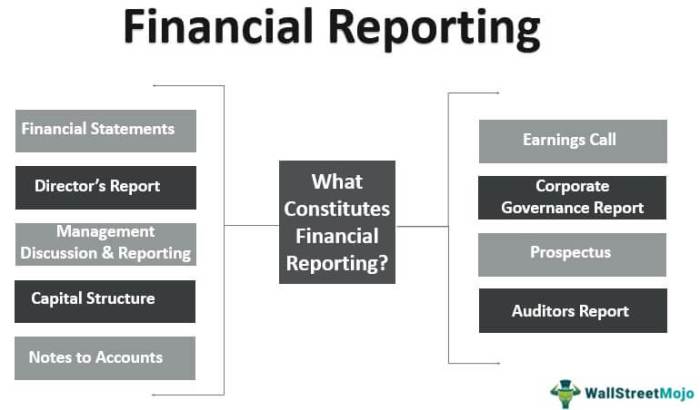





How Global Investment Funds Influence Financial Reporting Trends is a critical area of study in modern finance. The immense capital controlled by these funds exerts significant pressure on companies, shaping not only accounting standards but also disclosure practices, auditing processes, and corporate governance. This influence, while potentially beneficial in promoting transparency and accountability, also raises concerns about potential conflicts of interest and the homogenization of reporting practices globally. Understanding this dynamic is crucial for investors, regulators, and businesses alike.
This exploration delves into the multifaceted ways global investment funds impact financial reporting. We will examine how their investment strategies drive demand for standardized reporting, influencing the adoption of international standards like IFRS. Furthermore, we’ll analyze the effects on transparency, auditing procedures, and corporate governance structures, highlighting regional variations and potential challenges.
The Role of Global Investment Funds in Shaping Financial Reporting Standards

Global investment funds, with their vast capital and international reach, exert significant influence on the evolution of financial reporting standards. Their demand for consistent and transparent financial information directly impacts the adoption and enforcement of these standards, creating a powerful incentive for companies to align their reporting practices with globally accepted norms. This influence stems from their need to accurately assess risk and make informed investment decisions across diverse markets.
Influence on Demand for Standardized Financial Reporting
The sheer scale of global investment fund holdings necessitates standardized financial reporting. These funds invest in companies across numerous jurisdictions, each potentially employing different accounting standards. Without standardization, comparing the financial health and performance of these diverse investments becomes incredibly complex and unreliable. Consequently, funds actively advocate for greater harmonization of accounting standards, pushing for the widespread adoption of frameworks like International Financial Reporting Standards (IFRS) to facilitate efficient portfolio management and risk assessment. This demand for comparability directly translates into pressure on companies to adopt and adhere to these globally recognized standards.
Impact on Adoption of New Accounting Standards
Pressure from global investment funds significantly accelerates the adoption of new accounting standards. Funds often incorporate Environmental, Social, and Governance (ESG) factors into their investment strategies, demanding greater transparency and disclosure on such matters. This has led to a surge in the adoption of sustainability reporting standards and frameworks. Furthermore, funds actively engage with companies, urging them to adopt IFRS or other globally accepted standards, sometimes leveraging their voting rights or divesting from companies that lag in their reporting practices. This pressure incentivizes companies to proactively adapt to evolving reporting requirements to maintain access to capital and attract further investment.
Examples of Investment Fund Pressure Leading to Reporting Changes
Several instances highlight the impact of investment fund pressure on reporting practices. For example, the increased focus on ESG reporting has been significantly driven by the demands of large institutional investors who are increasingly integrating ESG factors into their investment decisions. Companies facing pressure from these funds have responded by expanding their sustainability reports, enhancing their disclosures on climate-related risks, and incorporating more detailed information on their social and governance practices. Another example involves the push for more robust corporate governance disclosures. Global funds often scrutinize corporate governance structures, leading to increased transparency in areas such as executive compensation, board composition, and risk management practices. This scrutiny has prompted many companies to improve their corporate governance disclosures to align with best practices and attract investment.
Comparison of Reporting Practices
The following table compares the reporting practices of companies heavily invested in by global funds versus those without significant global investment. The differences highlight the influence of these funds in driving higher standards of financial reporting.
| Aspect | Companies with Significant Global Investment | Companies without Significant Global Investment |
|---|---|---|
| Adoption of IFRS | High | Lower |
| ESG Reporting | Comprehensive and detailed | Limited or absent |
| Transparency of Corporate Governance | High level of disclosure | Lower level of disclosure |
| Frequency of Reporting | More frequent reporting (e.g., quarterly) | Less frequent reporting (e.g., annually) |
Impact on Disclosure Practices and Transparency
Global investment funds, wielding significant financial power, exert considerable influence on corporate disclosure practices and the overall transparency of financial reporting. Their investment strategies, often focused on specific metrics and risk assessments, directly shape the information companies choose to reveal and how they present it. This influence is not always uniform, varying across sectors and depending on the specific fund’s investment philosophy and the regulatory environment.
The prioritization of certain metrics by global investment funds significantly impacts the information companies choose to highlight in their financial statements. For instance, if a fund heavily emphasizes environmental, social, and governance (ESG) factors, companies will likely increase their disclosures related to sustainability initiatives, carbon emissions, and diversity metrics to attract investment. Conversely, a fund focused solely on short-term profitability might incentivize companies to downplay long-term risks or investments in research and development, leading to less comprehensive disclosures.
Influence on Transparency Levels
The impact of global investment funds on transparency is multifaceted. While some funds actively advocate for greater transparency, aiming to reduce information asymmetry and improve market efficiency, others might prioritize access to proprietary information, potentially leading to decreased transparency for the broader public. This disparity stems from differing investment strategies and the varying degrees of access to information these funds possess. The pressure to meet the expectations of these powerful investors can sometimes lead companies to selectively disclose information, potentially benefiting some stakeholders at the expense of others. The resulting landscape is complex and dynamic, with transparency levels fluctuating based on the prevailing investment trends and regulatory pressures.
Examples of Advocacy for Increased or Decreased Transparency
Activist investors, often backed by large global funds, frequently pressure companies to enhance their disclosures regarding environmental impacts, labor practices, and supply chain transparency. For example, a fund might publicly advocate for a company to disclose its carbon footprint more comprehensively or to provide detailed information on its sourcing practices. Conversely, certain private equity funds, known for their focus on maximizing short-term returns, might prefer less public disclosure, particularly regarding operational details or strategic plans, as this information could be used by competitors. The outcome depends on the specific fund’s objectives and the power dynamics between the investor and the company.
Key Metrics Prioritized by Global Investment Funds
Global investment funds commonly prioritize a range of key metrics in their investment decisions. The specific metrics vary based on the fund’s investment strategy and the sector in which it invests. However, several metrics consistently emerge as significant factors:
- Earnings Per Share (EPS): A widely used measure of profitability, reflecting the portion of a company’s profit allocated to each outstanding share.
- Return on Equity (ROE): A key profitability ratio indicating how effectively a company uses shareholder investments to generate profit.
- Revenue Growth: A measure of a company’s top-line growth, reflecting its ability to generate sales and expand its market share.
- Debt-to-Equity Ratio: A leverage ratio assessing a company’s financial risk by comparing debt to equity financing.
- Environmental, Social, and Governance (ESG) Scores: Increasingly important metrics reflecting a company’s commitment to sustainability, social responsibility, and ethical governance practices.
Influence on the Auditing Process and Assurance: How Global Investment Funds Influence Financial Reporting Trends
Global investment funds, with their substantial financial clout and sophisticated investment strategies, exert a significant influence on the auditing process. Their involvement impacts not only the scope and intensity of audits but also the perceived independence of auditors and the overall quality of financial reporting. This section will explore these effects, comparing audit practices across companies with varying levels of global investment fund involvement.
The involvement of global investment funds significantly alters the auditing landscape. These funds often possess in-house expertise in financial analysis and a deep understanding of accounting standards. This enables them to scrutinize financial statements with a higher level of detail and sophistication than typical stakeholders. Consequently, audit firms find themselves under increased pressure to conduct more thorough and comprehensive audits to meet the expectations of these discerning investors. Furthermore, the sheer size of investments managed by these funds creates a higher-stakes environment for both the companies being audited and the auditing firms themselves. Any significant audit finding can have substantial repercussions for both parties.
Audit Quality Differences Based on Global Investment Fund Involvement
Companies with high levels of global investment fund involvement generally experience more rigorous auditing processes. These funds often demand a higher level of assurance, leading to more extensive audit procedures, increased sampling sizes, and a greater focus on areas with higher risk of material misstatement. For example, a company heavily invested in by several large global funds might undergo more detailed testing of its revenue recognition processes, its inventory valuation methods, and its financial derivatives. In contrast, companies with less involvement from global investment funds may receive a more standard audit approach, with potentially less scrutiny in certain areas. This disparity can lead to observable differences in audit quality, though quantifying this difference precisely is challenging due to the lack of publicly available, standardized metrics for audit quality across diverse companies. However, anecdotal evidence and industry reports suggest a clear correlation between high levels of global investment fund involvement and a more thorough, and arguably higher-quality, audit.
Auditor Independence and the Demand for Robust Financial Reporting
The demand for robust financial reporting from global investment funds directly impacts auditor independence. These funds are not passive investors; they actively engage with management and exert pressure for transparency and accountability. This heightened scrutiny can create a delicate balance for auditors. While they are obligated to maintain their independence from management, they also need to maintain a positive working relationship with the company to effectively conduct the audit. The potential for conflicts of interest arises when a fund’s pressure for certain accounting treatments conflicts with generally accepted accounting principles (GAAP) or International Financial Reporting Standards (IFRS). Auditors must navigate these complexities to ensure both their independence and the integrity of their audit findings. A strong internal control environment within the audit firm and robust regulatory oversight are critical to mitigate this risk.
Types of Audit Procedures Influenced by Global Investment Fund Scrutiny
The following table illustrates the different types of audit procedures that are frequently influenced by the scrutiny of global investment funds.
| Audit Procedure Category | Specific Procedures Affected | Impact of Global Investment Fund Scrutiny | Example |
|---|---|---|---|
| Revenue Recognition | Testing of sales contracts, revenue cutoff procedures, and allowance for doubtful accounts | Increased sampling size, more detailed substantive testing, and heightened scrutiny of complex transactions | More rigorous testing of revenue recognition for long-term contracts with multiple performance obligations. |
| Inventory Valuation | Testing of inventory counts, obsolescence, and valuation methods | More detailed analysis of inventory valuation methods, particularly for companies with high levels of inventory or complex inventory management systems. | Increased testing of the lower-of-cost-or-market method for inventory valuation. |
| Financial Instruments | Testing of derivative instruments, hedge accounting, and impairment losses | More detailed review of financial instruments, including testing of valuation models and hedge effectiveness. | Increased scrutiny of the accounting treatment of complex derivatives and hedge accounting policies. |
| Internal Controls | Testing of key controls over financial reporting | More extensive testing of internal controls, particularly in areas identified as high-risk by the global investment funds. | Expanded testing of controls related to revenue recognition, inventory management, and financial reporting processes. |
The Impact on Corporate Governance and Risk Management
Global investment funds, wielding substantial capital, exert considerable influence on the corporate governance structures and risk management practices of companies in which they invest. Their investment strategies, often prioritizing long-term value creation and responsible investing, directly impact how companies are managed and the information they disclose to stakeholders. This influence can be both positive and negative, depending on the fund’s approach and the specific circumstances.
Global investment funds’ involvement shapes corporate governance by encouraging or demanding changes in board composition, executive compensation, and overall corporate strategy. Their active engagement, often through shareholder resolutions or direct dialogue with management, pushes companies to adopt more robust governance frameworks. Conversely, a focus solely on short-term returns can incentivize practices that prioritize immediate profits over sustainable growth and long-term value, potentially weakening governance.
Influence on Corporate Governance Structures
The investment strategies of global funds significantly impact corporate governance structures. Funds advocating for Environmental, Social, and Governance (ESG) factors often pressure companies to improve their environmental sustainability, social responsibility, and ethical business practices. This pressure can manifest in increased board diversity, the adoption of independent audit committees, and stricter internal control mechanisms. For instance, a large activist fund might nominate independent directors to a company’s board to enhance oversight and accountability, thereby strengthening the governance structure. Conversely, funds solely focused on maximizing short-term returns may be less inclined to invest time and resources in pushing for such changes, potentially leading to weaker governance structures if management is not already focused on best practices.
Influence on Corporate Risk Management Practices and Reporting
Global investment funds significantly influence corporate risk management practices and reporting. Funds with a long-term investment horizon tend to favor companies with robust risk management frameworks. They often scrutinize a company’s risk disclosure, seeking transparency regarding financial, operational, environmental, and social risks. This scrutiny encourages companies to adopt more comprehensive risk assessment methodologies, implement better risk mitigation strategies, and improve the quality and transparency of their risk reporting. Conversely, funds with a short-term focus may exert less pressure on risk management improvements, potentially leading to weaker risk management and reporting practices.
Examples of Improved and Weakened Corporate Governance, How Global Investment Funds Influence Financial Reporting Trends
Several instances illustrate the impact of global fund involvement on corporate governance. The rise of ESG investing has led many funds to actively engage with companies to improve their sustainability performance. This engagement has resulted in improved environmental disclosures, commitments to reduce carbon emissions, and better management of social and ethical risks in various sectors. Conversely, in some cases, pressure from funds focused solely on short-term financial gains has been linked to increased financial risk-taking and accounting irregularities, ultimately leading to corporate scandals and weakened governance. For example, the pressure for short-term earnings growth in the lead-up to the 2008 financial crisis contributed to excessive risk-taking by financial institutions, ultimately causing significant harm.
Interplay Between Global Investment Fund Pressure, Corporate Governance, and Financial Reporting Quality
Imagine a scenario where a large global investment fund, committed to ESG principles, invests significantly in a manufacturing company. The fund, through shareholder engagement and direct dialogue, pushes the company to adopt stricter environmental regulations, enhance its supply chain transparency, and improve its diversity and inclusion policies. This pressure leads to improved corporate governance, including enhanced board oversight and risk management practices. The improved governance, in turn, results in more accurate and comprehensive financial reporting, reflecting the company’s true financial health and sustainability performance. This increased transparency attracts further responsible investments, fostering a virtuous cycle of improved governance, better financial reporting, and enhanced corporate value. Conversely, if a company prioritizes short-term profits under pressure from funds solely focused on immediate returns, it might compromise on ethical practices or cut corners on risk management, leading to weaker governance and ultimately, potentially inaccurate or misleading financial reporting. This lack of transparency could attract negative attention from stakeholders and lead to long-term financial instability.
Geographical Variations in Influence and Reporting Practices
The influence of global investment funds on financial reporting practices is not uniform across geographical regions. Variations stem from differences in regulatory frameworks, corporate governance structures, investor sophistication, and the overall economic and political landscape. This section examines these geographical variations, highlighting the complexities and nuances involved.
Several factors contribute to the diverse impact of global investment funds across different regions. The strength of regulatory bodies, the level of enforcement, and the specific accounting standards adopted all play significant roles. Additionally, the level of investor activism and the prevalence of shareholder engagement initiatives vary widely, influencing the responsiveness of companies to the demands of these funds. Cultural factors and historical precedents also shape the acceptance and implementation of global best practices in financial reporting.
You also can investigate more thoroughly about The Future of Accounting in a Borderless Digital Economy to enhance your awareness in the field of The Future of Accounting in a Borderless Digital Economy.
Regional Differences in Responsiveness to Global Investment Funds
Companies in developed markets with robust regulatory environments and active investor communities generally exhibit greater responsiveness to the demands of global investment funds compared to those in emerging markets. For example, companies listed on the New York Stock Exchange (NYSE) or London Stock Exchange (LSE) are often subject to intense scrutiny from global investors and are more likely to adopt transparent and comprehensive reporting practices to attract investment. In contrast, companies in some emerging markets may face weaker regulatory oversight, leading to less stringent reporting requirements and a potentially lower level of responsiveness to investor pressure. The level of corporate governance also plays a significant role; strong corporate governance structures tend to foster better reporting practices, regardless of investor pressure.
The Impact of Regulatory Environments on Global Fund Influence
Differing regulatory environments significantly influence the effectiveness of global investment funds’ influence on reporting practices. Stringent regulatory frameworks, such as those found in the European Union or the United States, often mandate high levels of transparency and disclosure, making it easier for global investment funds to monitor and influence corporate reporting. Conversely, weaker regulatory environments may limit the effectiveness of these funds, as companies might face less pressure to comply with international best practices. For instance, variations in enforcement of accounting standards across regions can result in inconsistent reporting quality, even when the same standards are nominally adopted.
Comparative Analysis of Global Investment Fund Influence
The following table provides a comparative analysis of the influence of global investment funds across selected regions, acknowledging the inherent complexities and generalizations involved. The level of influence is assessed based on factors such as regulatory strength, investor activism, and the prevalence of transparent reporting practices. It’s important to remember that this is a simplified representation, and significant variations exist within each region.
| Region | Regulatory Environment | Investor Activism | Influence of Global Investment Funds |
|---|---|---|---|
| North America (US, Canada) | Strong, well-enforced | High | High |
| Europe (EU) | Strong, varying enforcement across member states | Moderate to High | Moderate to High |
| Asia (e.g., Japan, Singapore) | Moderately Strong, improving | Increasing | Moderate, increasing |
| Latin America (e.g., Brazil, Mexico) | Developing, inconsistencies in enforcement | Low to Moderate | Low to Moderate |
Last Point

In conclusion, the influence of global investment funds on financial reporting trends is undeniable and multifaceted. While their pressure for standardized reporting and increased transparency can lead to improved corporate governance and accountability, it’s crucial to acknowledge potential downsides, such as the risk of homogenization and the potential for conflicts of interest. Further research and regulatory oversight are needed to ensure a balance between promoting robust financial reporting and preserving the diversity and dynamism of global capital markets. A nuanced understanding of this complex interplay is essential for all stakeholders navigating the increasingly interconnected world of finance.
Quick FAQs
What are some examples of specific metrics global investment funds prioritize?
Common metrics include return on equity (ROE), earnings per share (EPS), debt-to-equity ratio, and various sustainability indicators, depending on the fund’s investment strategy and ESG focus.
How does the influence of global investment funds vary across different industries?
The impact varies significantly. Highly regulated industries might experience stronger pressure for transparency, while others may see less direct influence. The level of scrutiny also depends on the fund’s specific investment mandate.
What are the potential negative consequences of global investment fund influence?
Potential negative consequences include the homogenization of reporting practices, increased short-term focus, and potential conflicts of interest between fund managers and audited companies.