



How Political Instability Affects Multinational Financial Planning is a critical consideration for businesses operating globally. The unpredictable nature of political events, from regime changes to civil unrest, introduces significant risks to financial forecasting, investment decisions, and operational efficiency. This exploration delves into the multifaceted impact of political instability, examining its effects on foreign direct investment, currency fluctuations, supply chains, and long-term strategic planning.
Multinational corporations (MNCs) face unique challenges in navigating politically unstable environments. The inherent uncertainties associated with these environments necessitate robust risk mitigation strategies, including comprehensive political risk assessments, diversification of investments, and the implementation of sophisticated hedging techniques to manage currency volatility and protect against potential losses. This analysis will explore these strategies and provide insights into how MNCs can effectively adapt their financial planning to mitigate the negative impacts of political instability.
Defining Political Instability and its Dimensions
Political instability significantly impacts multinational financial planning, creating uncertainty and risk for businesses operating across borders. Understanding its various dimensions is crucial for effective risk management and strategic decision-making. This section will define political instability and explore its key facets, providing illustrative examples of their global impact.
Political instability encompasses a range of factors that undermine the stability and predictability of a country’s political system. These factors can interact and amplify each other, creating complex and challenging environments for multinational corporations. The consequences can range from minor disruptions to major financial losses and even the complete withdrawal of operations from a given market.
Regime Change and its Economic Consequences
Regime change, whether through revolution, coup d’état, or democratic elections, introduces significant uncertainty. A new government may overturn existing policies, contracts, and regulations, leading to unforeseen costs and liabilities for businesses. For example, the 2011 Egyptian revolution led to significant disruption in tourism and foreign investment, impacting businesses operating within the country. The subsequent political instability created challenges for multinational companies in forecasting revenue, managing supply chains, and planning long-term investments. Similarly, the Venezuelan political crisis has seen drastic changes in economic policy and a collapse in the value of the Bolivar, significantly impacting the financial planning of multinational corporations operating in the energy and consumer goods sectors. These examples highlight the substantial financial repercussions of rapid and unpredictable shifts in political leadership.
Civil Unrest and its Impact on Business Operations
Civil unrest, encompassing protests, riots, and violent conflicts, directly disrupts business operations. Damage to property, supply chain interruptions, and safety concerns for employees all contribute to increased costs and decreased productivity. The 2019-2020 Hong Kong protests, for instance, caused significant disruptions to businesses, particularly in the retail and tourism sectors. Businesses faced difficulties in maintaining operations, ensuring the safety of their employees, and fulfilling their contractual obligations. Similarly, the ongoing conflict in Ukraine has severely impacted multinational companies operating in the region, leading to operational shutdowns, supply chain disruptions, and substantial financial losses. The level of violence directly correlates with the severity of the disruption.
Policy Uncertainty and its Effect on Investment Decisions
Policy uncertainty, characterized by unpredictable changes in government regulations and policies, discourages long-term investment. Multinational companies require stable and predictable policy environments to make informed investment decisions. Frequent changes in tax laws, trade policies, or environmental regulations can lead to significant financial losses and deter future investments. For example, frequent changes in environmental regulations in certain European countries have created uncertainty for multinational corporations in the automotive and energy sectors, making it difficult to plan for long-term investments in sustainable technologies. This uncertainty increases the cost of capital and reduces the attractiveness of investment opportunities.
Corruption and its Financial Implications
Corruption, encompassing bribery, embezzlement, and cronyism, creates a high-risk environment for businesses. It increases transaction costs, distorts competition, and undermines the rule of law. Multinational companies operating in highly corrupt countries may face higher operating costs, increased legal risks, and reputational damage. For example, the perception of high levels of corruption in some African nations deters foreign investment and negatively impacts the financial planning of companies considering operations in these regions. The risk of bribery and extortion can significantly affect profitability and sustainability.
Different Types of Political Instability and Their Differential Impacts
The impact of political instability on multinational financial planning varies significantly depending on its nature. Violent forms of instability, such as civil wars and armed conflicts, generally have more severe and immediate consequences than non-violent forms, such as protests or changes in government policy. Violent instability can lead to complete operational shutdowns, destruction of assets, and significant loss of life. Non-violent instability, while potentially disruptive, often allows for more flexibility in adapting financial strategies. However, even non-violent instability can create significant uncertainty and hinder long-term planning. The specific response of a multinational corporation will depend on the nature and severity of the instability, the industry it operates in, and its risk tolerance.
Impact on Foreign Direct Investment (FDI) Decisions
Political instability significantly impacts multinational corporations’ (MNCs) foreign direct investment (FDI) decisions. The perception of risk, driven by factors such as political violence, policy uncertainty, and corruption, directly influences the attractiveness of a potential investment destination. MNCs, seeking to maximize returns while minimizing risk, carefully weigh these factors before committing substantial capital to a foreign market.
Political instability creates a climate of uncertainty that deters FDI. Investors are hesitant to commit resources to countries facing potential regime changes, civil unrest, or arbitrary policy shifts. The risk of asset expropriation, contract breaches, and disruptions to operations significantly outweighs the potential benefits in such environments. Conversely, stable political environments attract significant FDI due to predictable regulatory frameworks, consistent policies, and reduced risk of political interference. This leads to increased investor confidence and fosters long-term economic growth.
FDI Decisions in Stable vs. Unstable Regions
Stable political environments offer predictable regulatory frameworks, fostering investor confidence. This is evident in countries like Canada and Australia, which consistently rank high in global indices of political stability and attract substantial FDI. These countries benefit from clear property rights, transparent legal systems, and consistent government policies, all of which reduce the perceived risk for investors. In contrast, politically unstable regions often experience capital flight as investors seek safer havens for their investments. Countries experiencing frequent regime changes, civil conflicts, or high levels of corruption, such as certain regions in Africa and parts of South America, often struggle to attract significant FDI. The unpredictability and inherent risks associated with these environments make them less attractive investment destinations. For example, Venezuela’s nationalization of oil assets in the early 2000s significantly damaged its reputation among foreign investors, resulting in a substantial decline in FDI.
Hypothetical Scenario: MNC Response to Escalating Political Instability
Imagine a hypothetical scenario where “GlobalTech,” a multinational technology company, is considering investing in a new manufacturing facility in a developing nation. Initially, the country presents an attractive proposition due to its low labor costs and access to a growing consumer market. However, escalating political instability, manifested in rising social unrest and policy inconsistencies, begins to emerge. In response, GlobalTech might adjust its FDI strategy in several ways. It might delay the investment, conducting further due diligence to assess the evolving risk profile. Alternatively, it might reduce the scale of the investment, opting for a smaller, less capital-intensive facility. Another option could involve seeking government guarantees or insurance to mitigate potential losses. If the political instability continues to escalate, GlobalTech might ultimately decide to abandon the project altogether, choosing to invest in a more stable region instead. This illustrates how MNCs dynamically adapt their FDI strategies based on the ever-changing political landscape.
Currency Fluctuations and Exchange Rate Risks

Political instability significantly impacts a nation’s currency, creating substantial exchange rate risks for multinational corporations (MNCs) operating within or trading with these nations. These risks stem from the uncertainty surrounding government policies, economic reforms, and social unrest, all of which can dramatically affect investor confidence and capital flows. Understanding this relationship is crucial for effective financial planning.
Political instability often leads to currency volatility because it undermines confidence in the country’s economy and political system. Investors may flee the country, reducing demand for the local currency and causing its value to depreciate. Conversely, periods of heightened uncertainty can lead to speculative trading, creating short-term fluctuations that are difficult to predict. This volatility makes it challenging for MNCs to forecast future cash flows and profits accurately, impacting their ability to make informed investment decisions.
Methods for Mitigating Exchange Rate Risks, How Political Instability Affects Multinational Financial Planning
MNCs employ various strategies to mitigate the exchange rate risks associated with operating in politically unstable environments. These strategies aim to reduce the impact of unpredictable currency movements on their financial performance. The effectiveness of each method depends on the specific circumstances and the level of political instability.
Hedging Strategies Comparison
The following table compares several common hedging strategies and their effectiveness in managing currency risk during periods of political uncertainty. The effectiveness is relative and depends on the specific context and the accuracy of the forecasts.
| Hedging Strategy | Description | Effectiveness in Political Uncertainty | Advantages | Disadvantages |
|---|---|---|---|---|
| Forward Contracts | Agreement to buy or sell a currency at a future date at a predetermined exchange rate. | Moderate; offers some protection but may not fully account for extreme volatility. | Provides certainty regarding future exchange rates; relatively simple to implement. | Can be costly if the actual exchange rate moves favorably; requires accurate forecasting. |
| Futures Contracts | Similar to forward contracts but traded on an exchange, offering more liquidity. | Moderate; similar to forwards, offers limited protection against extreme events. | More liquid than forwards; standardized contracts. | Requires margin deposits; subject to market fluctuations. |
| Options Contracts | Give the holder the right, but not the obligation, to buy or sell a currency at a specific price within a certain timeframe. | High; provides flexibility to react to changing market conditions. | Offers downside protection without limiting upside potential; greater flexibility than forwards or futures. | More expensive than forwards or futures; requires careful selection of strike price and expiration date. |
| Currency Swaps | Agreement to exchange principal and interest payments in different currencies over a specified period. | High; particularly effective for managing long-term exposure. | Can be tailored to specific needs; can reduce overall borrowing costs. | Complex to structure and implement; requires counterparty credit risk assessment. |
Impact on Supply Chains and Operations
Political instability significantly disrupts multinational corporations’ supply chains and operational efficiency. Unpredictable political events can lead to border closures, trade restrictions, and disruptions in transportation, impacting the timely delivery of goods and services, ultimately affecting profitability and market share. This section will explore the various ways political instability affects supply chains and discuss strategies for mitigating these risks.
Political instability creates numerous challenges for global supply chains. These disruptions can range from minor delays to complete breakdowns, depending on the severity and nature of the instability. Examples include civil unrest leading to factory closures, government sanctions restricting imports or exports, and armed conflict disrupting transportation routes. The cascading effects of these disruptions can ripple through the entire supply chain, impacting production, distribution, and ultimately, the final consumer. Furthermore, the uncertainty inherent in politically unstable regions makes long-term planning and investment extremely difficult, forcing companies to adopt reactive rather than proactive strategies.
Disruptions to Global Supply Chains
Political instability manifests in various ways, each with the potential to severely disrupt global supply chains. Armed conflict, for example, can directly damage infrastructure, rendering transportation routes impassable and causing significant delays or complete cessation of operations. Changes in government policies, such as sudden import tariffs or export bans, can create immediate and significant bottlenecks. Civil unrest and protests can lead to factory closures, worker shortages, and disruptions in logistics, impacting production schedules and delivery times. Even seemingly minor political events, such as changes in regulatory frameworks or increased bureaucratic hurdles, can create unforeseen delays and complexities in the supply chain. These disruptions often result in increased costs, lost revenue, and reputational damage for multinational corporations.
Examples of Supply Chain Disruptions
Several multinational companies have experienced significant supply chain disruptions due to political events. For instance, during the Arab Spring uprisings, many companies operating in the Middle East and North Africa faced significant challenges, including disruptions to logistics, factory closures, and difficulties in securing raw materials. Similarly, the ongoing conflict in Ukraine has severely disrupted global supply chains for various commodities, including wheat, energy, and electronic components. Companies reliant on these supplies have had to scramble to find alternative sources, incurring substantial additional costs and potentially impacting their ability to meet customer demand. The COVID-19 pandemic, while not solely a political event, highlighted the fragility of global supply chains, particularly in the face of unexpected disruptions, and many of the challenges it exposed were exacerbated by pre-existing political instability in various regions.
Risk Management Strategies for Resilient Supply Chains
Maintaining resilient supply chains in politically volatile environments requires a proactive and multi-faceted approach. Diversification of sourcing and manufacturing locations is crucial to mitigate the risk of disruption from events in a single region. Investing in robust risk assessment and monitoring systems allows companies to anticipate potential problems and develop contingency plans. Building strong relationships with local partners and suppliers can provide valuable insights and support during periods of instability. Developing flexible supply chain designs that can adapt to changing circumstances is also essential. This might involve incorporating buffer stock, using alternative transportation routes, or implementing technology solutions that provide real-time visibility into the supply chain. Finally, robust insurance policies and contingency planning can help to mitigate the financial impact of disruptions. Proactive engagement with governments and regulatory bodies can also help to navigate complex political landscapes and ensure smooth operations.
Political Risk Insurance and Mitigation Strategies
Political instability significantly impacts multinational corporations (MNCs), creating substantial financial risks. Mitigating these risks is crucial for successful international operations. Political risk insurance plays a vital role in this process, offering financial protection against various political events that could negatively affect investments.
Political risk insurance acts as a safety net for MNCs operating in volatile political environments. It provides financial compensation for losses incurred due to unforeseen political events, allowing businesses to continue operations and limit financial damage. The availability and cost of such insurance, however, are directly correlated to the perceived risk level of a particular country or region. This means that higher risk environments will often command higher premiums or may be uninsurable altogether.
Types of Political Risk Insurance Policies and Coverage
Several types of political risk insurance policies are available, each designed to address specific political risks. The coverage offered varies depending on the insurer and the specific policy. Careful consideration of the potential risks and the appropriate level of coverage is essential for effective risk management.
- Expropriation Insurance: This covers losses resulting from the government’s seizure or nationalization of assets. For example, if a government unexpectedly takes control of a factory owned by an MNC, this insurance would compensate for the loss of the asset.
- Political Violence Insurance: This protects against losses due to war, civil unrest, terrorism, or other forms of political violence. This could include damage to property, business interruption, or loss of life. Coverage might include compensation for repair costs, lost revenue, and even repatriation of employees.
- Breach of Contract Insurance: This covers losses arising from a government’s breach of contract, such as failure to honor a concession agreement or permit. This type of insurance is particularly relevant for infrastructure projects or long-term contracts with governments in developing countries.
- Currency Inconvertibility Insurance: This protects against losses caused by a government’s inability or unwillingness to convert local currency into a freely convertible currency, like the US dollar. This is a significant risk in countries with weak economies or unstable political systems.
Incorporating Political Risk Assessment into Financial Planning
Effective financial planning for MNCs must integrate a robust political risk assessment. This involves systematically evaluating the political environment of each target market and incorporating those findings into investment decisions, budgeting, and forecasting.
A thorough political risk assessment involves analyzing various factors, including the stability of the government, the rule of law, the level of corruption, the presence of social unrest, and the country’s foreign policy. Several methods exist for performing this assessment, ranging from qualitative expert opinions to quantitative models using statistical data. This assessment should inform the selection of appropriate risk mitigation strategies, including the purchase of political risk insurance. Furthermore, the results should be integrated into financial models to account for potential losses and uncertainties related to political instability. For example, a company planning an investment in a country with a history of political instability might adjust its projected returns downwards to reflect the increased risk, or increase the required rate of return to compensate for the additional risk. This approach allows for a more realistic and conservative financial plan, better equipping the MNC to navigate the challenges of operating in politically unstable environments.
Impact on Long-Term Financial Forecasting
Developing accurate long-term financial forecasts in politically unstable regions presents significant challenges for multinational corporations. The inherent unpredictability of the political landscape introduces a high degree of uncertainty into financial models, making reliable projections difficult, if not impossible, to achieve. Traditional forecasting methods, which often rely on historical data and stable trends, are rendered less effective in environments marked by frequent regime changes, policy reversals, and social unrest.
The inherent volatility associated with political instability necessitates a departure from traditional forecasting approaches. The complexity of interwoven factors—such as sudden changes in legislation, disruptions to supply chains, and shifts in consumer confidence—makes it crucial to adopt more flexible and adaptable methodologies. This underscores the need for robust risk assessment and mitigation strategies integrated into the financial planning process.
Scenario Planning for Political Instability
Scenario planning is a powerful tool for addressing the uncertainty inherent in long-term financial forecasting within politically unstable environments. Instead of relying on a single, most-likely forecast, scenario planning involves developing multiple plausible future scenarios, each reflecting different potential political outcomes and their associated economic consequences. These scenarios are not simply predictions; rather, they represent a range of possibilities, allowing businesses to prepare for a wider spectrum of events. For example, a multinational company operating in a country facing potential elections might develop three scenarios: a continuation of the current government’s policies, a shift towards a more protectionist government, and a complete regime change. Each scenario would then be used to generate a different financial forecast, highlighting the potential impact of each outcome on key financial metrics. This approach allows for a more comprehensive understanding of potential risks and opportunities, enabling proactive decision-making.
Implications for Long-Term Investment Decisions and Capital Budgeting
Political instability significantly impacts long-term investment decisions and capital budgeting processes. The heightened uncertainty makes it challenging to accurately assess the long-term profitability of projects. The potential for nationalization, expropriation, or changes in regulations can dramatically reduce the expected return on investment, potentially rendering projects unprofitable. Furthermore, the difficulty in obtaining reliable financial data and forecasting future cash flows makes the traditional discounted cash flow (DCF) method less reliable. Companies might adopt higher discount rates to reflect the increased risk, potentially leading to the rejection of projects that would be deemed viable in more stable environments. For instance, a mining company considering a large-scale investment in a politically unstable region might use a significantly higher discount rate to account for the potential risks of political upheaval, leading to a reevaluation of the project’s feasibility. This increased risk premium can make long-term investments in these regions less attractive, even if the potential returns are high. A thorough political risk assessment, including scenario planning, is essential for making informed capital budgeting decisions in such contexts.
Regulatory and Legal Changes
Political instability often manifests as frequent and unpredictable changes in regulations and laws, significantly impacting multinational financial planning. This instability creates a challenging environment for businesses operating across borders, requiring them to adapt their strategies and risk management approaches constantly. The uncertainty surrounding future legal frameworks can lead to delays in projects, increased costs, and ultimately, reduced profitability.
The unpredictable nature of regulatory shifts under political instability makes long-term financial forecasting extremely difficult. Multinational corporations (MNCs) rely on stable legal and regulatory environments to make informed investment decisions and develop robust operational plans. When laws change frequently or without clear rationale, the ability to accurately predict future costs, revenues, and overall financial performance is severely compromised. This uncertainty can lead to decreased investor confidence and a reluctance to commit capital to projects in unstable regions.
Examples of Legal Uncertainty’s Impact
Legal uncertainty significantly impacts investment decisions and operational activities. For instance, unexpected changes in environmental regulations can force companies to invest heavily in upgrading their facilities to meet new standards, incurring significant unforeseen costs. Similarly, sudden changes in labor laws can lead to increased wage expenses and potential labor disputes, disrupting operations and impacting profitability. The imposition of new tariffs or trade restrictions can also drastically alter supply chains and market access, requiring companies to re-evaluate their sourcing strategies and distribution networks. This necessitates extensive financial re-planning and potentially significant capital expenditure.
Hypothetical Scenario: Sudden Policy Change Impact
Imagine a multinational beverage company, “Global Fizz,” operating a bottling plant in a politically unstable nation. The company has made significant investments based on existing tax incentives and environmental regulations. However, a sudden coup d’état leads to a new government that revokes these incentives, imposes stricter environmental regulations, and introduces new, significantly higher taxes on production. This sudden policy shift immediately increases Global Fizz’s operating costs, reduces its profitability, and potentially jeopardizes the viability of the bottling plant. The company is now forced to re-evaluate its investment, potentially leading to downsizing, restructuring, or even complete withdrawal from the market. This scenario highlights the severe financial consequences that MNCs can face due to sudden and unpredictable policy changes driven by political instability. The inability to accurately predict such events makes long-term financial planning exceptionally challenging and increases the risk associated with operating in politically unstable regions.
Reputational Risks and Brand Image: How Political Instability Affects Multinational Financial Planning
Political instability significantly impacts a multinational corporation’s (MNC) reputation and brand image, potentially leading to substantial financial losses. The perception of risk associated with operating in volatile regions can negatively affect consumer confidence, investor sentiment, and overall brand value. Negative media coverage, boycotts, and disruptions to operations can all contribute to a damaged reputation, making it crucial for MNCs to proactively manage these risks.
Operating in politically unstable environments exposes MNCs to the risk of negative publicity. This can stem from various sources, including direct involvement in political controversies, association with controversial regimes, or simply being caught in the crossfire of political unrest. The resulting damage to brand image can manifest as decreased sales, loss of market share, and difficulty attracting and retaining talent. For example, a company associated with human rights abuses in a politically unstable region might face boycotts and public condemnation, resulting in significant financial repercussions. The cost of repairing a tarnished reputation through public relations campaigns and other remedial actions can be substantial, sometimes exceeding the initial investment in the affected market.
Financial Consequences of Negative Publicity
Negative publicity arising from political instability can translate into significant financial consequences for MNCs. These consequences are not limited to immediate sales losses but can also impact long-term profitability and shareholder value. Reduced consumer trust can lead to decreased demand for products and services, necessitating price reductions or promotional campaigns to stimulate sales. Investors may lose confidence, leading to decreased stock prices and difficulty securing future funding. Furthermore, damage to reputation can make it challenging to attract and retain skilled employees, impacting operational efficiency and innovation. The overall effect is a reduction in profitability and a decrease in the company’s market capitalization. A real-world example would be a company experiencing a significant drop in stock value following reports of unethical labor practices in a politically unstable region. The subsequent investigation and public relations efforts would add to the financial burden.
Strategies for Protecting Reputation During Political Upheaval
MNCs can implement several strategies to mitigate reputational risks associated with political instability. It is vital to prioritize proactive risk management and robust communication strategies.
- Thorough Due Diligence and Risk Assessment: Before entering a new market, conducting comprehensive due diligence on the political landscape and potential risks is crucial. This involves assessing the stability of the government, the presence of armed conflict, and the potential for civil unrest.
- Robust Crisis Communication Plan: A well-defined crisis communication plan is essential for effectively managing negative publicity. This plan should Artikel procedures for responding to crises, communicating with stakeholders, and mitigating reputational damage.
- Strong Corporate Social Responsibility (CSR) Initiatives: Demonstrating a commitment to CSR, including ethical labor practices, environmental sustainability, and community engagement, can help build a positive brand image and enhance resilience during political instability.
- Transparency and Open Communication: Maintaining open and transparent communication with stakeholders, including employees, customers, and investors, can help build trust and manage expectations during times of uncertainty.
- Diversification of Operations and Supply Chains: Reducing reliance on a single politically unstable region by diversifying operations and supply chains can lessen the impact of potential disruptions.
- Engaging Local Communities: Building strong relationships with local communities can help MNCs navigate political challenges and gain valuable insights into the local context. This can involve supporting local initiatives and engaging with community leaders.
Conclusion
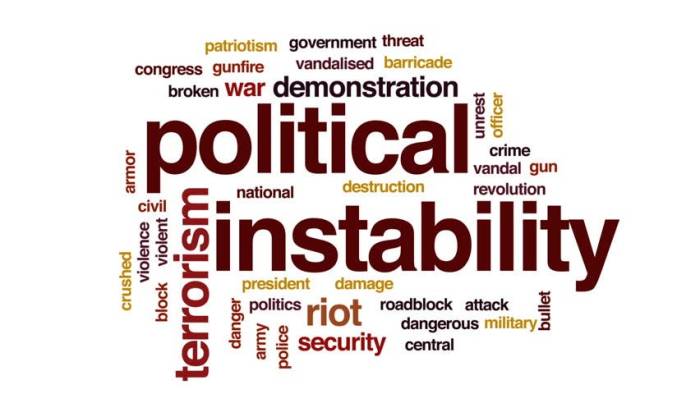
In conclusion, understanding how political instability affects multinational financial planning is paramount for successful global operations. While inherent risks are unavoidable, proactive risk management strategies, including thorough due diligence, robust hedging mechanisms, and diversified investment portfolios, are crucial in mitigating potential losses and ensuring long-term financial stability. By proactively addressing these challenges, multinational corporations can navigate volatile political landscapes and achieve sustainable growth in even the most unpredictable environments.
General Inquiries
What are some early warning signs of political instability?
Early warning signs can include increasing social unrest, declining government legitimacy, escalating political polarization, economic downturns, and rising levels of corruption.
How can political instability impact a company’s reputation?
Association with instability can damage a company’s reputation, leading to decreased consumer trust, boycotts, and difficulty attracting investors.
Beyond insurance, what other methods can mitigate political risk?
Diversification of investments, strong local partnerships, and robust contingency planning are effective mitigation strategies.
What role does local expertise play in navigating political instability?
Local expertise is crucial for understanding nuances of the political landscape, anticipating potential risks, and building strong relationships with stakeholders.
Find out about how How Financial Statement Manipulation Affects Investor Confidence can deliver the best answers for your issues.